75th Anniversary: 16) Meaningful Diversity: Origins of the Farming Style Concept

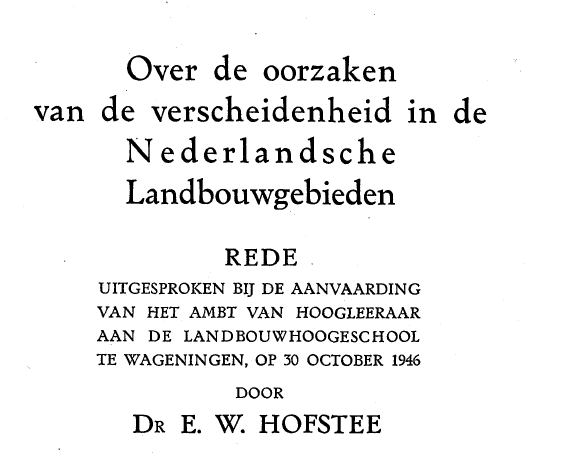
Part of the front cover of Hofstee’s inaugural lecture “On the causes of diversity in agricultural areas in the Netherlands” (1946)

E.W. Hofstee’s interest in the concrete, the lived, and the particular marked his inclination towards an “inductive” research methodology. He combined in-depth descriptions of social groups with a comparative approach (Hofstee 1938: 7-8). This grounded theoretical approach yielded the concept of farming styles in agricultural production. A farming style can be defined as shared normative and strategic ideas about how farming should be done (see also Blog 10). Hofstee’s concept of farming  style implied an important analytical inversion: one should not try to understand the practice of farming from the structural conditions to which the farmers responds but rather move to the center of our analysis the agency of farmers as creative actors. Hofstee thought that rural sociology should emancipate itself from structuralist and functionalist “adjustment sociology,” as the understanding of rural life in terms of an adaptation to “order” was not only narrow and incomplete but also wrong: it erased the agency of people in the creation of the world they inhabit (see also Blog 14). Continue reading
75th Anniversary: 15) Marquetalia: Tegen de stroom in, maar met de beweging mee


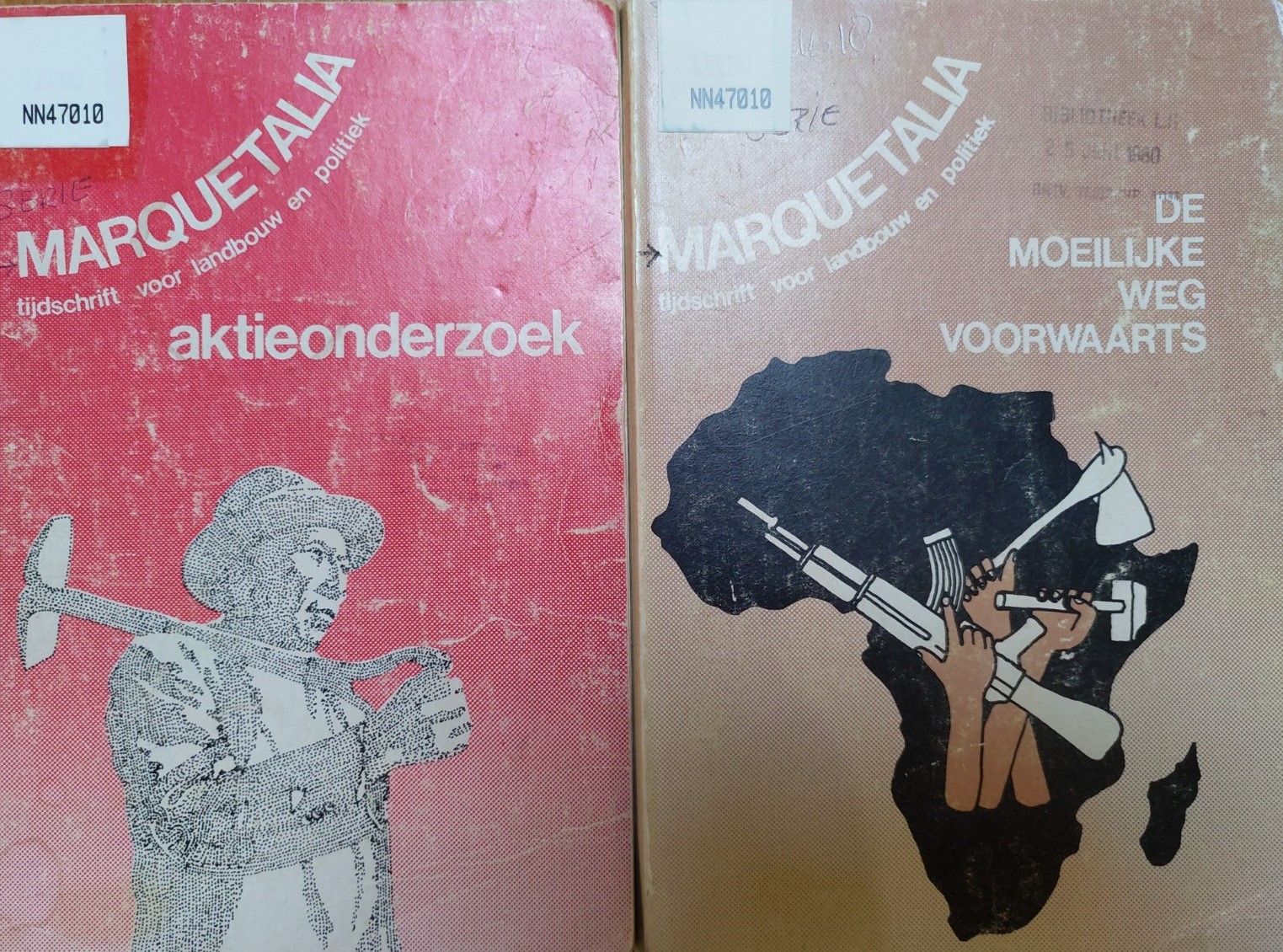
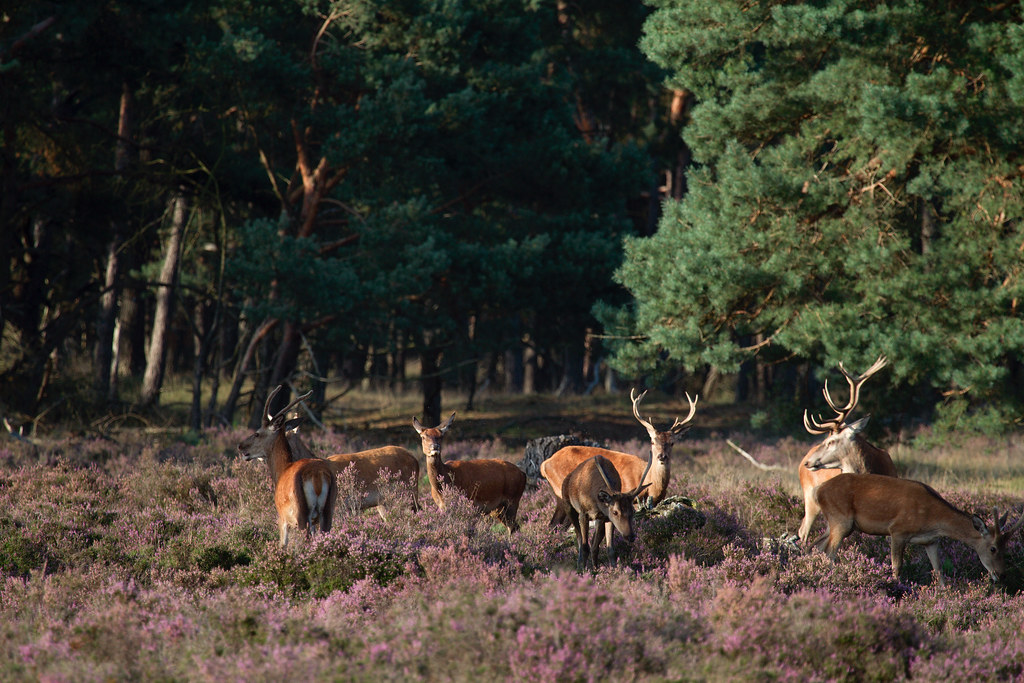
In 1979 verscheen het eerste nummer van Marquetalia, een tijdschrift over landbouw en politiek. Tot de oprichters van het tijdschrift behoorden Jan Douwe van der Ploeg, de latere hoogleraar en hoofd van de vakgroep Rurale Sociologie RSO, maar ook anderen die de rurale sociologie in de jaren tachtig en negentig weer op de kaart zetten, zoals de agrarische socioloog en voormalig RSO collega Jaap Frouws, die later een spraakmakende politiek-sociologische studie over mest en macht schreef (waarover later meer in een blog), en Jan Schakel, de latere onderwijscoördinator van RSO. Na zes nummers hield het tijdschrift op te bestaan. Het redaktiekollektief sprankelde nog van nieuwe ideeën, maar men woonde en werkte te ver van elkaar – verspreidt over drie continenten – en nieuwe carrières boden nieuwe netwerken en kansen. Een deel van het kollektief ging de kern vormen van RSO. Continue reading

75th Anniversary: 14) Is the Future of Rural Sociology Urban? Is the Veluwe City?

“Nationaal Park De Hoge Veluwe” by F.d.W. is licensed under CC BY-NC-ND 2.0

The functions and meaning attributed to the rural are manifold (Woods 2011: 1). Primarily, it operates as the intersection of “man and nature” (Ploeg 1997: 41), where for centuries most of our food, fiber, and fuel have been produced (Woods 2011: 1) but which now also provides the landscapes and scenery where visitors ‘slow-down’ or search for adventure and sensation (Buscher and Fletcher 2017) while comprising spaces of identification and belonging (Jongerden 2018). Further, the rural acquires meaning in relation to its complement: the urban. Often defined as opposites in terms of land use, population density, or social bonds, among others (Cloke 2006), these “constitute the complex unity of society viewed from a spatial angle” (Gilbert 1982: 609). This variety of functions and meanings has made the rural not only an epistemologically uncertain concept, but also a normative one.This normativity and uncertainty is part of the heritage of rural sociology. Continue reading

75th Anniversary: 13) Reflections: From Rural Sociology to a Sociology of Place?

Place has figured central in the work of the Rural Sociology Group. In a way this is, of course, already implicated by the adjective “rural” which adds a spatial identity to the sociology we do. Taking this identity as a social practice and the production of meaningful differences as points of departure (Hofstee 1946, Ploeg 1993, Wiskerke 2007), my own research gradually started to crystalize around the emergence of new spatial realities beyond ‘rural’  and ‘urban’.  At the background of this interest is the will to understand how people address inequality and uncertainty, and how they sustain themselves individually and collectively, socially and spatially. Continue reading

75th Anniversary: 11) Notes from the field: Agricultural Development in Rojava and Resistance of the Third Kind

Women’s cooperative farm in Rojava (2015)

Introduction

In one of our previous blogs we discussed Van der Ploeg’s concept resistance of the Third Kind (see Anniversary Blog 7). This was defined as a resistance which resides in working practices and farmers’ fields and is expressed in the way that cows are bred, how manure is made, products are delivered. In short, it is a resistance which intervenes in and reorganizes production, reproduction and markets (Van der Ploeg 2007). In this blog, the reconstruction of Kobanî is discussed a resistance of the third kind. Continue reading