Traditional foods at IP in Romania

Two weeks of Intensive Program are currently in progress in Cluj-Napoca, in the North West of Romania. Coming from 7 different countries, 42 students are learning about Traditional foods in relation to micro organisms. The course is international and interdisciplinary, this week they first had lectures in Sensory Analysis from colleagues of France, Belgium and Denmark and yesterday they started with the social science part in which I gave the first lecture on Food Culture & Authenticity.

We started the week on Monday with student presentations of Traditional Foods from their countries which we closed with a tasting session on the many products they brought. I used many of their examples in my lecture yesterday. For example, not one of the products presented was related to the ‘breakthrough’ of new preservation techniques (such as freezing) which developed simultanously with industrialisation. Of course, but without realising I found out, everybody had chosen products that had ‘old’ preservation techniques such as salting, smoking and fermenting.

A product such as sour cabbage was presented as typical for Romania but disputed by other students, for sauerkraut – zuurkool  is a typical winterfood in many Eastern and Northern European countries. Cabbage, Pork, Cheese, Fruits such as plums, Walnuts were among the main ingredients of many traditional foods presented. Traditional because these products are rooted in rural self-subsistance household preservation. Pork, for example, is the pride of Romania. One of the traditional foods presented by a Romanian student group was the Ignat on the 20th of December. On this day, families in rural areas gather together and sacrifice the pig they have kept for this reason. It is a big ritual with particular techniques involved and roles to play for different members of the household. More than once, I heard the ‘joke’ that pork is the vegetable for Romanians.

Urban Ag – Stadslandbouw

Grow your own is emerging as a trendy urban activity. Although allotment gardens often exists for over 50 years, their image is drastically changing. Until recently, these spaces were ignored by any city with promotional aspirations. Rather, they were tolerated at fringes or near railroad tracks. Quite different from the central place ‘community gardens’ are conquering now, increasingly heralded as ‘healthy’ spaces in and for neighborhoods. For a closer connection to nature, for the educational value of food growing, for the connection to better diets, for improvement of the social fabric of the ‘hood’.

What is policy aspiration and what is real in this? An interesting question for sociologists trying to understand contemporary society. Colleague Esther Veen is studying various forms of allotment/community gardens throughout the Netherlands. She is making her research accessible through the blog; www.onderzoekerstadslandbouw.wordpress.com. In Dutch.

Moreover, there are opportunities for students to study specific gardens in The Netherlands, recently a Master Thesis on an allotment garden in Ede was completed. A new research question comes from a garden in Sliedrecht (see blog in Dutch) and also the city of Rotterdam is interested in a city-wide study on the functioning of their community gardens.

For more information on Master Thesis possibilities in this field, please contact Els Hegger; Els.Hegger@wur.nl

WG on ‘Civic Food Networks’ at conferences ‘Ag in an Urbanizing Society’ IFSA 2012 and IRSA 2012

As follow-up of the successful Working Group on “New Forms of Consumer Engagement in Food Networks: Diversity, Mechanisms & Dynamics” that was held at the ESRS Conference in Chania, Crete last August 2011, we will organize Working Groups on similar topics at different scientific events in the coming year. The different scientific events for which WGs are organised are the following. For specific details see links:

1. International Conference “Agriculture in an Urbanizing Society” on Multifunctional Agriculture and Urban-Rural Relations, 1-4 April 2012 in Wageningen, The Netherlands, Working Group 3 “Exploring ‘civic food networks’ and their role in enabling sustainable urban food systems”, convened by Petra Derkzen, Cornelia Flora, Markus Schermer and Henk Renting, http://www.agricultureinanurbanizingsociety.com/UK/Working+group+themes/WG3

Deadline for abstract submission extended to 20 January 2012. Deadline for paper submission 1 March 2012.

2. 10th European International Farming Systems Association (IFSA) Symposium on “Producing and reproducing farming systems: New modes of organisation for sustainable food systems of tomorrow” in Aarhus, Denmark, from 1-4 July 2012. Workshop 4.1 “‘Civic food networks’ as driver for sustainable food and farming systems”, convened by Chris Kjeldsen, Markus Schermer and Henk Renting, http://ifsa2012.dk/?page_id=341

Deadline for abstract submission extended to 3 January 2012. Deadline for paper submission 1 March 2012

3. XIII World Congress of Rural Sociology of the International Rural Sociology Association (IRSA) on “The New Rural World: From Crises to Opportunities” in Lisbon, Portugal from 29 July to 4 August 2012, Session number 64 “New Forms of Consumer-Producer Cooperation within Food Networks: Comparing Experiences in the North and the South”, convened by Henk Renting, Gianluca Brunori, Flávia Charão Marques and Claire Lamine, http://irsa2012.com/media/uploads/events/irsa2012/XIII_WCRS_sessions_description_session.pdf

Deadline for abstract submission 15 January 2012, Deadline for paper submission 15 May 2012

We propose to use the concept “Civic Food Networks” as a common denominator for the type of newly emerging food networks that we wish to explore in these different Working Group sessions. This term has several advantages compared to other commonly used concepts such as “Short Food Supply Chains”, which has mainly been used in producer-centred analysis and in relation to rural development impacts, and “Alternative Food Networks” which mainly proposes an opposition to dominant, conventional food systems and implicitly supposes that these types of networks never will become mainstream and will continue to remain marginal. Additionally, the term “Civic Food Networks” clearly expresses that the food networks we want to explore have their basis within civil society and that, rather than merely as economic actors, consumers and producers in these networks mainly cooperate as “citizens” in new forms of collective action to shape the food system. As such, they can be understood as expressions of new forms of “food citizenship” in which consumers and producers together regain control over the ways in which food is produced and relations between state, market and civil society within food governance are actively reshaped.

We have tried to ensure that the various WG meetings have a different thematic focus within the topic of Civic Food Networks so the conferences will complement each other and broaden the geographical range of our debates. We are also trying to establish a mailing list of people interested in debates around Civic Food Networks. If you want to be included in this mailing list, please contact us at rentingh@gmail.com or Markus.Schermer@uibk.ac.at

Churrasco

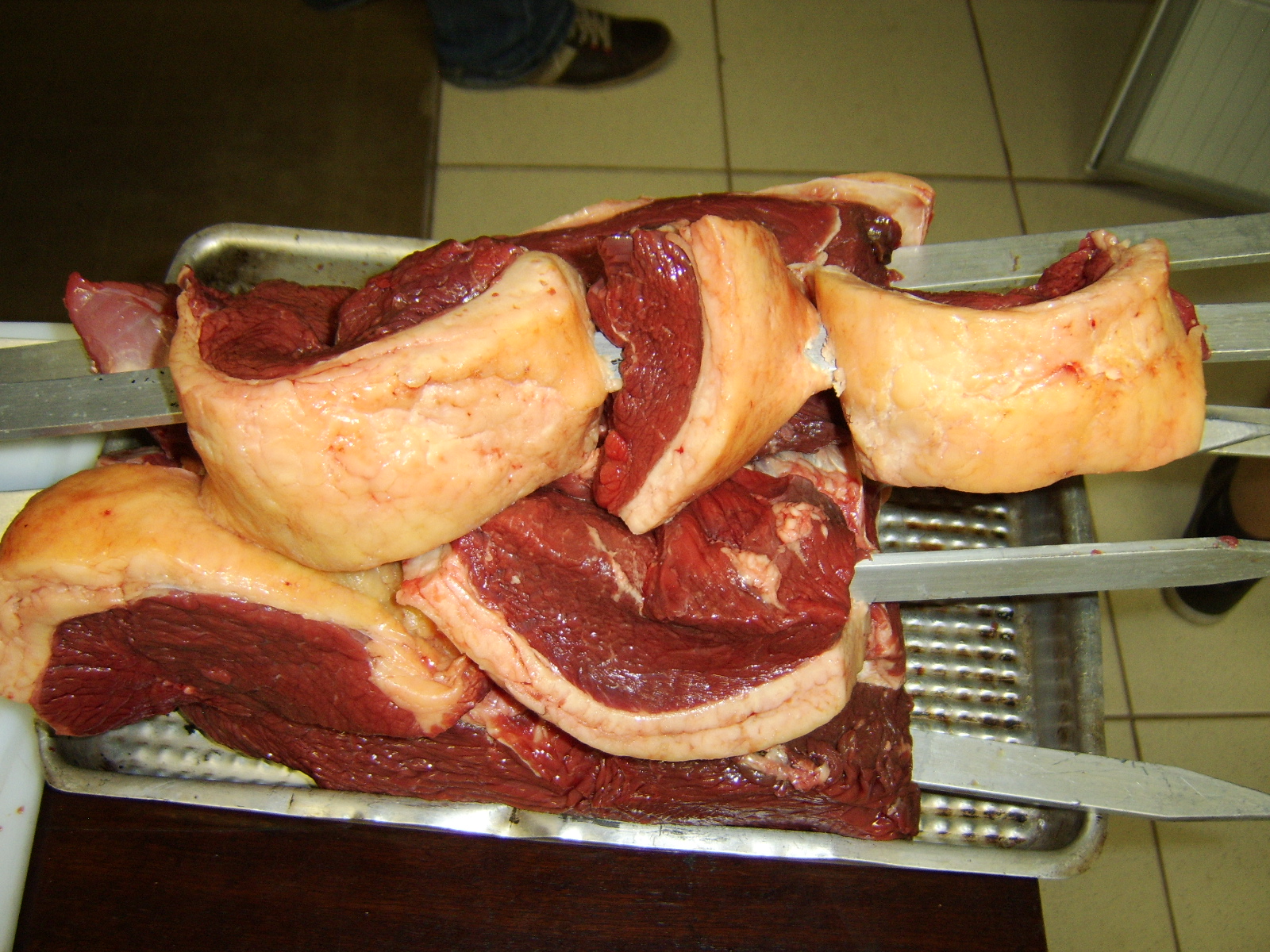
Meat. The most tender meat ever eaten. Here they distinguish between meat and chicken. Meat is red meat. This part of Brasil is known as Gaúcho country. It refers back to the only food that the first settlers were eating, meat for breakfast, lunch and diner. I always thought of the south of Argentina as the pampa land. But this landscape stretches well into Rio Grande do Sul. There is debate whether or not the Rio da Prata north of Buenos Aires is a division line, but those who do not take this consider all of Argentina, Uruguay and 63% of the state Rio Grande do Sul as “paisagem natural dos pampas”, some 700.000 km2. The Brasilian part is 178.243 km2 big and from a country perspective only 2 % of the Brasilian territory. However since it stretches over the most of this south state it is a significant landscape feature and cultural reference point here. In a way the southerners here have more in common with the “hermanos pampeanos do Uruguai e da Argentina” than with the north of Brasil.

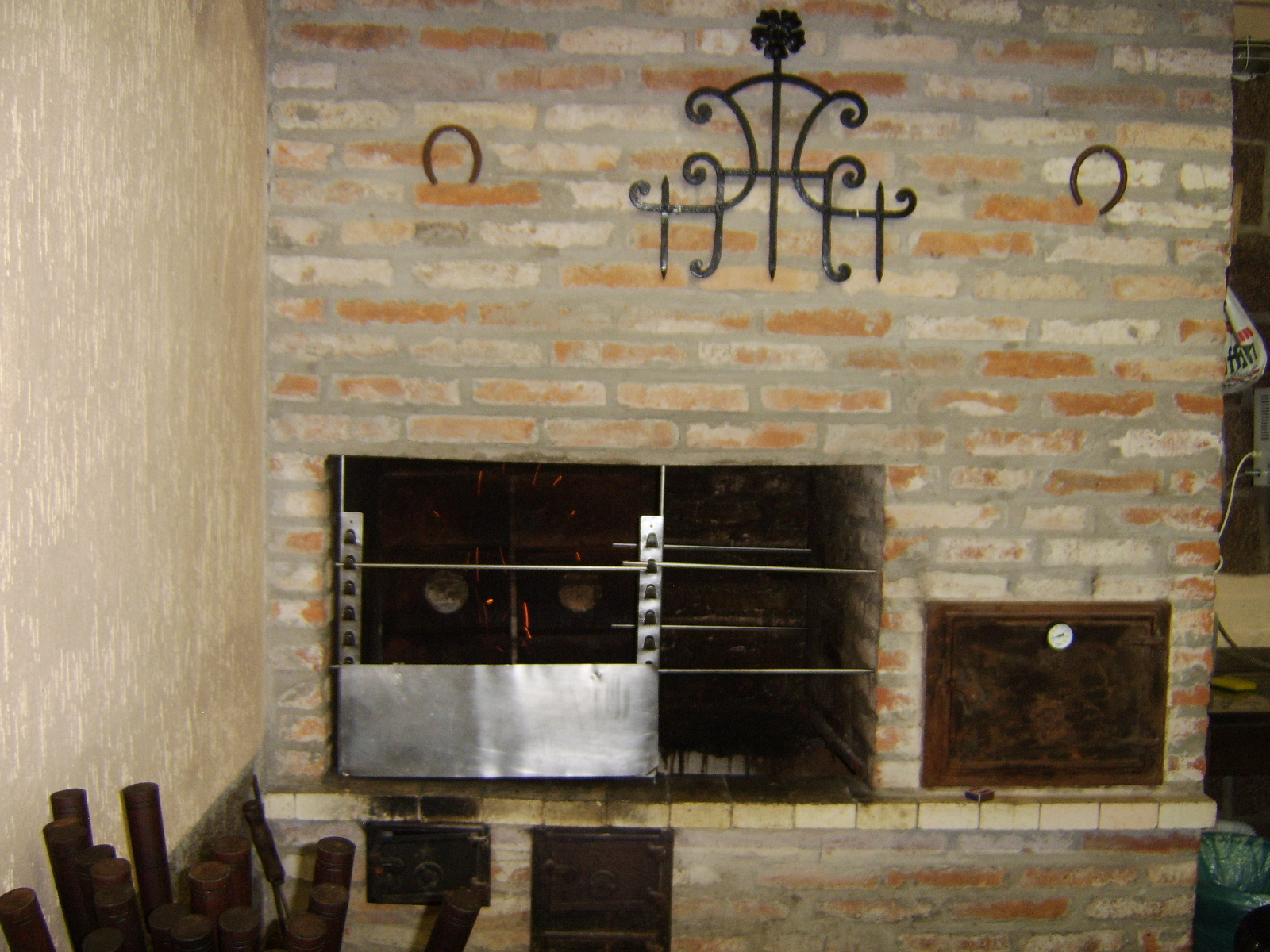
So, I had my ‘initiation’ as a gaúcha helping out with the churrasco, the Brasilian bbq. Of course, it is a typical men’s thing the preparation of the churrasco. Who is cutting the meat on sundays? There is not much else to it than meat, some toasted garlic bread and beer. But what a meat! Especially the “picanha” cut of meat, the most tender meat you can imagen. So all you need is wood fire or wood coals, first quality meat, salt and a typical bbq place. These places you can find everywhere, for example on the roof of every tall apartment building. Stick your nose out of the window on a sunday at noon and you can smell the churrasco’s in the whole city. It is typical for sunday family life or ‘occasions’ such as the end of my time here. Thanks all for the wonderful time!


Urban Ag and Revolution

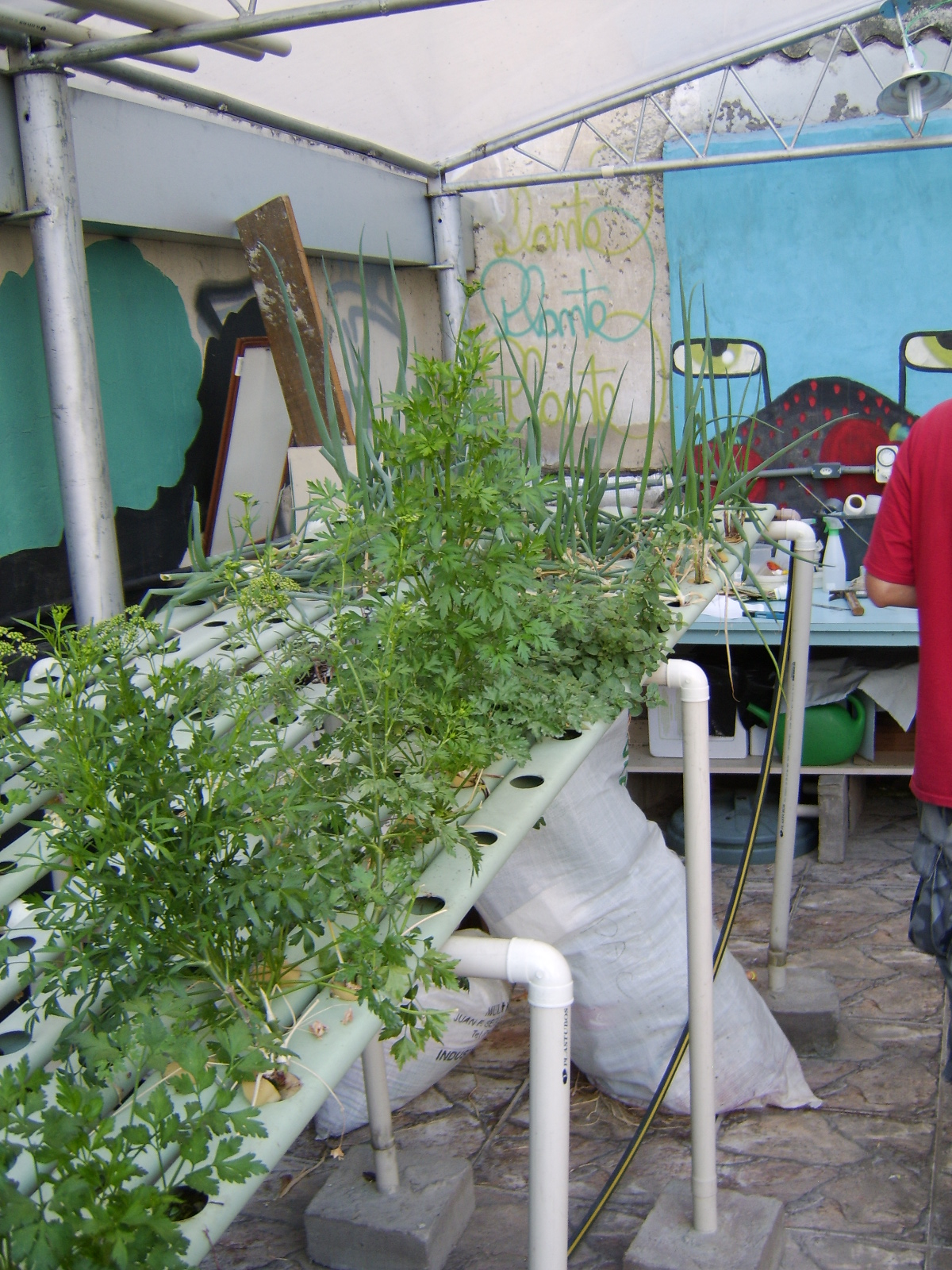
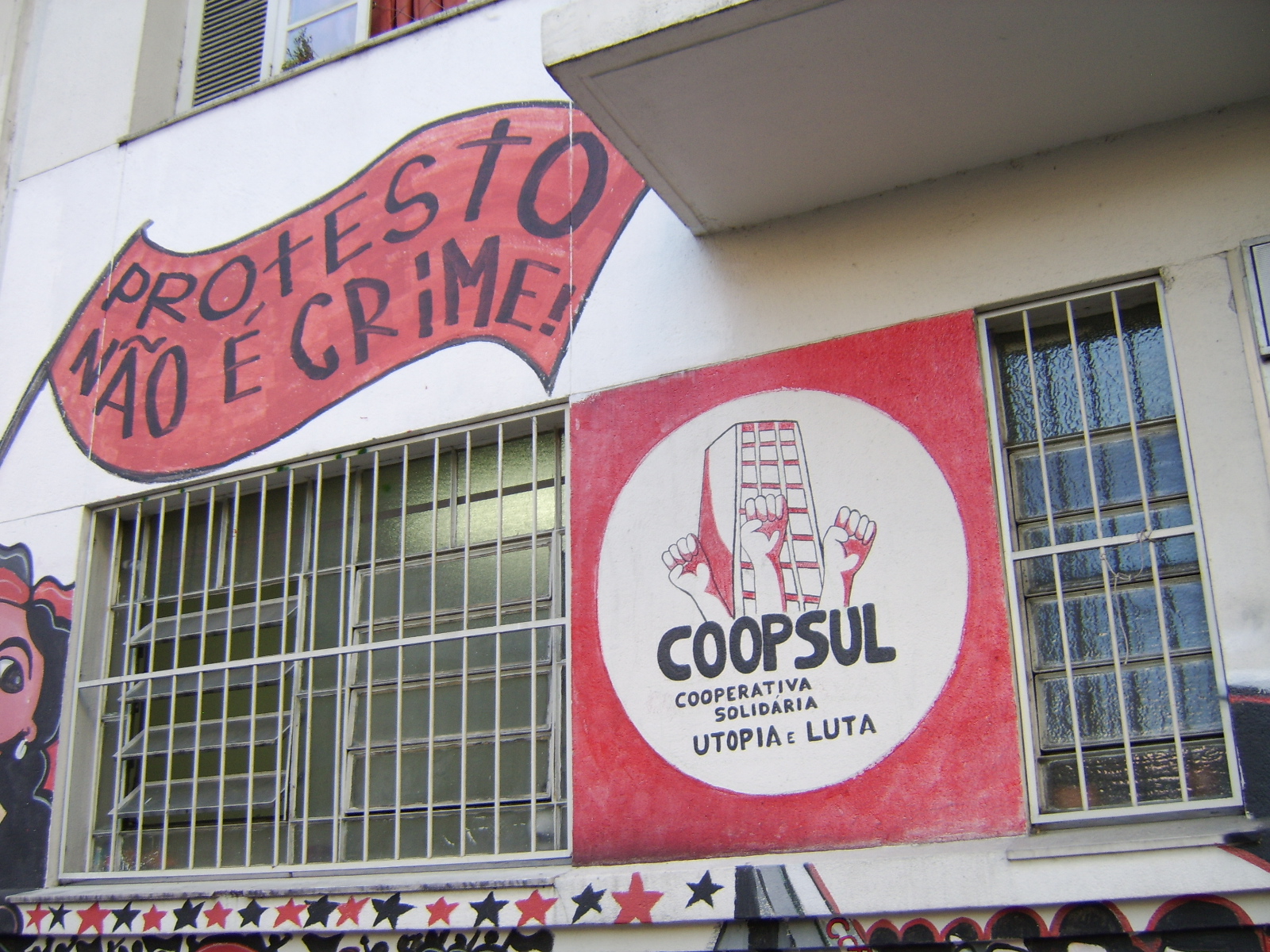
They claim to be the only example of rooftop farming in Porto Alegre. Hence, a revolutionary example in many ways. A student of last week’s class kindly offered to showed me around in Porto Alegre including unusual places such as the movement-community-cooperative COOPSUL. Right in the middle of the centre a building was squatted in 2005 related to the World Social Forum marches. The building was long-term abandoned and the movement of (somehow translated) ‘roofless’ people, the urban counterpart of the MST, asked with the squatting for the right to good housing. Their slogan; ‘Utopia e Luta’ which means Utopia and Struggle/Fight.

Against the odds, their fight was productive and they were given the right to stay in the building in 2007 under the condition that it would be a community place, open for the public. The building was turned into 42 individual apartments and community spaces for 5 separate cooperative economic activities; baking, gardening, sewing, laundry services and t-shirt printing. With the years, reality hit utopia from the inside. Tensions around individual needs and collective organisation, around leadership and running the cooperative emerged. It was originally envisaged that the people who were selected for the individual apartments would also work in the cooperative activities. This turned out to be difficult for various reasons. As a result, the 5 activities are not all running in the way it was envisaged and the rooftop farm is still very much in construction and produces for the building only.

Despite internal difficulties, the successful access to living space by squatting is still charged with a lot of symbolic energy. The movement and the building became a symbol for other urban groups and movements and the organisation is asked to assist in demonstrations and other revolutionary activities. For example today, they went out to assist MST land occupation demonstration in the face of evacuation.