Factoren die beleving van maaltijd bereid uit lokale producten beïnvloeden – MSc-thesis onderzoek

Door Marina van Maanen,  MSc-studente Gezondheid en Maatschappij

Lokaal betrokken en streekproducten staan steeds vaker op het menu van zorginstellingen. Waar eerder een trend was van steeds meer geïndustrialiseerde maaltijden als gevolg van kostenbesparingen, lijkt nu de ambachtelijke maaltijd terrein te winnen. Er zijn veronderstellingen dat een maaltijd op basis van lokaal betrokken en streekproducten een toegevoegde waarde kan hebben op de maaltijdbeleving en gezondheid van ouderen in zorginstellingen. Hier is echter (nog) geen wetenschappelijk bewijs voor.

Doel van mijn thesis onderzoek was daarom een verkenning van de mogelijke relatie tussen een maaltijd op basis van lokaal betrokken producten, maaltijdbeleving en kwaliteit van leven in een zorginstelling. Hier doe ik verslag van in mijn MSc-thesis getiteld:  Beleving van de maaltijd bereid uit lokaal betrokken producten in zorginstelling Joris Zorg.

Om deze vragen te onderzoeken heb ik een casestudy gedaan in zorginstelling Joris Zorg in Oirschot. Binnen Joris zorg worden op dit moment al maaltijden geserveerd op basis van lokaal betrokken en streekproducten. Binnen de casestudy heb ik interviews gedaan met bewoners, gastvrouwen in het restaurant, de koks en met vrijwilligers. Ook heb ik op verschillende dagen meegegeten en geholpen met het afruimen van de tafels. Opvallend was dat bewoners niet of nauwelijks op de hoogte waren van de herkomst van hun maaltijden. Ook waren bewoners niet bekend met termen als lokaal of streek. Dit maakte het doen van ‘gewone interviews’ lastig. Als een ‘verbeterde’ interview methode heb ik een vragenlijst ontwikkeld op basis van een menukaart, waarmee meer waardevolle informatie werd verzameld. Reden hiervoor is waarschijnlijk dat deze vragenlijst beter aansloot bij de belevingswereld van ouderen in zorginstelling Joris Zorg.

Maaltijdbeleving in Joris Zorg: uitkomst na proef met menukaart

Het verband tussen de maaltijd en kwaliteit van leven zoals verondersteld door literatuur, heb ik niet kunnen bevestigen op basis van mijn onderzoek. Kwaliteit van leven binnen Joris Zorg wordt voornamelijk geassocieerd met verzorging, rust en georganiseerde activiteiten. Wat de maaltijd aangenaam maakt en wat factoren zijn die bijdragen aan de maaltijdbeleving zijn: de juiste bereiding van de maaltijd, sociale factoren van de maaltijd, maaltijdsamenstelling en de versheid van producten. De toegevoegde waarde van het gebruiken van lokaal betrokken producten voor de maaltijd zit nu voornamelijk in de kwaliteit van deze producten en de interesse en het leuk vinden van deze producten in de Week van de Smaak. Wat zeer opvallend is, is dat bewoners buiten de Week van de Smaak niet of nauwelijks op de hoogte zijn van de lokaal betrokken achtergrond van de maaltijd. Uit de menukaartjesproef komt naar voren dat wanneer bewoners wel op de hoogte zijn, dit kan leiden tot goede herinneringen, verhaal en discussie aan tafel en herkenbaarheid. Dit kan een zeker een toegevoegde waarde zijn voor de maaltijdbeleving.

Aanbeveling voor Joris Zorg is dan ook om meer/beter te communiceren naar bewoners over de achtergrond van de maaltijd. Dat kan bijvoorbeeld in de vorm van een nieuwe menukaart (deze heb ik ondertussen samen met het keukenteam ontworpen). Aanbeveling voor vervolgonderzoek is het gebruiken van onderzoeksmethoden welke aansluiten bij de belevingswereld van ouderen. Met als voorbeeld in dit onderzoek de menukaartjesproef.
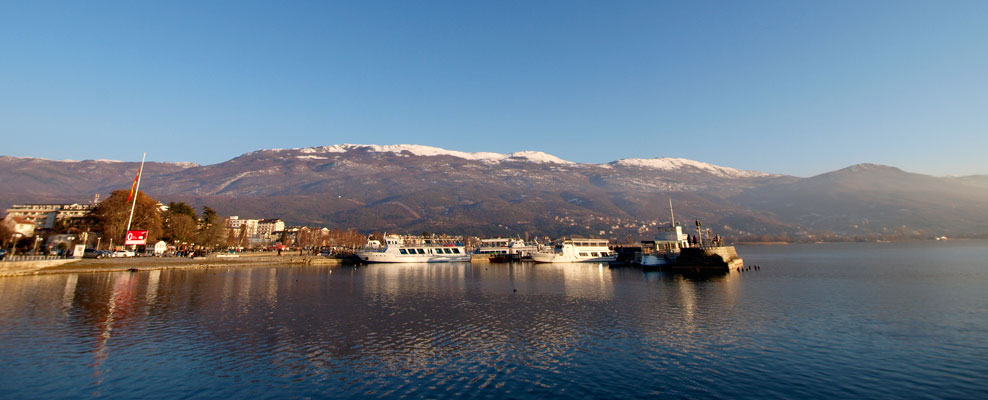
Sense of place in National Park Galicica – using new media in MSc-thesis research

By Bojan Rantasa, MSc-student International Master of Rural Development

Last Friday, 23 March 2012, I presented my MSc-thesis research proposal for fellow students and researchers of the Rural Sociology Group. My thesis research is titled “The Sense of Place of National Park Galicica” is part of my Msc-study International Master Rural Development (www.imrd.ugent.be). Joost Jongerden of the Rural Sociology Group is my sepervisor. My thesis presentation can be viewed at www.galicica.rantasa.net, a website on my thesis research where I will post research proceedings as well.

In my research I will use new media as tools for communication with the public but also as research method. I developed a website at the proposal stage of the research (www.galicica.rantasa.net). It enables dedicated communication with stakeholders and public, by offering updates on the research and a contact form. The web page also hosts the questionnaire on the sense of place of “Galicica”, thus becoming an important and integrated tool to the research. The information on the research currently presented on the web page is limited. This is not to lead the visitors of the web page, thus creating biased answers in the questionnaire.

To spread the questionnaire, I will use Facebook and targeted e-mail messages that are disseminated by the participants, causing a domino effect. This approach resulted in more than 50 completed questionnaires in the first week.

Continue reading

Politics of place making in urban farming – an essay

By Anke de Vrieze

Last trimester, I had the opportunity to join the Capita Selecta course `A Global Sense of Place´, taught by Joost Jongerden and Dirk Roep. From my current working experience in the field of urban agriculture, the subject of the course – place-based approaches for sustainable development- interested me and proved valuable. In the course, different approaches to ‘place’ were discussed and related to culture, politics, economics and leadership. As we were a small group of students, we met in a weekly reading group, to discuss the literature and our written assignments.

Personally, I was most inspired by the work of Doreen Massey. Her perspective on place and space is a relational one, as she describes places as ‘temporary constellations’ or ‘bundles of space-time trajectories’. In one of her articles, she connects this relational perspective to ‘geographies of responsibility’ and shows how the ‘global’ is embedded locally as well. Taking the example of the City of London, i.e. it’s financial district, she argues against generalised understandings of the local as a product of the global, and demonstrates that indeed much of what we call ‘the global’ stems from local areas, such as the City of London. This leads her to plea for alternative globalisations, based on ‘a challenge of place’. I think, Massey’s perspective can prove meaningful for anyone studying ‘place’, whether it be in urban or rural settings.

For the final essay, ‘Growing community? Urban agriculture in the context of place-based urban development’ of the course, I discussed the ‘politics of place-making’ in a case of urban farming. By drawing on the example of an neighbourhood-based urban agriculture project, I showed how the different perspectives on place, as employed by various actors involved, creates a dynamic fields of interests regarding the ability of UA to address urban issues, and to achieve sustainable community development. Based on this short analysis, I argued for the need of a relational perspective on place, taking into account place-frames and positionality of actors, in (future) cases of neighbourhood-based urban farming.

Anke de Vrieze, anthropologist and project coordinator of FARMING THE CITY (www.farmingthecity.net), contact: ftc@citiesthemagazine.com

Excursion Biodiversity in Brabant

By Elisa de Lijster

After I completed my MSc-thesis for International Development Studies (see earlier post in Dutch) I’m now working at the Centre for Agriculture and Environment (Centrum for Landbouw en Milieu or CLM) on my second MSc thesis project about the current turmoil in Dutch Nature Policy.

I will explore and hopefully find new and creative ways of managing and realizing nature in combination with agricultural and other – out of the box – practices. For this, I will undertake interviews with actors from State Forestry Service, Agricultural Environmental Cooperatives, Nature Organisations, Farmers’ Union and Governmental Administrators. Apart from the interviews, I will go as participant observer to symposia and meetings organised by several nature organisations which have the aim to discuss the future course of nature policy in the Netherlands.

CLM under the header of the Netherlands Rural Network (Netwerk Platteland) is also organising a field excursion focusing on nature & biodiversity and cooperation between different parties in the Province of Brabant (see the announcement, in Dutch, and the site biodiversiteit in Brabant). We will visit several sites and projects such as the Association of Dune Farmers, the Nature Museum, the project Nature Gate and the project Biodiverse Farm Yards.

The purpose is to exchange knowledge and learn from each others’ experiences and bottle necks. Of course, from an academic and scientific perspective, such a day is an excellent opportunity for participant observation: to meet relevant actors and in my case to see how they perceive the changes in Nature Policy which could affect their livelihoods and planning projects. If you have an interest, see the announcement. 

Elisa de Lijster (elisa.delijster@wur.nl

MSc International Development &  MSc Forest and Nature Conservation

Surinam bami, Georgian beet-salad and Turkish baklava

The allotment gardeners of De Koekelt have gathered for a potluck in De Koekelt on Saturday, third of September. Surinam, Turkish, Italian, Georgian, and Dutch gardeners prepared food with the vegetables of their garden which, all together, made a very tasty and varied lunch.
I am doing my thesis on De Koekelt, trying to find out how to strengthen sense of community and participation of the gardeners. De Koekelt is an allotment garden in Ede with gardeners of twelve different nationalities. By walking around one can recognize great differences between the gardens. Some grow more flowers, others more vegetables, some gardeners build a place to sit down and enjoy, while others use their space in the most efficient way to produce as much food as possible.
These differences are appreciated by the gardeners, but create friction as well: “Why do foreigners need to grow so many beans?” or “Why do Dutch women only grow flowers and weeds on their garden?”
With help from three gardeners, I organized the potluck, where the gardeners had a chance to appreciate the differences between themselves, by tasting the different meals each gardener proudly prepared from their own garden products. By eating together, they used the opportunity to speak with gardeners they usually never spoke with. For example, a Georgian woman and a Turkish man discovered that they used to be neighbours, since the villages they come from are both situated on the border of Georgia and Turkey.
The board of De Koekelt, who was sceptical about this activity (“do you really think the gardeners will do all this effort of cooking and bringing their own plates?”) was also present and enjoyed the gathering. They had experienced a sense of losing control, but they seemed to realize that gardeners initiative should be stimulated, not constrained. They saw how little organization is needed to bring the gardeners together, and although they initially objected against this activity, they concluded that this should be organized more often

Lise Alix, MSc-student Rural Sociology