Unknown's avatar

About Han Wiskerke

Chair and Professor of Rural Sociology at Wageningen University (The Netherlands) Research domains: rural development, multifunctional agriculture, city-region food systems

Second European Sustainable Food Planning Conference

As a follow-up of the first European Sustainable Food Planning Conference, which took place on 9 and 10 October 2009 in Almere (The Netherlands), the Urban Performance Group of the University of Brighton (UK) will host the second European Sustainable Food Planning Conference on 29 and 30 October 2010. Like the first one, this second conference will be held under auspices of the Association of European Schools of Planning (AESOP).

Context and aim

Planning for sustainable food production and consumption is an increasingly important issue for planners, policymakers, designers, farmers, suppliers, activists, business and scientists alike. In the wider contexts of global climate change, a world population of 9 billion and growing, competing food production systems and diet-related public health concerns, are there new paradigms for urban and rural planning capable of supporting sustainable and equitable food systems? Continue reading

AspergeGilde Peel en Maas

Het AspergeGilde Peel en Maas is een samenwerking van 25 aspergetelers uit de gemeente Peel en Maas. De telersgroep werkt samen met een aantal lokale restaurants, kookstudio’s en recreatieondernemers, ook wel de vrienden van het AspergeGilde genoemd. Het AspergeGilde heeft de volgende doelstellingen:

  • promotie van de Peel en Maasregio als aspergeregio
  • bevordering van de aspergeconsumptie door nadere kennismaking met deze groente en de productiewijze ervan

Met doet dit onder andere door het organiseren van aspergearrangementen (bezoek aan een aspergeteler in combinatie met een aspergemaaltijd in een lokaal restaurant), fietstochten door het gebied, kookworkshops, etc… Elk jaar wordt het aspergeseizoen geopend door middel van een aspergemaaltijd voor een grote groep genodigden. Dit jaar vond de seizoensopening plaats op 28 maart.

Voor meer informatie over het AspergeGilde Peel en Maas verwijs ik naar het onderstaande promotiefilmpje.

Sustainable Food Systems Education and Engagement in Detroit

Recently, in the process of writing an international research proposal, I had an email exchange with Dr. Kami Pothukuchi, Associate Professor in Urban Planning at the College of Liberal Arts and Sciences of Wayne State University. Dr. Pothukuchi is, together with Prof. Jerry Kaufman, one of the founders of food planning in the USA. She was the first to write about food as a stranger to the planning field in 2000 and is one of the authors of “Community and Regional Food Planning: A Policy Guide of the American Planning Association“. This policy guide was a major source of inspiration for organizing the first European Sustainable Food Conference under auspices of the AESOP.

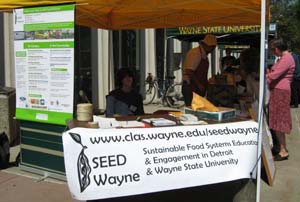
In our email exchange Dr. Pothukuchi informed me that she has recently become director of SEED Wayne. SEED is the acronym for Sustainable food systems Education and Engagement in Detroit. 

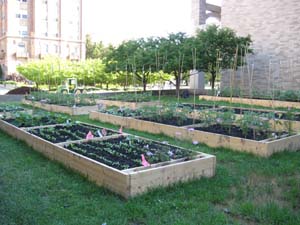
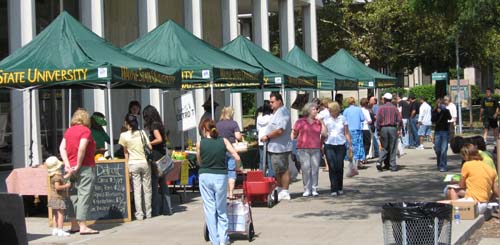
SEED Wayne is dedicated to building sustainable food systems on the campus of Wayne State University and in Detroit communities. SEED Wayne works in partnership with community-based organizations promoting food security, urban agriculture, farm-to-institution, and food and fitness planning and policy development. SEED Wayne embraces core university functions in teaching, research, engagement and operations. 

I think SEED Wayne is a perfect example of the role a university can and should play in enhancing sustainable food systems as well as in creating a learning-by-doing environment for students in which close collaboration with local communities is an intrinsic part of university teaching and research. For those interested in SEED Wayne download the brochure or simply browse SEED Wayne’s website.

Good food nation: reversing obesity via local food systems

Recently the Massachusetts Institute of Technology (MIT) and Columbia University published the results of a study on reversing America’s obesity epidemic by reorganising the system of food production, processing and distribution. According to the researchers obesity is widespread due to the national-scale system of food production and distribution, which surrounds children — especially lower-income children — with high-calorie products. Up to 90% of American food is processed, which contains ingredients, often acting as preservatives, that can make food fattening. The MIT and Columbia researchers propose a solution:

 America should increase its regional food consumption. Each metropolitan area, the researchers say, should obtain most of its nutrition from its own “foodshed,” a term akin to “watershed” meaning the area that naturally supplies its kitchens. Moreover, in a novel suggestion, the MIT and Columbia team says these local efforts should form a larger “Integrated Regional Foodshed” system, intended to lower the price and caloric content of food by lowering distances food must travel, from the farm to the dinner table.

For more information, you can read the complete press release by MIT or go the online project results.

1 Billion Hungry

One billion people live in chronic hunger. In the time it takes to watch this video, two children will die of hunger. If this situation is unacceptable to you, sign on http://www.1billionhungry.org