75th Anniversary: 14) Is the Future of Rural Sociology Urban? Is the Veluwe City?

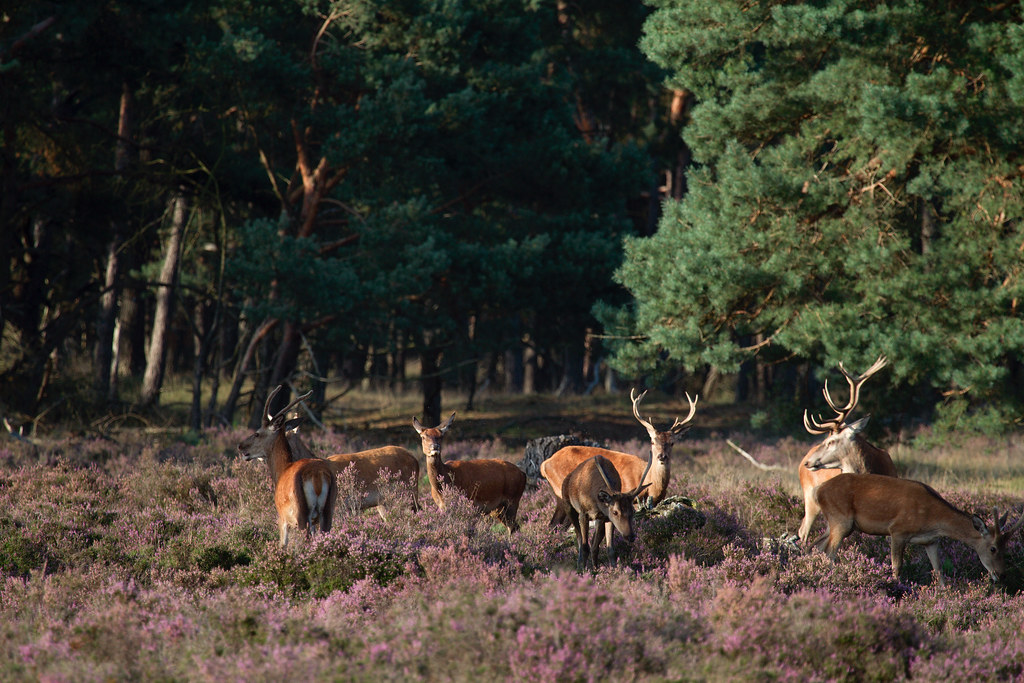
“Nationaal Park De Hoge Veluwe” by F.d.W. is licensed under CC BY-NC-ND 2.0

The functions and meaning attributed to the rural are manifold (Woods 2011: 1). Primarily, it operates as the intersection of “man and nature” (Ploeg 1997: 41), where for centuries most of our food, fiber, and fuel have been produced (Woods 2011: 1) but which now also provides the landscapes and scenery where visitors ‘slow-down’ or search for adventure and sensation (Buscher and Fletcher 2017) while comprising spaces of identification and belonging (Jongerden 2018). Further, the rural acquires meaning in relation to its complement: the urban. Often defined as opposites in terms of land use, population density, or social bonds, among others (Cloke 2006), these “constitute the complex unity of society viewed from a spatial angle” (Gilbert 1982: 609). This variety of functions and meanings has made the rural not only an epistemologically uncertain concept, but also a normative one.This normativity and uncertainty is part of the heritage of rural sociology. Continue reading

75th Anniversary: 13) Reflections: From Rural Sociology to a Sociology of Place?

Place has figured central in the work of the Rural Sociology Group. In a way this is, of course, already implicated by the adjective “rural” which adds a spatial identity to the sociology we do. Taking this identity as a social practice and the production of meaningful differences as points of departure (Hofstee 1946, Ploeg 1993, Wiskerke 2007), my own research gradually started to crystalize around the emergence of new spatial realities beyond ‘rural’  and ‘urban’.  At the background of this interest is the will to understand how people address inequality and uncertainty, and how they sustain themselves individually and collectively, socially and spatially. Continue reading

Looking back, Looking Forward: Setting a future agenda for rural sociology

We are proud to announce our upcoming seminar series ‘Looking back, Looking Forward: Setting a future agenda for rural sociology’ as part of the 75th anniversary celebration of Rural Sociology. We will kick off the series in February and continue throughout 2021, leading up to our grand anniversary celebration on the 24th of September. Continue reading

75th Anniversary: 12) Engaging in Agri-Environmental Cooperativism

The Netherlands witnessed in the 1990s the emergence of novel expressions of collective action among farmers. Building upon a rich tradition of agricultural cooperativism as well as outcomes of regional farming style research (see blog 10), these novel forms of collective action aimed initially especially for more farmer-friendly agri-environmental and nature policy measures. Continue reading

75th Anniversary: 11) Notes from the field: Agricultural Development in Rojava and Resistance of the Third Kind

Women’s cooperative farm in Rojava (2015)

Introduction

In one of our previous blogs we discussed Van der Ploeg’s concept resistance of the Third Kind (see Anniversary Blog 7). This was defined as a resistance which resides in working practices and farmers’ fields and is expressed in the way that cows are bred, how manure is made, products are delivered. In short, it is a resistance which intervenes in and reorganizes production, reproduction and markets (Van der Ploeg 2007). In this blog, the reconstruction of Kobanî is discussed a resistance of the third kind. Continue reading