
 Farming styles refer to a cultural repertoire, a composite of normative and strategic ideas about how farming should be done. The notion goes back to early work of Hofstee, the founding father of the Rural Sociology Group, initially by focussing on the cultural backgrounds of inter-regional differences in farmers’ uptake the agricultural modernisation logics. Late 1980s the notions re-appears, changing the focal point to intra-regional significance of differentiating farmers’ responses in relation to the various sustainability problems that characterize these same modernisation logics.
Category Archives: 75th Anniversary
75th Anniversary: 9) De Toga: overleefde hiërarchie of dalend cultuurgoed
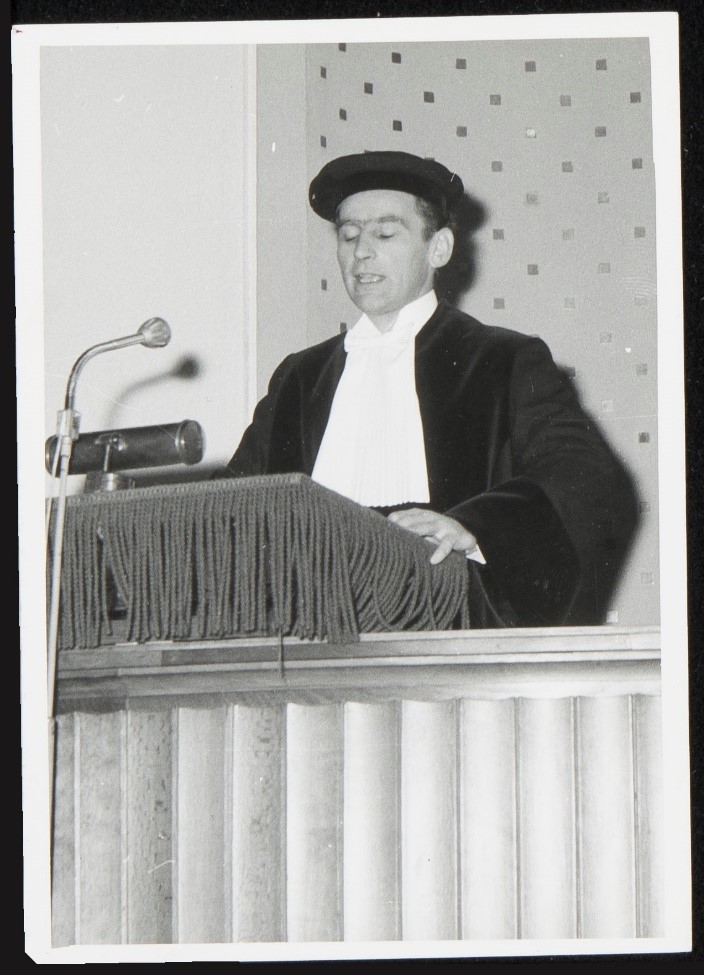
Professor Kooij met toga, bef en baret
Parallel aan de democratisering van de universiteit in de jaren zestig en zeventig, met de voor die tijd kenmerkende opkomst van vakgroepsbestuur, in plaats van de almachtige hoogleraar, en inspraak door studenten, kwam ook universiteitssymboliek onder vuur te liggen. Een van die symbolen was de toga, het kenmerkende gewaad dat de hoogleraar draagt bij plechtigheden. De sociologen Gerrit Kooij en Rien Munters openden de discussie over het aan de wilgen hangen van de toga. Continue reading
75th Anniversary: 8) Kyoto meets Wageningen, Political Economy meets Rural Sociology
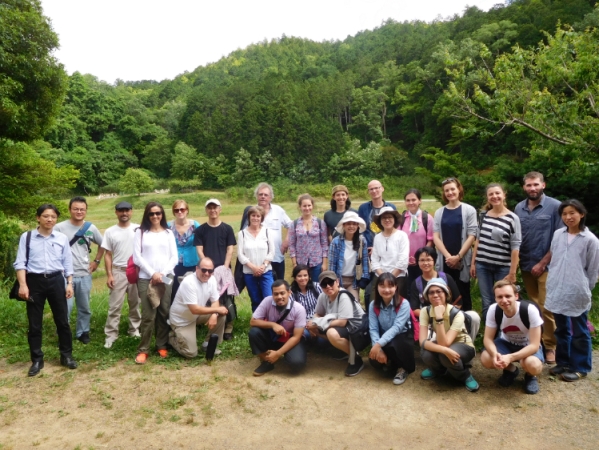
Countryside excursion at the 2016 Graduate Workshop
Introduction
The collaboration between the group of rural sociology at Wageningen University and the group of agri-food political economy at Kyoto University officially started in July 2014, when we signed a letter of intent to foster international cooperation in education and research. This was first materialised when Kyoto University invited Dirk Roep in February 2015, and Guido Ruivenkamp and Joost Jongerden in March 2015 (http://agst.jgp.kyoto-u.ac.jp/topics/report/376). Their visit to Kyoto kickstarted a series of intensive lectures given by invited RSO members as well as a series of joint workshops between the two groups either in Kyoto or in Wageningen, as explained below. Continue reading
75th Anniversary: 7) Rural Sociology and Resistance of the Third Kind

Women farmers in Rojava (2015)
Introduction
When it comes to the agrarian question, academia has been deeply divided. At the risk of caricature, there is one school of thought that considers the process of capitalist development a force that moves history progressively forward and another that takes the creative agency of people as the primary force of development. Historically, the Rural Sociology Group belongs to the latter school. The work on farming styles, meaningful diversity, new peasantries and foodscapes gave expression to the idea of this creative agency (Hofstee 1982, Ploeg 2008, Wiskerke 2009). In this blog, I will explore the importance of the agency concept through Van der Ploeg’s concept of resistance. Continue reading
75th Anniversary: 6) The Cartophoot: Hofstee’s geographic mapping of difference
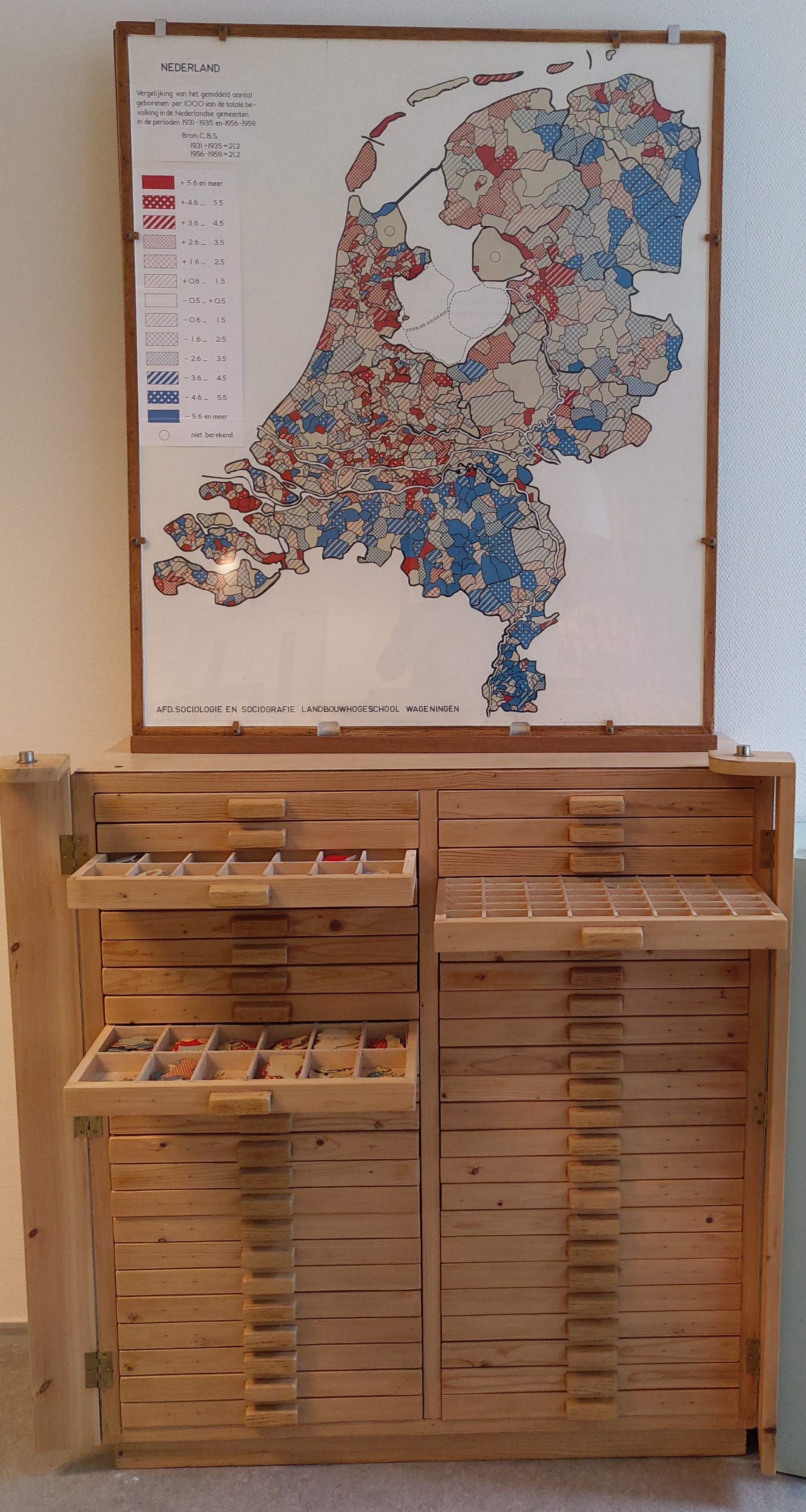
Picture 1. The cartophoot
In 1949, three years after his appointment as professor in social and economic geography, the ‘trojan horse’ through which rural sociology entered Wageningen, Evert Willem (E.W.) Hofstee became the chair of a commission to study the development of fertility in the Netherlands.[1] This Commission for Birth Research (Commissie voor het Geboorte-Onderzoek)[2] was part of the Institute for Social Research of the Dutch People (Instituut voor Sociaal Onderzoek van het Nederlandse Volk [ISONOVO]). Continue reading
 Rural Sociology Wageningen University