Internship Opportunity at Greendish

This is an internship for Dutch speaking students who can make a five month commitment.

Over Greendish

Greendish heeft sinds haar oprichting in 2011 professionals uit de food service industrie geholpen in hun transitie naar gezonde en duurzame menu’s en werkwijzen die goed zijn voor de mens, het bedrijf en onze aarde.


In de food service industrie zien we veel onwetendheid en misverstanden over duurzaamheid en gezond eten; het zou bijvoorbeeld duur, moeilijk en niet lekker zijn. Door de dreiging van klimaatverandering en de stijgende behoefte aan voedsel, kunnen we deze misverstanden niet langer negeren. Als verantwoordelijke professionals, moeten we het heft in eigen handen nemen om de transitie te starten die nodig is voor de toekomst van de sector en van onze planeet. Wij geloven dat juist deze sector-pioniers uiteindelijk boven de rest uit zullen stijgen en over de hele linie het meest succesvol zullen zijn.


Met ons ambitieuze team van voedingsdeskundigen, chefs en gedragswetenschappers werken wij er hard aan te zorgen dat gezond- en duurzaam eten makkelijk, lekker en overal toegankelijk is voor iedereen.


Het project ‘Restaurants van Morgen’

“Gezond voor de consument, duurzaam voor de samenleving en kostenbesparend voor de horecaondernemer! Dat is wat Greendish en Natuur & Milieu met Restaurants van Morgen willen bereiken.”


Over het project

Restaurants van Morgen (afgekort RvM) is een project waarin Greendish samenwerkt met de organisatie Natuur & Milieu. Binnen het project begeleiden we 23 restaurants in de Regio Foodvalley (gemeenten Ede, Nijkerk, Rhenen, Veenendaal en Wageningen) naar een duurzamere toekomst. Het project bestaat uit drie fases: de nulmeting (T0), de begeleiding, en de T1 meting. De nulmeting is afgelopen jaar uitgevoerd. Hierin gingen we bij alle restaurants langs en hielden we een interview met de chefs/eigenaren. Verder onderzochten we onderwerpen zoals de samenstelling van de menukaart, waste en inkoop. Ook de top-5 populairste hoofdgerechten werd volledig doorgemeten. De restaurants zijn inmiddels op de hoogte gebracht van de resultaten. Momenteel zijn wij bezig met de tweede fase van het onderzoek, de begeleiding. Voor deze begeleiding zijn er twee trajecten opgezet, light begeleiding (LB) en intensieve begeleiding (IB). De intensieve begeleiding wordt gegeven aan acht daarvoor uitgekozen restaurants. Voor hen wordt samen met ons een plan op maat gemaakt. De rest van de restaurants krijg light begeleiding, waarmee we op een wat algemener niveau informatie met de restaurants zullen delen over verschillende onderwerpen rondom duurzaamheid. Na afronding van de begeleidingsfase zal er een tweede meting worden uitgevoerd, de T1 meting. Dit is waar jij potentieel je steentje zult gaan bijdragen!


Wat zul je zoal gaan doen?

De meetmethoden voor de T1 metingen hebben we inmiddels ontwikkeld. Jouw bijdrage aan de T1 meting zal onder andere bestaan uit:

  • Het inplannen van afspraken
  • Langsgaan op locaties met Greendish medewerkers
  • Interviews houden of aantekeningen nemen (kwalitatief onderzoek)
  • Wegingen doen van gerechten in de restaurants, vergelijkbaar aan de T0 meting (kwantitatief onderzoek)
  • Het effect laten zien van de interventie op hoeveelheden, bereiding, inkoopbeleid en meer
  • Analyse van de resultaten en het verschil tussen T0 en T1
  • De resultaten visualiseren aan de hand van een presentatie
  • Adviezen samenstellen voor restaurants


Overige werkzaamheden

Werken bij Greendish is erg divers, en in overleg kunnen er dus zomaar andere leuke taken bijkomen waarmee jij een inkijk krijgt in de dagelijkse werkzaamheden van onze stichting!


Wat verwachten wij van jou?

Greendish bestaat uit een klein team, waar we onderling leuk met elkaar omgaan. Zo lunchen we gezamenlijk en organiseren we maandelijks een borrel of andere activiteit. We zijn open en informeel en bieden veel ruimte voor eigen inbreng. Zowel het werken in teamverband als zelfstandig kunnen werken is belangrijk. Een stage bij Greendish is uitdagend maar leerzaam en op het grensgebied tussen Wetenschap en praktijk.


Wil je impact maken en bijdrage aan verandering in de samenleving waarbij miljoenen eetmomenten van consumenten onderweg op stations, luchthavens, in restaurants en tijdens de lunch op kantoor gezonder en duurzamer worden, dan bij je bij ons aan het juiste adres!
Meld je aan via https://greendish.org/nl/internship-position-nl/


Contactpersoon: rose.korte@greendish.org
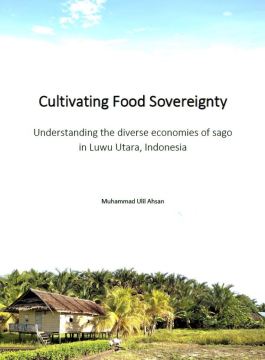
 

Cultivating Food Sovereignty: Understanding the diverse economies of sago in Luwu Utara, Indonesia

title pg ulilMuhammad Ulil Ahsan, MSc Student Development and Rural Innovation, Wageningen University
 

Below the abstract of the MSc-thesis “Cultivating Food Sovereignty: Understanding the diverse economies of sago in Luwu Utara, Indonesia“.


The full thesis can be downloaded from the WUR-Library by clicking on the hyperlink


Indonesia has taken up food sovereignty in the constitutional document Food Act number 18/2018 that animates the food policy and program implementation in Indonesia. However, it remains largely rhetorical since the food program implementation has undermined the local food system in many places. This study explores the implementation of food sovereignty in Luwu Utara that is predicated with productionist paradigm, where self-sufficiency is the main goal and transnational corporation are involved in the process of enactment. The implementation put pressure on the local food system in Luwu Utara, particularly in relation to sago. The sago food system encompasses complex issues ranging from the relationship between people in the system to their relation with sago. The diverse economy framework is applied to unravel the diverse forms of economies that lie within the sago food system, and to legitimate the value of food sovereignty existing in Luwu Utara. Diverse economies of sago in Luwu Utara are dominated by non-capitalist practices that can challenge the dominant discourse of capitalist economy as food sovereignty against for. The different forms of food sovereignty at different scales necessitates reflection on food sovereignty implementation. Cultivating food sovereignty requires reflexivity, creating the basis of food sovereignty and building recognition are the strategies to develop a multi-scalar sovereignty. Administering multi-scalar sovereignty is a challenge that must be overcome in the development of a democratic food system in Indonesia.

Keywords: Food sovereignty, diverse economies, sago, Luwu Utara

#VEGAN: A critical analysis of the discourses around food, identity and responsibility from vegan Instagram influencers – MSc Thesis by Adele Wilson

title pg

Adele Wilson, MSc Student Health & Society, Wageningen University 

Below the abstract of the MSc-thesis “#VEGAN: A critical analysis of the discourses around food, identity and responsibility from vegan Instagram influencers“.


The full thesis can be downloaded from the WUR-Library by clicking on the hyperlink

In the UK we need to reduce the amount of meat we produce and consume in order to prevent climate disaster and poor public health. Vegan Instagram influences have been key figures in providing society with knowledge on why and how people should live meat free. The discourses provided to us by these ‘influencers’ about, food, health, ethics and environmental concerns are extremely powerful as they shape our everyday food thoughts and practices. However, there has been relatively little academic research into the knowledge produced by these online food influencers. Therefore, this study aimed to identify some of the contemporary discourses around veganism on Instragram. Particular attention was paid to how these discourses framed the responsibility for animal welfare, human health, and environmental concerns. The research analysed the profiled of 6 vegan instagram influencers; @chakabars, @earthlinged, @deliciouslyella, @rachelama, @kingcook and @crueltyfreeclairey. The data was analysed using a Foucauldian style discourse analysis. Two main themes were identified. The first was ‘hard veganism’ that focused on the moral justifications for veganism. It was found discourse focused on the justifications for veganism was critical of the livestock industry and unevenly burdened individuals with the responsibility for preventing climate disaster, protecting animals and preserving human health through by consuming a vegan diet (e.g. Christopher, Bartkowski, Haverda, 2018). Therefore, veganism was associated with practicing one’s moral beliefs and acting in a utilitarian way to societal constraints we live in. The second theme was ‘soft veganism’ that referred to images and talk on food. ‘Soft veganism’ framed the food industry positively for providing people with many vegan food options and making veganism ‘easy’. Vegan food was also used to construct vegan subgroups that were aimed at challenging stereotypical views on veganism as an elite white practice (Harper, 2012) and breaking down barriers that prevented some people from engaging with a vegan lifestyle. Therefore, this research found that Instagram is a space where multiple vegan identities are constructed with varying levels of political involvement and philosophical engagement. This research concludes that Instagram may be a useful tool for influencing people to reduce their meat consumption, as it allows people to select knowledge on how to practice veganism that best suits their identity, beliefs and lifestyle.

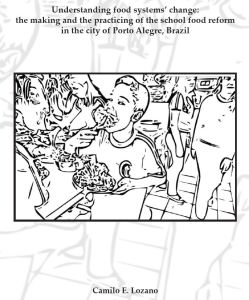
Understanding food systems’ change: the making and the practicing of the school food reform in the city of Porto Alegre, Brazil – PhD-thesis Camilo Lozano

Wednesday, March 13 2019, at 1.30 pm CET Camilo Lozano will defend his PhD-thesis ‘Understanding food systems’ change: the making and the practicing of the school food reform in the city of Porto Alegre, Brazil’.

The ceremony will be live streamed by Weblectures.wur.nl but can be viewed later as well. The full thesis will be available online after the defence ceremony.


Imaginary futures of food provisioning practices in peri-urban areas – Martin Ruivenkamp

Since a couple of months, I’m employed as postdoc researcher by the Rural Sociology Group and assigned to the project Urbanising in Place, a selected project of the Sustainable Urbanisation Global Initiative (SUGI) that is funded by the European Commission under the Horizon 2020 ERA-NET Cofund scheme. Let me introduce myself to you, but I’m interested in getting to know you too! So, please do not hesitate to contact me at martin.ruivenkamp@wur.nl.

I do feel ‘at home’ at the Rural Sociology group. Surely, this might be related to the fact that I heard many good stories about Rural Sociology from people close to me… And, the work carried out by members of Rural Sociology intrigue me and motivate me to contribute to the three themes RSO focuses on: 1) the development of ecological and socially sustainable agrarian and food policies by studying the role of agricultural and rural activities, products and services in metropolitan and peri-urban regions; 2) the identification and reconfiguration of modes of connectivity between the production and consumption of food, by taking a multidimensional approach to food and reconnecting food to the social, cultural and environmental context of food provisioning practices; 3) the generation of images and narratives of ‘other’ values that build on a reappropriation of space through practices that reflect both rural-urban differences and symbiosis and overcome commoditisation of rurality. These themes link up nicely, however maybe creatively, to my previous meanderings through the landscape of social science. Looking back, the pathway that emerged through my wanderings in the fields of social psychology (MSc in 2004), sociology (Ba in 2005), and Science and Technology Studies (PhD in 2011; postdoc research since 2013) foregrounds my interests in the interwovenness of the real and imaginary, the practised and the envisioned and I look forward to apply these concepts as a lens for exploring food provisioning practices in peri-urban areas. I will further elaborate these issues within the contexts of ‘Urbanising in Place’ project. This project investigates how small-scale food provisioning practices on the metropolitan fringe, threatened by ever-expanding urbanisation dynamics, may be reimagined and reconfigured in such ways that rather than being pushed out of metropolitan areas they can be enabled to claim an active role in managing the food-water-energy nexus in the (near) future. Within the confinements of the overall research programme I am not to take the future as an extension of a dominant now, but rather to explore the envisioning of various potentialities of multitudinous futures and investigate how to shift perspective from the obvious, mainstream food system, to the multitude of food provisioning practices, developing and emerging from ‘below’ and how to appraise their roles in social and ecological sustainable futures.

Aside from the above, my roots also explain my contentment to have become part Rural Sociology. As a kid, I always enjoyed visiting my grandparents in Italy. Being originally peasants from Calabria (a region in the ‘poor’ southern parts of Italy) who for economic reasons had migrated to the ‘rich’ north of Italy, working the land was part of their being. Therefore, next to a small two-room apartment in the centre of smoggy Milan, where my grandfather had started a restaurant serving traditional Calabrian food, they had a cottage in the hills of Alessandria (one and a half hour drive from Milan). Here they had an orchard with various fruit trees (apricots, peaches, prunes, cherries), a vineyard and they grew their own vegetables. I always loved to climb the trees and pick and eat the fruit while sitting in the trees and have lunch with the whole family underneath the umbrella pine close to the house. My grandma processed the tomatoes and basil from the garden into pasta sauce, which, with the fresh homemade pasta she made, needed just a little parmesan cheese to make it taste beautiful. The wine came directly from the neighbours and was made partly with the grapes my grandfather grew. Also, years later, when my grandparents had to sell the cottage and were stuck in their two-room apartment, my grandmother kept huge basil plants on the balcony, which, with an open window, smelled up the whole living room. My grandfather rented a small plot next to a power station a couple of blocks from their house, to be able to continue to work the field and grow his tomatoes. In Milan, due to his connections in the catering industry, he sometimes was able to obtain from friends ‘Sardella’, a typical fish conserve from Calabria – also known as ‘Poor man’s caviar’.

These memories, the smells and tastes are to my opinion important points of focus manifested in studies of regional food dynamics, diverse modes of food provisioning (in peri-urban and urban areas) and interlinked food networks (as in this case emerging from migration flows). I do believe in the relevancy of giving affective credence to food knowledge, food appreciation and consciousness in the identification and generation of socially just and ecologically sustainable food futures. And, I hope, without sounding too histrionic, in the coming three years to be able to combine ‘heart’ and ‘mind’ and form new personal pathways that contribute – e.g. through action research approaches – to the identification of diversity, making visible the potentialities of unconventional food practices, broadening the scientific, policy-oriented and public visions of food provisioning activities and advancing multiple food futures and policy decisions. In elaborating these ‘small-scale’ ambitions I guess I will very much appreciate an automatic wifi connection.