Second Sustainable Food Planning Conference – Reminder

As I announced in a blog on the 31st of March, the Urban Performance Group of the University of Brighton (UK) will host the second European Sustainable Food Planning Conference on 29 and 30 October 2010. Planning for sustainable food production and consumption is an increasingly important issue for planners, policymakers, designers, farmers, suppliers, activists, business and scientists alike. In the wider contexts of global climate change, a world population of 9 billion and growing, competing food production systems and diet-related public health concerns, are there new paradigms for urban and rural planning capable of supporting sustainable and equitable food systems? This conference will promote cross disciplinary discussions between active researchers and practitioners in response to this question, and related issues articulated during the first European Sustainable Food Planning Conference held in 2009 in Almere.

Working at a range of scales and with a variety of practical and theoretical models, we will review and elaborate definitions of sustainable food systems, and begin to define ways of achieving them. To this end 4 different themes have been defined as entry-points into the discussion of ‘sustainable food planning’. These are:

  1. Urban agriculture;
  2. Integrating health, environment and society;
  3. Food in urban and regional planning and design;
  4. Urban food governance

For each theme we are seeking contributions. Abstracts should be no longer than 500 words, and e-mailed to Andre Viljoen (a.viljoen@brighton.ac.uk) no later than the 31st May 2010.

For more information, see the conference website.
Developing Czech Sitopia

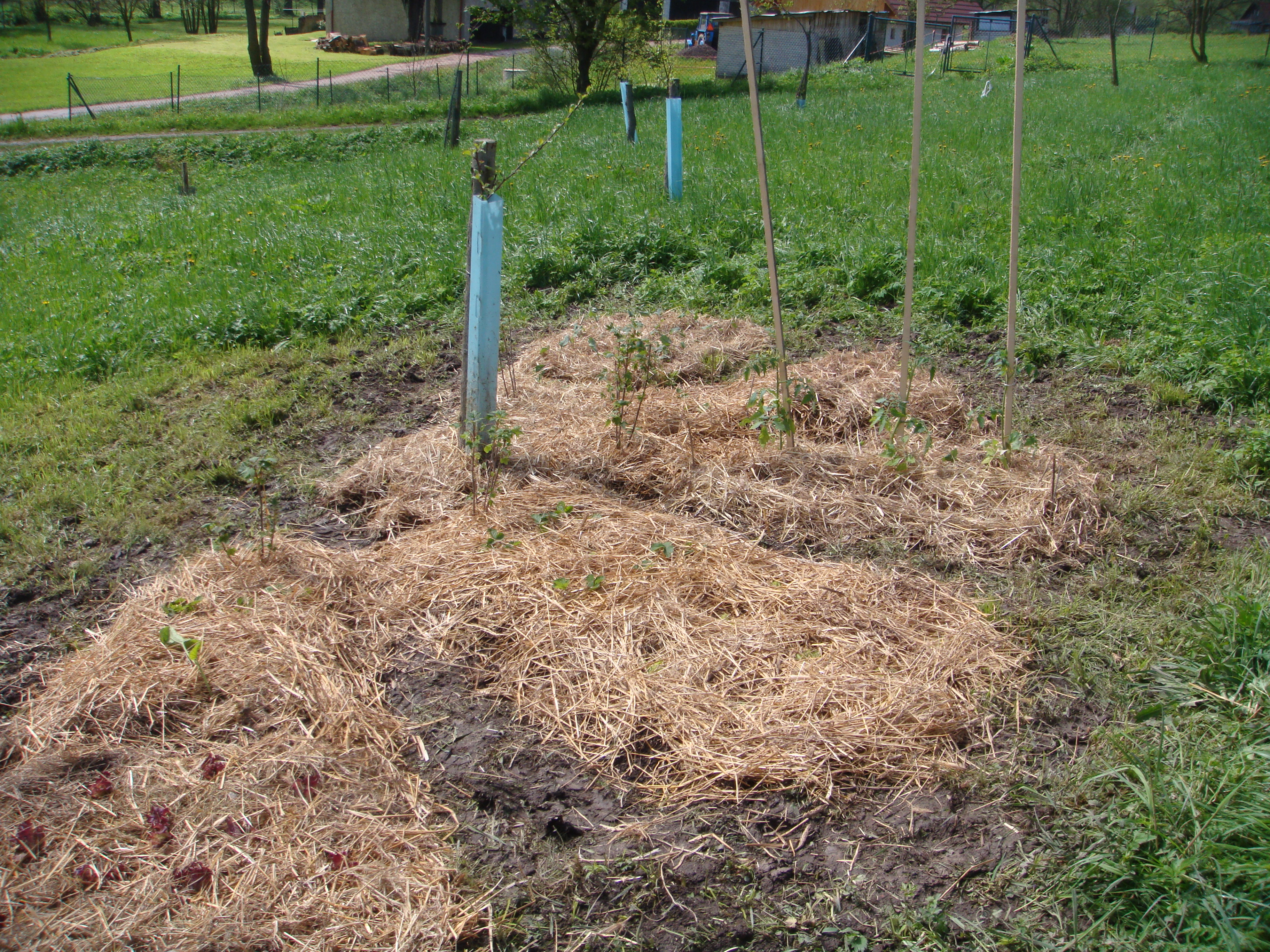
How to get good quality food from your own region? Where to buy fresh and organic food which is in season in the Czech region of Dvur Kralove and in cities such as Trutnov and Broumov? How to get a network going of (potential) producers and (potential) consumers? These were among the questions discussed during a seminar about quality food and permaculture which was held at MIZ in Zdoňov, near the Polish border around 3 hours northeast from Prague on the 14th of May.

During the seminar different aspects of permaculture were presented in both Czech and English to the 10 participants mainly from around Zdoňov. We discussed how to enhance biodiversity, how to build fertile soil, how to start ecological farming and how to set up a regional food network. The seminar concluded with a joint initiative of three presenters to get themselves and their aims known in the region so that other people with similar interest, both consumers and producers can respond.

In a way, this was a tiny start in making Sitopia, I realized today listening to the guest lecture of Carolyn Steel for the Bsc course ‘Agrarische en rurale ontwikkeling; sociologische perspectieven’. Sitopia, she explained is derived from the words “Sitos” and “topos” meaning “food” and “place”. Making place through food, through meals, through sharing, through caring about the origins of your daily meal and thus, searching for a kind of human connection to food which can hardly be expressed in the anonymous context of the supermarket. In this Czech region, there is not much infrastructure yet beyond the faceless produce from globally operating supermarket chains. But just like in many other countries, mentality is shifting and new networks are born each day.

Integrated-regional food paradigm

In the current second year Bsc course ‘Agrarische en rurale ontwikkeling; sociologische perspectieven’, students have to make assignments in groups connected to documentaries which subsequently provide input for discussion tutorials. During the first week we worked with the concept of ‘paradigm’ and compared current competing agro-food paradigms. The agro-industrial paradigm (see e.g. Ploeg 2010) and the integrated-regional paradigm (see e.g. Wiskerke 2010).

It led to interesting discussions on feeding the world and the future of our resources. Very remarkable was that the integrated-regional paradigm changed names in the student reports to the ‘traditional’, or ‘local & artisanal’ paradigm. When asked, this turned out to be no conscious choice. It revealed implicit images of the integrated-regional paradigm which influences judgements about the feasibility of this alternative. It also revealed that the practice and future potential of this paradigm is still partly unimaginable.

Earlier this year, other Msc students went to see the integrated-regional paradigm in practice in Hemmen, just at the other side of the river Rhine. Here, several entrepreneurs in organic agriculture and retail are integrating their businesses while keeping their independence and are regionalising their practices step by step. This may still sound abstract. A true explanation needs more than one blog. Here, for now an example of what ‘integrated’ could mean.

Organic arable farm Lingehof (aprox. 80 hec. and 14 mainly contract crops) includes in its rotation scheme space for the gardeners of the Stroom, who run an organic vegetable box scheme for approx. 200 households. Together they also make it possible for people to adopt a (high-stem) apple tree. The dairy farm Opneij and the Lingehof together function as a mixed farm, exchanging manure and straw, rotating grassland and fodder crops. Organic shop the Smidse sells vegetables from the Stroom, meat from Opneij and bread from wheat of the Lingehof. Last year they also started collaboration on another level through the ngo Stichting Hemmens Land (and see earlier blog). One of the activities of this ngo is to set up thematic excursion arrangements to offer groups (such as the Wageningen students) the possibility to visit all involved entrepreneurs around a coherent (educational) program such as closing the nutrient cycle. This can be seen as an integrated (farm)diversification strategy and will create a source of extra income.

Eat your landscape Part 1; tea

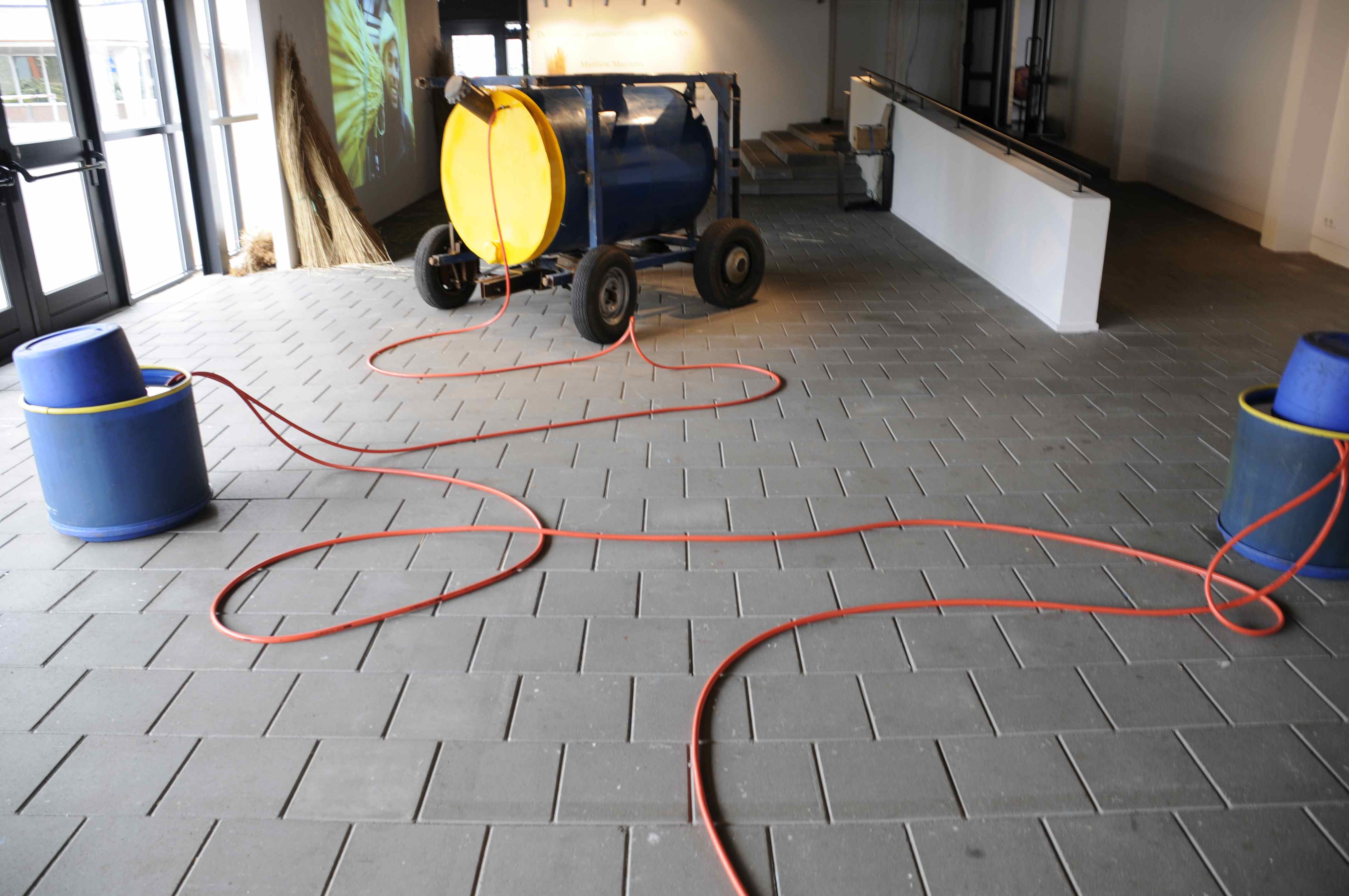
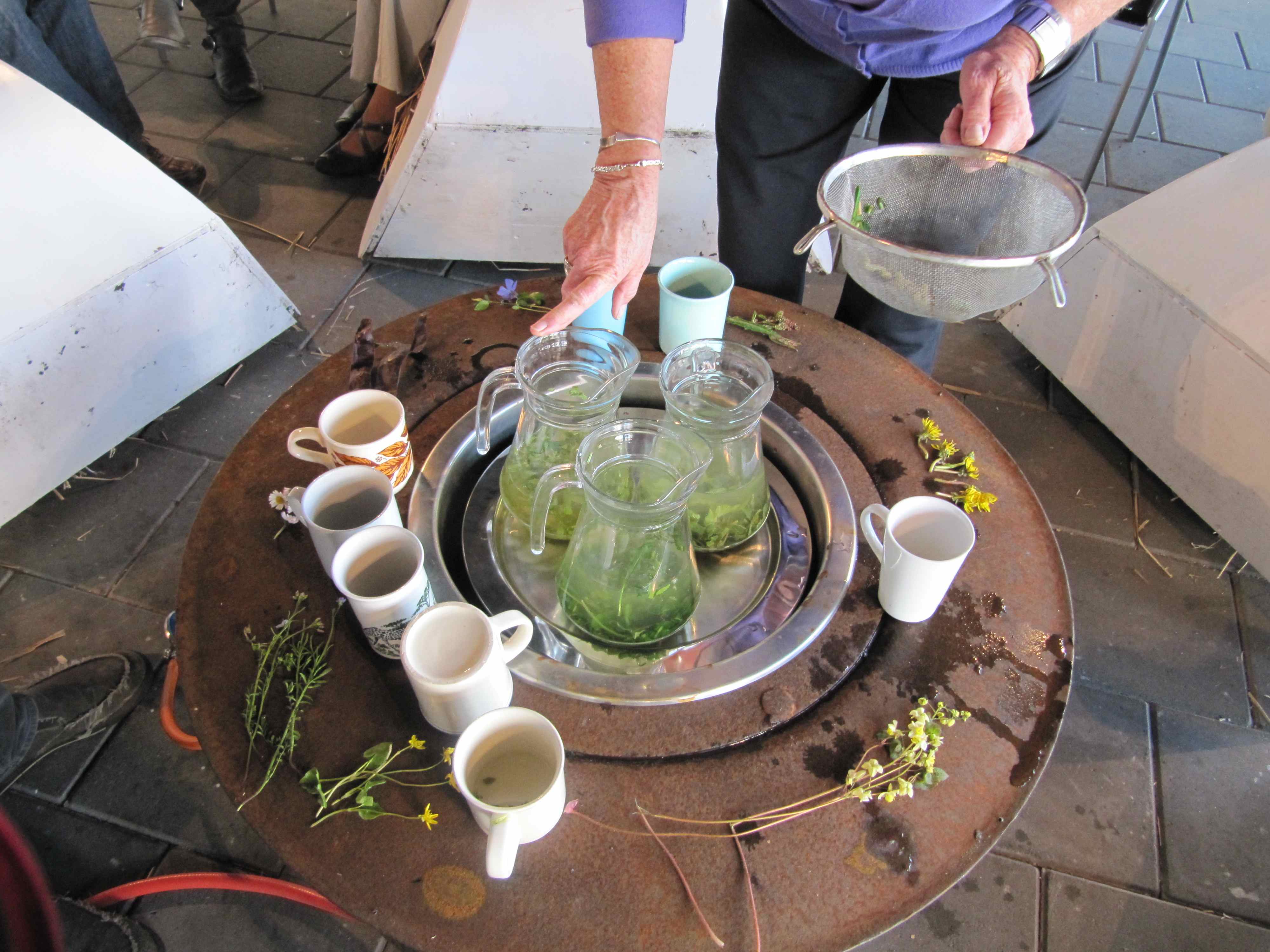
Two weeks ago I was present at a tea session in the tea house installation of artist Matthew Mazzotta whom I visited earlier in Smalle Ee. His installation is now exhibited in De Galerij in the city of Drachten, Friesland until the 20th of May. The methane production unit was ready to produce the gas to boil the water. However, the tea itself still had to be gathered. And the urban environment of Drachten was going to provide our tea according to Matthew. His project about local knowledge and social interaction challenged us, visitors of the gallery, to go into town together and search for edible plants.

Since the introduction of the plant Camillia Sinsensus from ‘the far east’ around the 17th Century, we say that we are going to ‘make a tea’ even if this means that we actually make an infusion of local herbs or weeds, such as camomile or nettles. We still refer to that as ‘a herbal tea’ such is ‘drinking tea’ integrated in our culture. And not only in our culture. Think of the British afternoon tea, Japanese tea ceremonies or tea from a Russian “samovar”. Also, the Inuit in northern Canada and several indigenous peoples in Kenya adopted (black) tea into their culture after its introduction. How important tea is for social gatherings you can read here.

We went into Drachten with books to determine that we would not collect toxic plants. Downtown Drachten turned out to be full of edible plants, once you know where to look and what to look for. We quickly developed a preference for unattended places.. And while searching interesting discussions emerged. How to weight the pollution aspect of heavy metal from car gas on road plants against the use of pesticides, herbicides and antibiotics in our ‘clean’ supermarket food? What about soil quality in between two pavement tiles? Why did we worry about the soil in which sorrel, dandelion or ivy could be found and not about the fake ‘soil’ in which tomatoes and lettuce is grown?

I preferred the infusion of ivy, rich and spicy although the subtle taste of elder was also special.

Stage/internship and Thesis/Afstuderen Voedselteams Tilburg

Interessante stage en/of afstudeeropdracht bij de Brabantse Milieufederatie in Tilburg (BMF), Noord-Brabant. De Brabantse Milieufederatie is een onafhankelijke belangenbehartiger voor natuur, landschap en milieu in de provincie Noord-Brabant. Ze zet zich in voor duurzame ontwikkelingen met speciale aandacht voor de kwaliteit van onze dagelijkse leefomgeving. Voedsel is daarin een belangrijk element. De BMF is met verschillende nieuwe voedselinitiatieven bezig en heeft al eerder op deze blog oproepen geplaatst voor stage en afstudeer mogelijkheden. De eerdere oproep rondom buurtmoestuinen is nog steeds beschikbaar. Kijk hier voor meer informatie.

Deze nieuwe oproep voor een stagiaire en/of afstudeerstudent gaat over voedselteams. In Amerika zien we de opkomst van CSA’s (Community Supported Agriculture) en allerlei andere vormen van Food Communities tussen producenten en consumenten. Ook in andere landen komen nieuwe intiatieven van de grond. In Belgie bestaan al meer dan 100 Voedselteam bijvoorbeeld. In Nederland komen dit soort initatieven echter maar mondjesmaat van de grond. Er zijn 10 CSA/Voedselteam achtige constructies actief, onder de Nederlandse verzamelnaam van ‘Pergola’. De BMF wil in Brabant minimaal 3 voedselteams actief gaan krijgen en wil daarnaast ook andere vormen van voedselnetwerken opzetten. Zie bijvoorbeeld de blog van Simone Plantinga over haar huidige afstudeerscriptie.

Opdracht in twee delen, separaat te doen of te combineren. Periode 5 maanden tot een 1 jaar.

Deel A: De BMF wil de bestaande contacten met groepjes consumenten en soms ook boeren/tuinders die geinteresseerd zijn verder met elkaar in contact brengen. Zij zoeken daarom een enthousiaste student die deze opstartende netwerken/teams gaat begeleiden en ondersteunen om te komen tot een operationeel Voedselteam. Er zijn contacten in Tilburg, Den Bosch en Breda.

Deel B: Opzet van een communicatietraject om het begrip Voedselteam en netwerk binnen Noord-Brabant verder uit te dragen zodat mogelijkerwijs meer steden dergelijke initiatieven zullen nemen.

Er is veel ruimte voor eigen inbreng. Men zoekt een enthousiast iemand die in staat is zelfstandig te werken, doorzettingsvermogen heeft en goed kan organiseren. ‘Community’ denken is essentieel. Afstudeeropdracht is open voor alle studenten met interesse en hoeft niet perse via RSO plaats te vinden.

Leg direct contact met John Vermeer van de BMF voor meer informatie en solliciatie: Email:John.vermeer@bmf.antenna.nl of 013-5356225