A day in researching sense of place in the National Park “Galicica” in Macedonia

By Bojan Rantasa, MSc-student International Master of Rural Devleopment (IMRD)

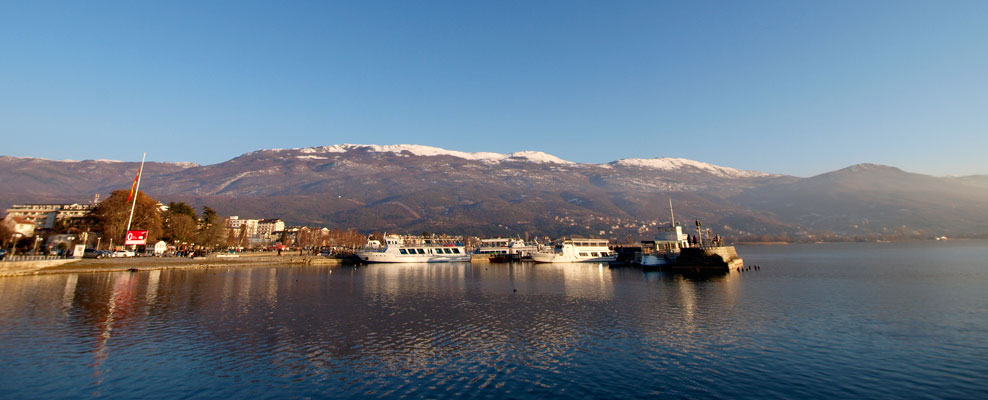
Earlier I introduced my thesis research regarding the ‘Sense of place in Galicica national park‘. My research is coming to an end, but I am still cautious to speak of results prematurely. So I will share how my research days look like. Embarked on the mission to do a field research in the National Park “Galicica” in Macedonia, I begun packing my backpack: 

  • Field audio recorder. I will do open interviews with people, and writing notes whilst doing interviews is out of the question. First, if I write, I will have to pause the conversation and that will take a lot of time, and the person might forget what he or she was talking about, but most important, I am too lazy to write.
  • Photo camera. I am researching sense of place, and having visual records of the places is a must. At least this is how I see it.
  • Video camera. Photography is beautiful and my favourite art, but sometimes it does not say enough. Image and sound is compelling to more senses than just image.
  • Handheld GPS. I should not get lost, but it will also come handy in marking those places that people see important, and making a map of what I’ve researched, as places reside in locations.
  • Replacement batteries. I do not think that I will bump into a MediaMarkt shop behind that mountain peak.
  • Walking stick. It is a mountain, dogs wondering around, thorny bushes, and my left knee is not really in a good shape. Besides, this one has a ¼” screw on the top, so I can use it as a monopod for the camera.
  • Some snacks. I will spend a full day out.
  • Sun tan cream. I hope that there will be some sun today.
  • Toilet paper. No need to stress this importance.

Well, if people are not scared from my looks, I figure that means that they are open for a conversation on their sense of place. So I’m off on the first bus to the next village on my list. I arrive there around mid day. At this time only retired people are in the village. I walk around and I meet an old granny. But she refuses to speak with the recorder on. She says that afterwards someone might come to look for her. I, on the other hand, refuse to talk to her without the recorder. It is not only the issue of not noting all the detail of the conversation, but it is the issue that at a later stage of my research I will see some interesting correlation, something I might use to build a theory on. Now if I have only my written notes, I will not have this new thing noted. But if I have an audio recording of the conversation, I can check if there is really a pattern or something to relate to my new discovery in the interviews I’ve did in the past. Additionally, people that refuse to talk with the recorder on are people that have something to hide. So those people will tell me less or even lies, thus I can consider them as a misleading factor, or simply a waste of time. So I go my way. The granny did give me a boiled egg, as it was Eastern just yesterday, it will come in handy for my lunch later.
Continue reading

Request for a master student in the ‘Reestdal’ (Drenthe)- new call

The PeerGrouP is a location-art group that specializes in site-specific theatre and visual arts in the northern provinces of the Netherlands. The PeerGrouP consists of a lively mix of theatre makers and artists who are inspired by the landscape, the location and the local inhabitants. The quality of food, ecology, practical knowledge of the landscape, community spirit and the supply of energy are recurring themes within the PeerGrouP’s projects.

The PeerGroup is looking for artists and researchers willing to participate in their P.A.I.R. (Portable Artist in Residence) project. The P.A.I.R.-project promotes artistic social commitment while focusing attention on man and his surroundings. This year the P.A.I.R. theme is Landscape Population: the landscape and its meanings in relation to the inhabitants and other users will be looked at on different levels. The P.A.I.R. will be visiting the Wolden in the ‘Reestdal’, near the village De Wijk, in the north of the Netherlands (Drenthe) from the second half of September till the end of October to meet local inhabitants and to investigate their surroundings. On 13th of September also an art-route initiated by inhabitants will be opened in this area.

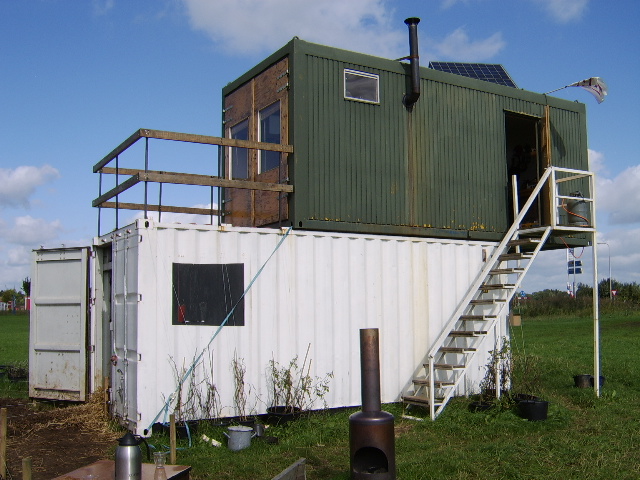
The Rural Sociology Group and the Peer Group are looking for a master student interested in landscape, place, values and population, who is enthusiastic to do his/her internship or thesis in this site-specific project, starting preferably around July-September. The student-researcher will actually stay in the P.A.I.R. (see photo) in September in the ‘Reestdal’ and participate with inhabitants. The P.A.I.R. will then partly be a ‘Reestdal-library’ and partly accomodation for the student-researcher. Preliminary research questions are:
– What is ‘sense of place’ for the local population in the Wolden?
– Which meanings to people give to the landscape? What do people appreciate? What are important cultural markers in the landscape?
– Do inhabitants experience local identities? Which stories can be told related to the landscape?
– How are meanings, identities and sense of place linked to underlying values of people?
– How can meanings identities and sense of place be translated to recommendations for practice and policy? (people’s participation, community cohesion, networks)
Methods that can be used are e.g. social (deep) mapping, visualization methods, appreciative inquiry, integral theory. The student researcher will carry out ‘on-site’ participatory research on the sense of place and values of the local population in this area. The research will be supervised by the RSO group (Ina Horlings) and the Peer Group (Henry Alles). If you are interested, please send a mail as soon as possible to Ina Horlings (lummina.horlings@wur.nl).

Afstudeerproject Kloosterburen: student(en) gevraagd

Stichting SintJan is een bijzonder particulier initiatief uit Kloosterburen, gemeente De Marne, in de provincie Groningen. Het initiatief SintJan Kloosterburen is voortgekomen uit het traject ‘Korensantoverleg’ (1997-2000) en het ontwikkelen van de dorpsvisie Kloosterburen 2003.
In dit traject zijn burgers met kennis, inzicht en een grote maatschappelijke betrokkenheid bezig hun eigen leefomgeving vorm te geven. Wat SintJan vernieuwend maakt, is de integrale benadering die aan het plan ten grondslag ligt: de initiatiefnemers willen wonen, werken, zorg en cultuur zodanig in Kloosterburen borgen dat de leefbaarheid en vitaliteit van het dorp versterkt wordt.
Dergelijke vitale gemeenschappen en burgerinitiatieven krijgen steeds meer een cruciale rol te vervullen, juist ook in regio’s die te maken hebben met bevolkingsdaling (Breman, 2011). Waar de gemeente De Marne op dit moment nog ongeveer 11.000 inwoners kent, wijzen de prognoses uit dat dit aantal tussen nu en 2040 zal dalen naar ongeveer 8.000 (Gemeente De Marne, 2011a). Daarmee behoort de gemeente tot één van de sterkst krimpende gebieden in Noord Nederland. Behalve een krimpend aantal inwoners leidt dit ook tot een veranderende samenstelling van de bevolking (ontgroening en vergrijzing).
Hoewel het bewustzijn en de erkenning van de meerwaarde van dit soort burgerinitiatieven groeiende is, ook in de gemeente De Marne en de provincie Groningen (zie o.a. de visie op burgerparticipatie, Gemeente De Marne, 2011b) blijken er in de praktijk nog veel valkuilen en obstakels die de doorontwikkeling van burgerinitiatieven in de weg staan.
Wij zijn op zoek naar een student of een groep studenten die aan de slag gaat met ‘het verhaal van Kloosterburen’ in termen van ‘storytelling’ als aanpak. Vragen die daarbij aan de orde komen zijn:
‘Wat is de achtergrond / ontstaansgeschiedenis van dit initiatief?’, Hoe is het de afgelopen jaren verlopen? Wie heeft de kar getrokken op welk moment? (gedeeld leiderschap? , vitale coalities? Etc.), Wat zijn belangrijke mijlpalen of keerpunten. Wat is de spin-off van het initiatief (Wat is tot stand gekomen / bereikt? ) en hoe kijken diverse direct of indirect betrokken hier gedurende de tijd (op wellicht andere wijze) tegen aan?

Continue reading

Sense of place in National Park Galicica – using new media in MSc-thesis research

By Bojan Rantasa, MSc-student International Master of Rural Development

Last Friday, 23 March 2012, I presented my MSc-thesis research proposal for fellow students and researchers of the Rural Sociology Group. My thesis research is titled “The Sense of Place of National Park Galicica” is part of my Msc-study International Master Rural Development (www.imrd.ugent.be). Joost Jongerden of the Rural Sociology Group is my sepervisor. My thesis presentation can be viewed at www.galicica.rantasa.net, a website on my thesis research where I will post research proceedings as well.

In my research I will use new media as tools for communication with the public but also as research method. I developed a website at the proposal stage of the research (www.galicica.rantasa.net). It enables dedicated communication with stakeholders and public, by offering updates on the research and a contact form. The web page also hosts the questionnaire on the sense of place of “Galicica”, thus becoming an important and integrated tool to the research. The information on the research currently presented on the web page is limited. This is not to lead the visitors of the web page, thus creating biased answers in the questionnaire.

To spread the questionnaire, I will use Facebook and targeted e-mail messages that are disseminated by the participants, causing a domino effect. This approach resulted in more than 50 completed questionnaires in the first week.

Continue reading

Four more DERREG films: 9 films in total

Earlier I reported (see post) on the five short films made of the DERREG case study areas. Next to  films of Comarca de Verin (Spain), Alytus (Lithuania), Westerkwartier (Netherlands), Roscommon (Ireland) and Regierungsbezirk Dresden (Germany), four more have been uploaded at the You Tube DERREG Films Channel:  a second one on Regieringsbezirk Dresden, one on Saarland (Germany), the South Moravian region (Czech Republic) and one on Oevre Norrland (Sweden).