Open letter on the EU’s ‘Farmers for the Future’ Report and the Farm to Fork Strategy

Open letter of European scholars to (in English, French and Spanish):

  • Frans Timmermans, Executive Vice-President of the European Commission
  • Janusz Wojciechowski, European Commissioner for Agriculture,
  • Norbert Lins, President of COMAGRI of the European Parliament.

Re: ‘Farmers for the Future’

Wageningen, 10th of March 2021

Dear Sirs,

In 2020 the European Commission released ‘Farmers for the Future’ (EUR 30464 EN), a Science for Policy Report, prepared by the Joint Research Centre (JRC) of the European Commission. This policy report is intended to contribute to the further elucidation of the EU’s Farm to Fork Strategy which is a key element of the European Green Deal. It has, at its core, a description of 12 profiles that are attempt to categorize the likely diversity and range of professional farming styles in European agriculture in 2040. The report asks, and tries to respond to, the following question: “ Who will be the key players of the EU next generation agriculture, the farmers of the future?” Continue reading

75th Anniversary: 22) Vormende krachten, veranderende verhoudingen: reflecties op de studie van een veranderend platteland

“Noem je dissertatie nooit deel 1” schreef de Wageningse professor agrarische geschiedenis Pim Kooij (Kooij 1991: 9) in zijn inleiding tot het boek “Het Oldambt, deel 2: nieuwe visies op geschiedenis en actuele problemen”. Achteraf bezien was het wellicht niet eens zo’n heel slechte keuze van E.W. Hofstee om zijn proefschrift in 1937 “Het Oldambt: Vormende Krachten deel 1’ te noemen (Hofstee 1937). Zelf kwam de grand old man van de rurale sociologie er niet meer aan toe hier een deel 2 aan toe te voegen, oorspronkelijk beoogd als een integrerende en concluderende afsluiting van het voorafgaande deel. Maar zijn toevoeging ‘deel 1’ heeft anderen uiteindelijk de uitdaging doen aangaan om met een vervolg te komen. Al was het meer dan 50 jaar later, en niet zo zeer concluderend, maar reflecterend. Continue reading

75th Anniversary: 20) Boerengroep

Boerenprotest tegen melkprijs- ongedateerd, archief Boerengroep

Het is al weer 50 jaar geleden dat de Boerengroep[1] werd opgericht in een roerige tijd van grootschalige boerenprotesten. Een Europese demonstratie van boeren in Brussel op 23 maart 1971 liep uit op een confrontatie met de politie. Er gingen tientallen auto’s in vlammen opgingen en één boer vond de dood (klik op deze link voor een nieuwsverslag over deze betoging uit 1971)[2]. De demonstratie maakte duidelijk dat er onder boeren en boerinnen grote ontevredenheid was over het gevoerde Europese landbouwbeleid. Continue reading

75th Anniversary: 16) Meaningful Diversity: Origins of the Farming Style Concept

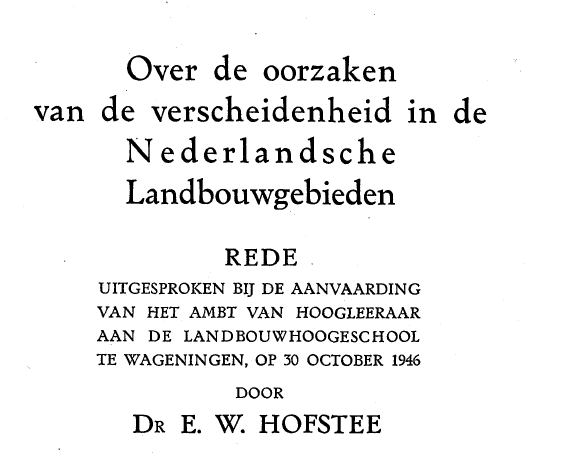
Part of the front cover of Hofstee’s inaugural lecture “On the causes of diversity in agricultural areas in the Netherlands” (1946)

E.W. Hofstee’s interest in the concrete, the lived, and the particular marked his inclination towards an “inductive” research methodology. He combined in-depth descriptions of social groups with a comparative approach (Hofstee 1938: 7-8). This grounded theoretical approach yielded the concept of farming styles in agricultural production. A farming style can be defined as shared normative and strategic ideas about how farming should be done (see also Blog 10). Hofstee’s concept of farming  style implied an important analytical inversion: one should not try to understand the practice of farming from the structural conditions to which the farmers responds but rather move to the center of our analysis the agency of farmers as creative actors. Hofstee thought that rural sociology should emancipate itself from structuralist and functionalist “adjustment sociology,” as the understanding of rural life in terms of an adaptation to “order” was not only narrow and incomplete but also wrong: it erased the agency of people in the creation of the world they inhabit (see also Blog 14). Continue reading

75th Anniversary: 15) Marquetalia: Tegen de stroom in, maar met de beweging mee


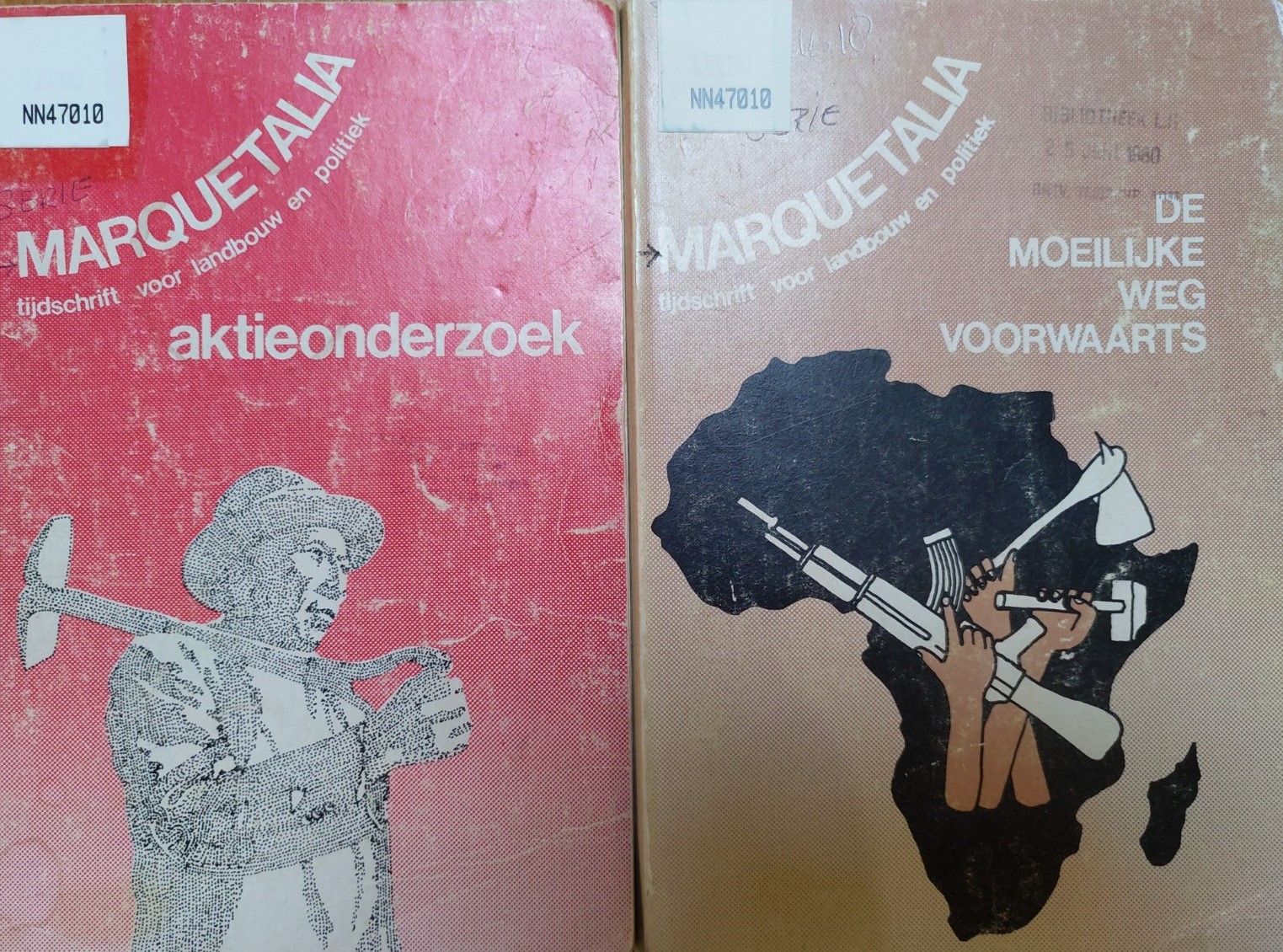
In 1979 verscheen het eerste nummer van Marquetalia, een tijdschrift over landbouw en politiek. Tot de oprichters van het tijdschrift behoorden Jan Douwe van der Ploeg, de latere hoogleraar en hoofd van de vakgroep Rurale Sociologie RSO, maar ook anderen die de rurale sociologie in de jaren tachtig en negentig weer op de kaart zetten, zoals de agrarische socioloog en voormalig RSO collega Jaap Frouws, die later een spraakmakende politiek-sociologische studie over mest en macht schreef (waarover later meer in een blog), en Jan Schakel, de latere onderwijscoördinator van RSO. Na zes nummers hield het tijdschrift op te bestaan. Het redaktiekollektief sprankelde nog van nieuwe ideeën, maar men woonde en werkte te ver van elkaar – verspreidt over drie continenten – en nieuwe carrières boden nieuwe netwerken en kansen. Een deel van het kollektief ging de kern vormen van RSO. Continue reading