Vacancy PhD position: Learning from food systems transitions – enabling community resilience

Do you want to contribute to solving societal issues in the domain of food systems? Do you have a MSc degree in sociology, anthropology, development studies or related field with an interest in food systems? If yes, then we may be looking for you!

The Social Sciences Group (SSG) at Wageningen University is looking for a motivated PhD candidate to study relations between food system transitions and community resilience. The position is based in the Rural Sociology Group (RSO) and will be supervised by Professor Han Wiskerke and Dr Jessica Duncan with active supervision and collaboration with Dr Sietze Vellema from the Knowledge, Technology and Innovation Group (KTI), and Dr Marion Herens from Wageningen Centre for Development Innovation (WCDI).

Continue reading →

Migrant workers in Spain’s Agri-Food Industry and the Ceuta ‘March for Dignity’

Merissa Gavin, Master’s Student, International Development Studies at Wageningen University

Re-negotiating precarity: Migrant fruit pickers in southern Spain
For my ongoing thesis research, I am interested in how migrant workers in Spain’s agri-food industry navigate politically induced precarity. Precarity, within the scope of this research, refers to the instability of immigrants’ status in society as they embody the paradox of being essential for the economy yet ostracised from socio-political life and unprotected by the state. To deepen my understanding of this phenomenon, I have come to Huelva, Andalusia, in the south of Spain to meet the people harvesting the fruit supply of Europe, from oranges and lemons, to strawberries and blueberries. An industry kept afloat by the work of undocumented migrants, the seasonal fruit harvest attracts thousands of migrant workers to rural Andalusia every year, with parts of the region largely populated by migrants of African descent living in makeshift roadside settlements, las chabolas. My research focuses on the lived experience of these workers as they struggle for the conditions of a dignified life.

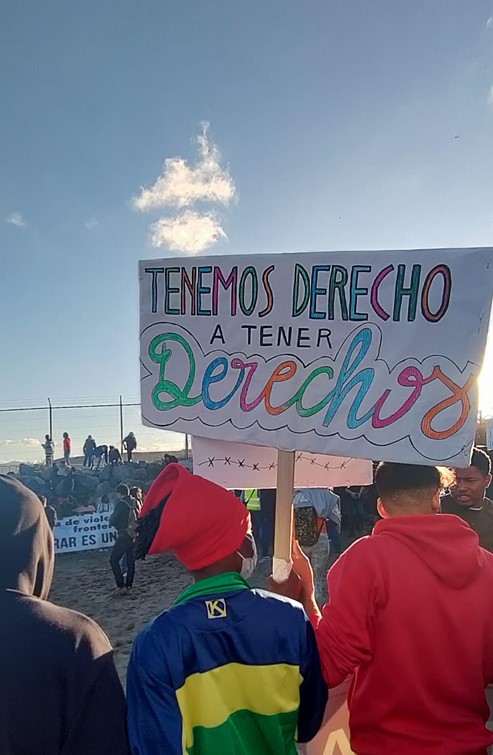
“Tenemos derecho a tener derechos” (We have the right to have rights). Photo taken by the author at the March for Dignity
Continue reading →

Caring for people and nature: A summary report on Green Care and place-based sustainability in Finland by Angela Moriggi et al.

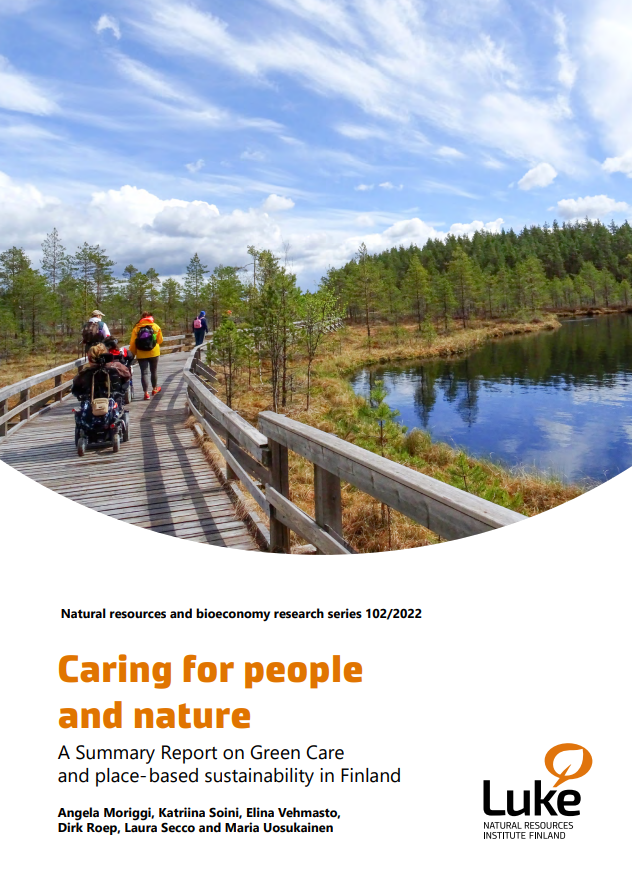
Caring for people and nature: A summary report on Green Care and place-based sustainability in Finland by Angela Moriggi, Katriina Soini, Elina Vehmasto, Dirk Roep, Laura Secco and Maria Uosukainen, published by the LUKE – Natural Resources Institute Finland.

Four highlights of the report

Continue reading →

Vacancy: research assistant gender norms in rural innovation in the Netherlands

The Rural Sociology Group and the Business Management and Organisation Group of Wageningen University are looking for a Research Assistant to work on the inventory of gender norms in rural innovation in the Netherlands. This research is part of the joint 3-year EU-funded project GRASSCEILING which started in January 1st, 2023.

The position is for 12 months at 0.4 FTE. The research assistant will be based at the  BMO group.

In this exciting research position:

Continue reading →

(Re)building historical commons: exploring forest commoning as a transformative practice in the Northwestern Iberian Peninsula. PhD-defence by Marta Nieto Romero

Friday December 16, 2022, during a ceremony from 13.30-15.00, Marta Nieto Romero will defend her PhD thesis ‘(Re)building historical commons. Exploring forest commoning as a transformative practice in the Northwestern Iberian Peninsula‘ in the auditorium of the Omnia building of Wageningen University and Research. See here for more information and a link to the live broadcast or recording of the ceremony. The PhD-thesis will be available at WUR Library after a successful defence. Below a Summary of the PhD-thesis.

Summary

A commons is a social organizational system where all interested parties participate in the collective use and care for common resources with an emphasis on open access, fair usage and long-term sustainability. While commons have received substantial scientific attention, we know little on how commons’ systems emerge and are sustained over time; in other words, the common-ing practices. The thesis investigated how forest are commoned and become the basis for building thriving communities both in rural and urban areas. It followed a case-study approach with two cases in Galicia (Spain), and one in North region of Portugal (North-western Iberian Peninsula). Methods included interviews, participant observation and a Participatory Action Research (PAR) project where people’s meaningful experiences in forests were collected and shared with the broader community to understand the role of affects in driving participation. The thesis offer understanding on why/how humans engage in caring for their places, and why is this relevant for sustainability transformations.