Thesis opportunity in Galicia (NW Spain) with the Post-Growth Innovation Lab at the University of Vigo

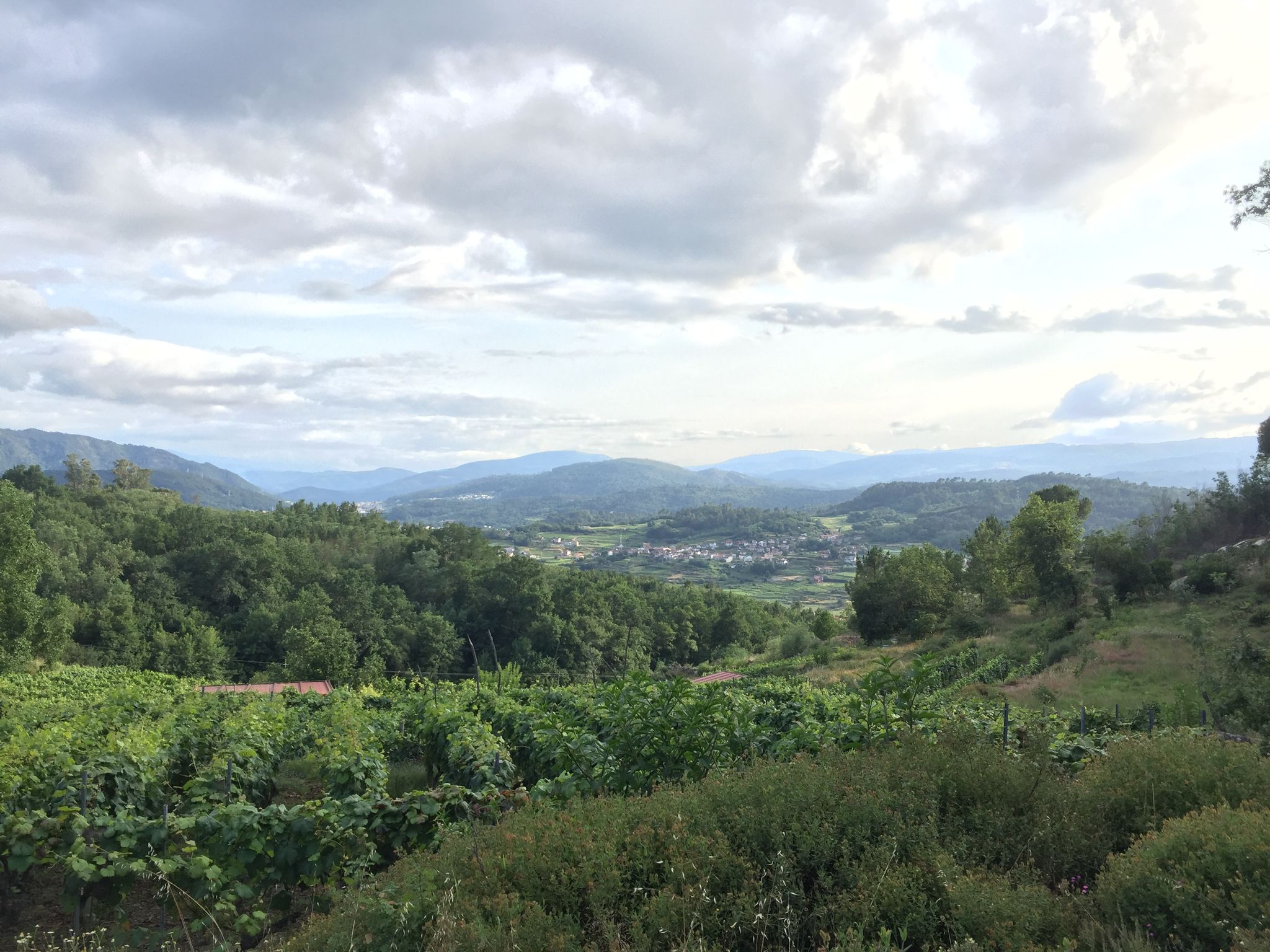
Commons, or commonly managed land, seem to be a relic of the past. The enclosure of the commons and concomitant rise of modern agriculture and capitalism have received much attention in academic literature. However, in Galicia, an autonomous region in the Northwest of Spain, a quarter of land is still managed as commons, typically referred to as ‘montes vecinales en mano común’. This way of land management means that land cannot be divided, owned individually, traded, or sold but is rather decided over by the people living in the parroquia or parish. The intricate link of household economies to the common lands, materializing through for example the grazing of animals in the commons or the harvesting of toxo (a nitrogen-rich shrub) to turn into fertilizer, was violently put to an end by the dictatorial state that usurped common lands between 1937 and 1989 to afforest them according to principles of industrial forestry. The rupture of household, rural economies is linked to substantial changes in these spaces, most notably, a significant drop in the rural population from 71.8% in 1950 to 14.3% in 2000 (Seijo 2005). The State’s forestry program was incredibly ambitious, planting five and a half million hectares of forest in the period between 1940 and 2006 (Vadella, 2016) with Galicia being a particular area of interest for the State’s reforestation program (Picos, 2017). After the Franco dictatorship ended, lands were returned to communities yet the processes and reasons for the devolution are contested and context-specific. Some communities never received their lands back, some received fractured parcels, some lands were filled with monocultures of eucalyptus and pine, while others house public facilities like schools and hospitals. About 3,000 montes vecinales en mano común exist throughout Galicia and each is shaped by a particular historical and situated process, allowing us to explore the cracks, resistances, and adaptations that have shaped the Galician commons becoming what they are today and what they could be tomorrow.
Thesis projects can be formulated around the following:

  1. Chronicling diverse economic practices over time in a historical perspective. People’s physical presence in the commons has changed over time, in line with modernization and economic ‘development’. Using qualitative methods such as interviews, these changes can be studied to learn about how commoning changed over time, what this meant for rural livelihoods, and commoners’ subjectivities.
  2. Exploring current configurations of diverse economic practices in the monte and how these came to be. Here students can examine how the commoning community has come to be, how initiatives have arisen in the commons, and how diverse economic practices have taken shape and relate to human flourishing.
  3. Futuring and imaginaries. Here we consider the futures commoners imagine or aspire to. Through qualitative research methods, this part of the project considers the meanings people ascribe to the commons and what commoning could look like in the future. We ask what role the commons have in human well-being as imagined by commoners but also by other actors like policymakers, scientists, and research centers.

The research takes place in connection to a PhD study by Noortje Keurhorst (University of Vigo). She will also be the local supervisor for this research.  For fieldwork a good command of Spanish and/or Galician is useful.  

MID, MOA or MDR students interested can send an e-mail to joost.jongerden@wur.nl
Researching in Zapatista Communities: Listen more, ask less

Beatriz Lopes Cerqueira, Master’s Student, Environmental Sciences – Environmental Policy at Wageningen University

For my MSc thesis research, I decided to travel to the home of one of my special interests, the Zapatista movement, which has been fighting with and for the dignity of the indigenous peoples of Chiapas, Mexico, and learn their particular views and practices towards Nature, natural resources and the preservation of the environment.

The relationship established between the Zapatistas and me followed what I believe to be the fundamental properties of emotional relations(hips) – those based on the mutual exchange of ideas and feelings, trust, and respect. For me, these kinds of connections require a careful management of our thoughts and feelings as emotional beings and the ways in which these are interchanged. Thus, for my research with the Zapatistas, I engaged in a long and complex process of analysing and evaluating the best way to create a relationship based on reciprocity and trust. Later on, I tried to apply these reflections in my own research process. Which methods and methodology would allow me to build trust with the Zapatistas, to conduct research without blindly extracting their knowledge? Which would be the best tools for telling the story of the Zapatistas’ ecological consciousness and the values, emotions and worldmaking processes that make up their cosmovision? For academic research, I believe that methodological choice(s) are the most important foundation for a steady and lasting relationship.

When I started to think about my fieldwork, I decided to do exploratory work in Oventik, one of the Zapatistas’ autonomous centres, in the highlands of Chiapas, before beginning.

Continue reading

The diaries of a bus buddy: Fieldwork observations as immigrants navigate Spain’s agri-food industry

Merissa Gavin, Master’s Student, International Development Studies at Wageningen University

My daily ‘commute
Beyond the methods and ethics of data collection, something we were taught in fieldwork preparation is that the field is full of surprises. Often you arrive to a reality much different to what your a priori desk research may lead you to expect. 

I came to Huelva expecting to observe and participate with Jornaleras de Huelva en Lucha (JHL), a self-organised feminist and anti-racist group of day labourers in the strawberry industry. My intention, in the best-case scenario, was to live and work alongside the fruit harvesters. Failing this, I was willing to accept visiting where the workers lived, hanging out with them after work and joining unionist action organised by JHL. However, due to the delicacy of immigrant workers’ statuses and the protectionist front of employers, this avenue proved unviable. Employers commonly provide accommodation on site and they are reluctant to facilitate external interactions. In place of JHL, the entry point for my research has been Asociación Nueva Ciudadanía por la Interculturalidad (ASNUCI). ASUNCI is an association that offers its members hostel beds, internet connection and hygiene services, all of which are in high demand amongst workers not housed by their employers, but instead living in roadside settlements without electricity or water.

Continue reading

Migrant workers in Spain’s Agri-Food Industry and the Ceuta ‘March for Dignity’

Merissa Gavin, Master’s Student, International Development Studies at Wageningen University

Re-negotiating precarity: Migrant fruit pickers in southern Spain
For my ongoing thesis research, I am interested in how migrant workers in Spain’s agri-food industry navigate politically induced precarity. Precarity, within the scope of this research, refers to the instability of immigrants’ status in society as they embody the paradox of being essential for the economy yet ostracised from socio-political life and unprotected by the state. To deepen my understanding of this phenomenon, I have come to Huelva, Andalusia, in the south of Spain to meet the people harvesting the fruit supply of Europe, from oranges and lemons, to strawberries and blueberries. An industry kept afloat by the work of undocumented migrants, the seasonal fruit harvest attracts thousands of migrant workers to rural Andalusia every year, with parts of the region largely populated by migrants of African descent living in makeshift roadside settlements, las chabolas. My research focuses on the lived experience of these workers as they struggle for the conditions of a dignified life.

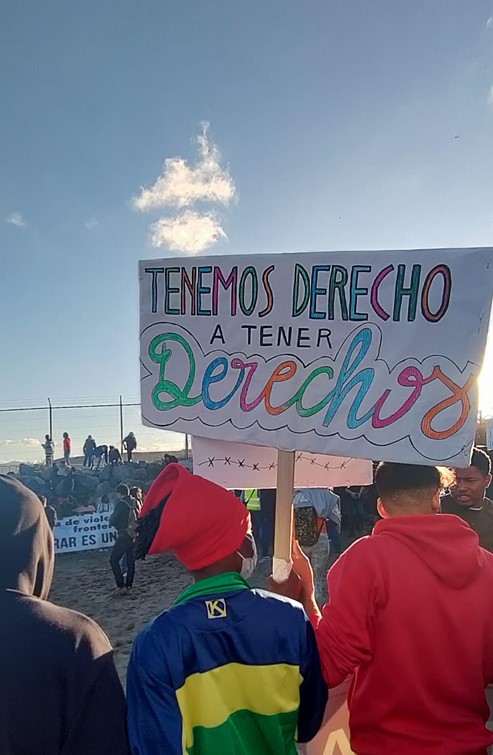
“Tenemos derecho a tener derechos” (We have the right to have rights). Photo taken by the author at the March for Dignity
Continue reading

Vacancies @Boerengroep: coordinator and intern Farm Experience Internship 2023

Coordinator:
Stichting Boerengroep (Peasant Foundation) is looking for a new coordinator starting April 1, 2023. The coordinator is a spider in the web of students, farmers, interest groups and educational institutions. The coordinator initiate activities, supports initiatives of others, and maintains the Boerengroep network. More information at https://www.boerengroep.nl/vacancy-coordinator/

Intern:
Boerengroep has also a vacancy for an intern, from the end of March until the end of August 2023, to organize the coming 2023 Farm Experience Internship (FEI). The FEI is a four-week summer course on agroecology, see https://www.boerengroep.nl/what-is-the-fei/. As an intern you will help organizing, promoting and shaping the course content and contact farmers and students. More information at https://www.boerengroep.nl/internship-vacancy-coordinate-the-farm-experience-internship/