SUSPLACE website launched – Exploring the potential of place-shaping practices for sustainable development

The SUSPLACE consortium bids you a hearty welcome to our newly launched website http://www.sustainableplaceshaping.net. SUSPLACE is a Marie Skłodowska-Curie Actions Innovative Training Network (ITN) funded by the European Commission that explores the full potential of place-shaping practices for sustainable development. SUSPLACE officially kicked-off on October 1, 2015 in Wageningen, The Netherlands and will last till September 30, 2019. The overall aim of the project…

via SUSPLACE – Exploring the potential of place-shaping practices for sustainable development — SUSPLACE

Food growing practices in rural Hungary – vlog about MSc thesis by Zsolt Varga

Zsolt Varga, student Master of Development and Rural Innovation, made a video blog about his MSc-thesis research to what extend people in rural Hungary still grow their own food.

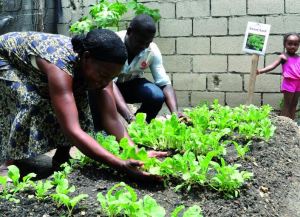
Sacks of hope: Sack Gardening in Kibera slum (Kenya) as sustainable place-shaping

Sack_gardeningBy Merel Scheltema – Msc. Urban Environmental Management, specialisation in Spatial planning, WUR.

I propose that an investment in quality public space, through urban agriculture and multi-functional land use, can improve the access of people to basic needs. According to the UN habitat executive Director of Joan Clos i Matheu public spaces are therefore a vital asset. The quality of public spaces affects the quality of private spaces and the city as a whole. A ‘good’ public space is part of the solution to create ‘healthy’ cities, by revitalizing the environment, economic development and fostering social capital. The concept of ‘sustainable place-shaping’, answers this call for healthy public spaces. It is a holistic approach to strengthen collective agency, participation and leadership of people who engage in places.

In my essay for the RSO course ‘A global sense of Place’, I applied the SUSPLACE framework, developed by the Rural Sociology Group to investigate: how urban agriculture as an investment in public space contributes positively to sustainable place-shaping. I studied this by examining urban sack farming in the Kibera slum of Nairobi, the largest Slum in Africa.  I reason that  urban gardening offers basic needs as well as improves social capital, environmental quality and economic opportunities. Continue reading

The Tiny House Movement: A progressive movement or a reactive defense of place?

Isabelle van Acquoy wrote an essay on the Tiny House Movement for the course RSO-55306 A Global Sense of Place. Is the Tiny House Movement a progressive movement reaching out or a reactive sense of place, she asked herself? Below a condensed version of her essay.  

The Tiny House Movement is an upcoming ‘social and architectural trend that advocates living simply in small spaces’ (Anson, 2014). A tiny house is on average between 10 and 40 square meters and is originally a mobile house, however they exist in different sizes and shapes. The movement became booming in the United States as a result of the housing market crash in 2007 and 2008 in which a lot of people lost their homes due to the inability to pay their enormous mortgages. Quite recently, the movement also became of interest in the Netherlands where different pioneers are experimenting with this alternative way of housing and living. Continue reading

A glimpse of an organic farm in the Netherlands

By Tian Yu, a PhD candidate at Wageningen University, who’s research focusses on organic farming and rural development.

Since the ecological movement came into being in the sixties, organic farming has kept on developing and now has a history of half century in the Netherlands. Today’s organic farm is different from what it was in the beginning. Some ‘modern elements’ have been added, but the underlying social and environmental principles are still the same.

After doing some readings and interviews about organic farm in the Netherlands, I finally got the chance to experience a real, tangible Dutch organic farm. The farm I visited is located in the famous Dutch ‘polders’ in the Flevoland province, and produces mainly vegetables. It has 75 hectares of land, which is bigger than the average organic farm in Holland. Even though it has no plants or work in the field during wintertime, still I have experienced and seen a lot, especially regarding energy- and labour use on the farm. It’s easy to notice at first that some fuel-based and electricity-based machines were used for planting, harvesting and washing vegetables, which is kind of out of my imagination. But also the so-called new energy – solar energy and methane – are used here.

Continue reading