Master thesis and internship possibilities: INNOVATIVE AGRICULTURE AND FORESTRY IN THE PYRENEES

The project takes place in a little mountain village in the Spanish Pyrenees. The question is formulated by a Dutch woman who lives and works in this village. 

The central question is: How can agriculture, in a little mountain village in the Spanish Pyrenees, be developed in a way that meets the circumstances and needs of today?

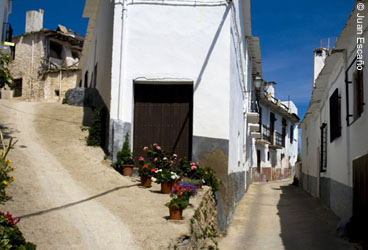
This particular mountain village has been abandoned for fifty years. The association ‘Muro de Solana’ (http://murodesolana.org/) is dedicated to bring it back to life.

Pyreneeen

The means of living here used to be cattle breeding and farming, mainly producing potatoes and wheat. Since many people have left, the once cultivated fields have been replanted with pine trees. The terrain  has small fields and difficult access and also a lack of water supply. The village used to have only a few  hectares of farming fields, however, for this project they consider an area between 1-10 hectares. A true challenge!

Rather than going back to the old means of agriculture the association looks for innovative ways of farming which meet the circumstances and needs of today. This means the development of farming practices which improve the soil quality, are less intense in labour, produce products based on demands, and reconstruct the current forest fields.

The research results can be an inspiring example for other (semi-)abandoned villages in the North of Spain, giving villages an source of income, as well as providing reduced risks of forest fires.

Main goal is to regenerate forest farming fields, now poor in biodiversity and with the risk of forest fires (due to the planted pine trees), into useful, productive and fertile terrain.

There is no deadline for this project.

Contact person: lummina.horlings@wur.nl

Master thesis and internship possibilities: DEVELOPING AN ECOLOGICAL AND SELF-SUSTAINING WATERSYSTEM

The project takes place in a little mountain village in the Spanish Pyrenees. The question is formulated by a Dutch woman who lives and works in this village.

The central question is: how can an ecological and self-sustaining water system be created?

The main goal is to design such a water system, which is reliable as well as usable in practice.

This particular mountain village has been abandoned for fifty years. The association ‘Muro de Solana’ (http://murodesolana.org/) is dedicated to bring it back to life. In former days rain water was captured and water was also transported with the help of donkeys from a well, at a distance of one km at a lower altitude then the village. There never was any kind of drainage, piping or water from the tap.

This investigation includes a variety of issues. These issues can also be addressed in separate studies.

– Capturing water, from the well and of rain water

– Storage, safe and maintaining the quality of water

– Distribution

– Discharge

– Purification of the water

– Re-use of purified water

The terrain of the Pyrenees has difficult access and no electricity. Electricity provision depends on sun- and water-energy. It used to be a village for four big families with cattle breeding and farming. Now the association is looking for establishing a water system for 3-4 households and a 200 m2 vegetable garden which is ecological, self-sustaining and meets the production standards of today.

This research results could be an example for other (semi) abandoned villages in the North of Spain. There are many villages in similar situations and the lack any kind of water system is a big problem.

There is a strict deadline for the realization, but this can be negotiated with the government and local council. For the authorities the water system is of great importance for the development of the village.

Contact person: lummina.horlings@wur.nl

LEADERSHIP MATTERS! Seminar on ‘Leadership in Urban and Regional Development: Debates and New Directions’, 5-6 February 2014, University of Birmingham

This seminar was organised by the ‘Research network on Leadership in Urban and Regional Development, of the Regional Studies Organisation. I have included a summary of the most interesting presentations here, written by Alistair Bowden, Teesside University Business School. For more information, the full report and power-point presentations, please send a mail to lummina.horlings@wur.nl. If you are interested in doing a master thesis on leadership, please contact me as well.

Thirty five enthusiastic academics converged on Park House on the wooded outskirts of the Birmingham University campus on a rainy British morning, but the weather could not dampen spirits. The speakers and discussants were from diverse academic backgrounds (from politics to palaeontology, and from planning to psychology), had varied careers (from a physicist to a field geologist, and from a curator to councillor) and had travelled from disparate locations round the globe (from Auckland to Bishop Auckland, and from Babeş-Bolyai to Birmingham). But we all shared a passion for leadership of place: cities, conurbations, rural areas and regions. Discussing the seminar with a more experienced conference goer on the way back to the station, this mix of disciplines, careers and nationalities, held together by a shared interest in this emerging subfield, was highlighted as the reason for its success: diverse actors and a strange attractor!

John Gibney kicked us off with a brief, considered introduction. This wasn’t going to be an easy conference. We weren’t given the answer at the start. We were going to have to work out ‘what it was all about’ for ourselves.

Our first speaker was Lummina Horlings, who gave a paper on an entrepreneurial rural area just west of Groningen, Netherlands. She was interested in how to enhance collaboration, institutional reform and joint learning to help make a place more resilient. From informal foundations with a small group of visionaries engaging in a pilot project, collective agency emerged through ‘spiral development’ of bottom up initiatives, supporting policy schemes and joint learning by doing. The conclusion was that collaborative leadership played a critical role in enabling success. The discussion explored the motivation(s) to collaborate, the catalytic role of a key actor, the supporting role played by local politicians, the role of the research team and their relationship to the local people.

This was followed Andrew Beer, President of the RSA. Andrew has taken upon himself to try to make sense of leadership of place; to answer the question ‘how do we get beyond case studies?’ But he wasn’t being driven my some esoteric desire for theoretical purity, rather he came across as having a great streak of pragmatism, wanting to do something practical with the growing research on leadership of place.

Continue reading

Wageningen goes Arts & Design

Poster Wageningen Goes Arts and DesignRUW and the Cultural Geography Chair group present: Nature, food, animals and  landscape – seen through the eyes of artists and designers.

What? Lecture and discussion
When? Thursday 27 February, 19-21
Where?  Forum C314
With:

Sascha Landshoff (DeTostiFabriek – The Toastie Factory)
In Amsterdam, the experimental project ‘Tosti Fabriek’ was set up, producing all the ingredients for a toastie in an old factory. Grain was harvested and turned into bread, pigs were kept to produce ham and cows were milked to produce cheese. What does this project tell us about cycles of production and the relations between people, food and cities?

Henriette Waal (Outdoor Brewery)
How can you make the landscape drinkable? Henriette is an artist and designer (Design Academy Eindhoven) who made an outdoor installation for beer brewing. She uses rainwater and wild plants for brewing beer, turning the landscape into an ingredient.

‘Bartaku’ (Plant based photo-voltaic cells)
How can we use plants to generate energy? Bart Vandeput not only investigates the energy potential of plant based photovoltaic cells, but in the process generates new ways of relating to energy (consumption): what if we could eat it? And generate electricity with our body?

This lecture is the kick-off for a Capita Selecta ‘Environmental Humanities’ about the relation between science, technology and art. Inspired by your essay and in conversation with you, students of the Rietveld Academy of Arts will work on creating designs which will be exhibited in Wageningen. More info about the course (5th period, 3ECTS): Clemens.Driessen@wur.nl

Student asked for MSc-thesis research on poultry systems in Venda, Northern South Africa

There is a possibility for a MSc-student to explore poultry dynamics in South Africa. Post-apartheid socio-technical development interventions (still) favours the introduction and expansion of modern poultry systems (broilers and layers) among smallholders to supply meat and eggs to urban consumers. The ‘formula 1 chicken’ (or plof kip) relies heavily on purchased industrial feed and fodder. The market, in addition, plays a crucial role. Together they shape the future of this poultry system. Next to this modern system, a flourishing poultry hinging on indigenous scavenging chicken is operational.

The project aims to make a detailed socio-technical analysis of both poultry systems with a focus on problematic issues and opportunities.

Accommodation and a translator can be arranged. Info: Paul.Hebinck@wur.nl