Local food at the Rhederoord estate – gastronomic highlight

By Renee Ciulla  – Msc-student attending the course Origin Food: a market for identity

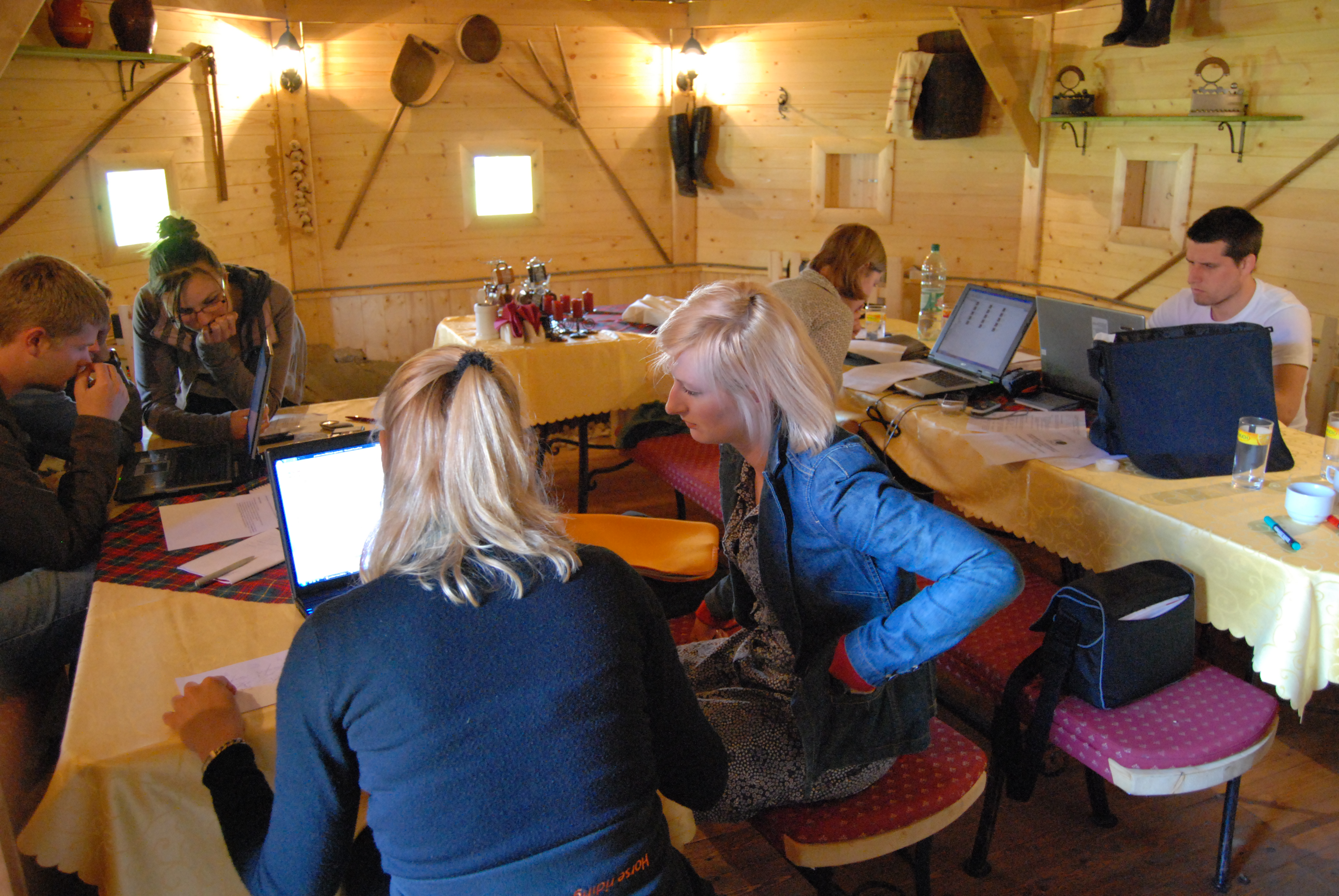
On April 8th, the Origin Food course (see earlier post) was treated to a gastronomic excursion to the Rhederoord estate near the town of Arnhem in De Steeg. Located on 12 ha, the estate provides a magnificent view over the foothills of the IJssel valley and Veluwe forests. The Rhederoord  is mainly known for it’s restaurant which offers a fine dining experience, sourcing most of their products from the surrounding countryside or within the Netherlands. However, the estate also caters events, hosts weddings and can accommodate over 250 guests in their 22 rooms. Possibilities also exist to book business and private meetings.

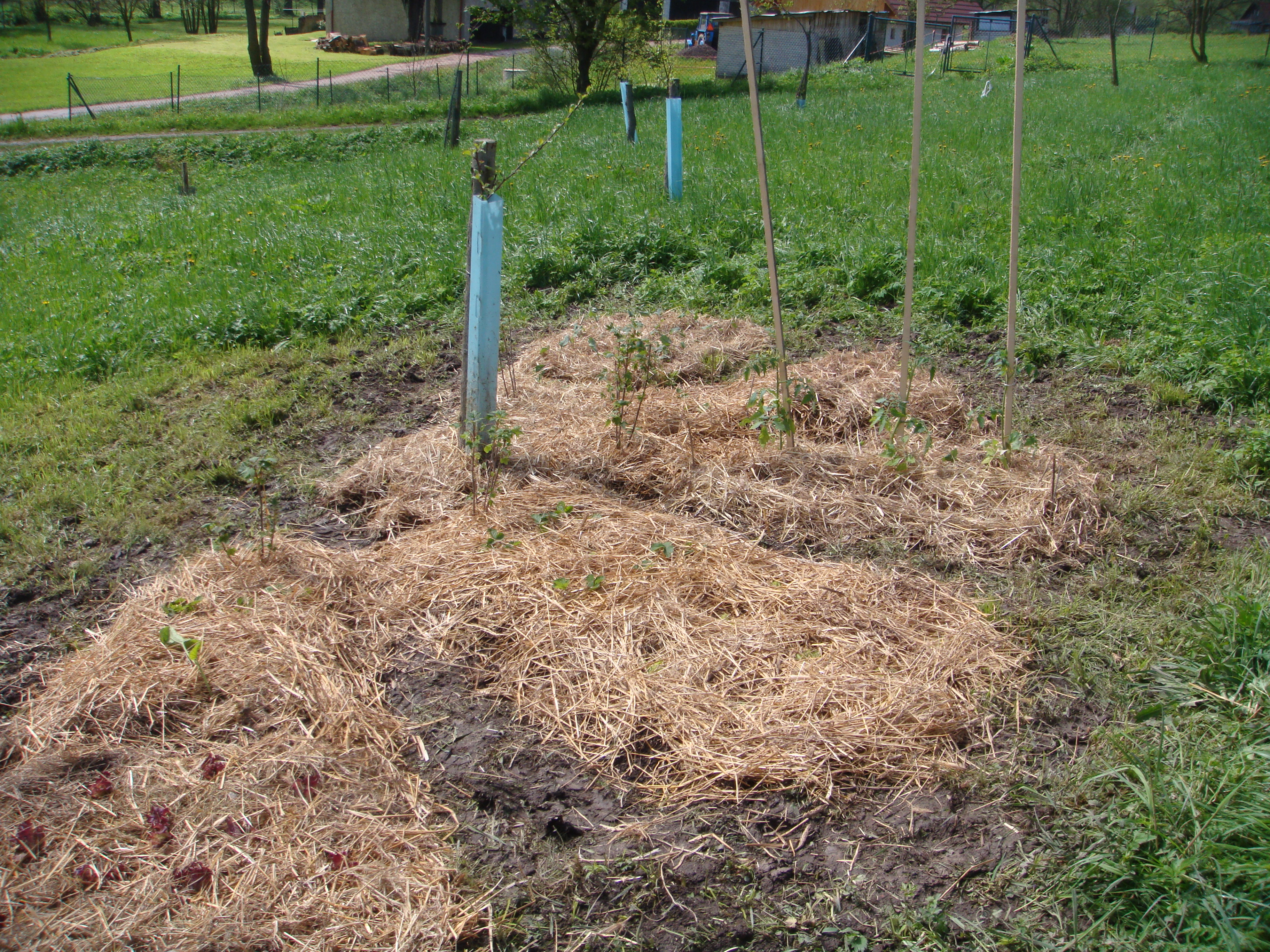
Despite the snowy morning, grey clouds and traffic delays in Arnhem, our group was in high spirits when we saw what greeted us in the foyer of the Rhederoord: a cheerful group of staff awaited to take us to a tastefully decorated coat room followed by a delicious estate-made apple tart on a delicate butter crust. As we mingled with our steaming cups of coffee, the sounds of clinking forks and laughter drifted up the wood-paneled walls and out the large paned windows to the manicured gardens and rolling fields. After our mid-morning feast we sat for an entertaining and inspiring history of the Rhederoord. The goals are to support local farmers and producers in every culinary aspect of their restaurant which they believe is reflected in the flavors and visual appeal. Additionally, the estate tries to educate other chefs and visitors about how to grow their own vegetables and herbs. A garden near the entrance of the restaurant displays various herbs, strawberries and vegetables enabling chefs to see first-hand what these foods look like in their growing state. Sheep and cows are also owned by the estate for their own supply of local meat.

Buffet of local food at the Rhederoord estate

After our outdoor tour we couldn’t have been more surprised when we saw the buffet that welcomed us downstairs. Glowing in the atmospheric, perfectly positioned lights was an assortment of local gastronomic gems: pates, organic sheep, goat and cow cheeses, savory thinly-sliced ham, loaves of freshly baked breads with Dutch wheat, and mounds of warm rolls. Local greens and cabbage made some delicious salads. Meats included blood sausage, sea bass and river lobsters. The food was bursting with flavor and succulent textures- the entire room fell silent during our first ten minutes of eating as everyone floated in their personal eating heaven. A wine tasting of foud Dutch wines followed with ample joking about the quality of Netherlands wine. As for me, I was too distracted with the dessert still sitting on the buffet table: beautiful croissant-type cream puffs filled with fresh-egg custard and pieces of dark chocolate; every bite melted in my mouth.

The entire experience to Rhederoord was reminiscent of a family Christmas dinner. We all left feeling extremely grateful for the learning experience and culinary delights. Thanks to Dirk for organizing a spectacular and delicious trip!

University Food Culture (2)

Reading about the relationships between food categories and social categories I wonder about lunch habits of myself and of this university. Is our Dutch university lunchtime habit a meal? Lunch is, like breakfast and dinner, an indication for a specific type of meal. As Mary Douglas (1972) explains; meals and drinks are social events and they put a frame on the gathering, meals usually restricts alternative occupations. Meals also have an internal structure such as the need for contrasts, like something hot and something cold, or between bland and spicy. If there is only sweet food for example, this is usually not experienced as a meal.

Food taken outside the category of a meal is usually called by its name; have a sandwich or a glass of milk. This signals the line between food as a social category (meal) and food taken for private nourishment (the food item). I am eating my sandwiches with cheese right now, because I will do sports during lunchtime. I usually feel like wanting something warm – soup –  when I go down to the canteen with my colleagues to eat my home brought sandwiches. To have our monthly chairgroup meeting during lunch feels somehow strange.

The meal category is in fact a social category. The type of meal – its internal structure and its external boundaries – says something about work relationships on a continuum of distance versus intimacy. The manifold ways to eat at work, or the lack of one clear pattern with pressure to adhere to signals the individuality of work culture and/or Dutch culture. Eating sandwiches and drinking a glass of milk for lunch hardly contains enough structuring contrasts for it to be called a meal. We even often skip lunch all together. This doesn’t really bother us, only our foreign colleagues.

Second European Sustainable Food Planning Conference

As a follow-up of the first European Sustainable Food Planning Conference, which took place on 9 and 10 October 2009 in Almere (The Netherlands), the Urban Performance Group of the University of Brighton (UK) will host the second European Sustainable Food Planning Conference on 29 and 30 October 2010. Like the first one, this second conference will be held under auspices of the Association of European Schools of Planning (AESOP).

Context and aim

Planning for sustainable food production and consumption is an increasingly important issue for planners, policymakers, designers, farmers, suppliers, activists, business and scientists alike. In the wider contexts of global climate change, a world population of 9 billion and growing, competing food production systems and diet-related public health concerns, are there new paradigms for urban and rural planning capable of supporting sustainable and equitable food systems? Continue reading

AspergeGilde Peel en Maas

Het AspergeGilde Peel en Maas is een samenwerking van 25 aspergetelers uit de gemeente Peel en Maas. De telersgroep werkt samen met een aantal lokale restaurants, kookstudio’s en recreatieondernemers, ook wel de vrienden van het AspergeGilde genoemd. Het AspergeGilde heeft de volgende doelstellingen:

  • promotie van de Peel en Maasregio als aspergeregio
  • bevordering van de aspergeconsumptie door nadere kennismaking met deze groente en de productiewijze ervan

Met doet dit onder andere door het organiseren van aspergearrangementen (bezoek aan een aspergeteler in combinatie met een aspergemaaltijd in een lokaal restaurant), fietstochten door het gebied, kookworkshops, etc… Elk jaar wordt het aspergeseizoen geopend door middel van een aspergemaaltijd voor een grote groep genodigden. Dit jaar vond de seizoensopening plaats op 28 maart.

Voor meer informatie over het AspergeGilde Peel en Maas verwijs ik naar het onderstaande promotiefilmpje.

Touching food and social relations through art

“Since Eve ate apples, much depends on dinner” Byron wrote. Food, both solid and liquid, is making the difference between life and death. For all the interest in and appreciation of ‘landscape’ and ‘nature’ we are most intimately connected to nature through the integration of nature in ourselves; our daily intake of food. However, there can be quite a disparity between care for nature and with what care we fill the supermarket basket. The availability of an abundance of food is such a taken for granted fact of life that we know less and less what food actually is.

“The extent to which we take everyday objects for granted is the precise extent to which they govern and inform our lives” Margaret Visser says.

The couch, the fridge, the supermarket and the fork are making us to who we are and simultaneously prevent us from being different. It is artists, among others, who can address that which has become invisible by its omnipresence.

An interesting art project is currently taking place in Smalle Ee, a tiny little place in the northern province of Friesland. Last week I visited Matthew Mazzotta, an artist from the US who is living in the P.A.I.R installation of the Peergroup for two months. Here, he is building his tea house where he will make tea from locally collected plants and from energy which he generates from methane of locally collected manure. Through this he uncovers knowledge about local food foraging and edible plants.

His project is a social intervention. In every aspect of his project he purposely relies on local knowledge and help of the local community. Since the beginning of March many people have become involved in one way or another. Curiosity to that weird thing he is building, helping out such as the ‘rietdekker’ did and -above all – people come to share. Not least through meals. With a few exceptions he had dinner with local people each night. Dinner is, after all, a matter of life and death. See what he is doing through this link, partly in Frisian and partly in English.