University Food Culture (4)

source: vandaag.be

“If you see students eating sandwiches in the corridor, you can be sure they are Dutch” said a foreign colleague to me. Eating an apple or sandwich on the way to somewhere is apparently a particular habit not a general one. Eating like this, skipping a meal but grazing bits on the go reduces lunch as a mealtime to a series of sandwiches spread over the day. It brings the amount of meals – as social events –  back to two or one (or maybe none) if there is no morning meal neither.

In the middle ages, it was also custom to only have two meals a day, ‘ochtenmael’ and ‘aventmael’. Breakfast entered the scene when the morning meal was eaten later, towards noon. Breakfast then, was a small bite ‘on(t)biten’ to bridge time towards the big noon meal. Nowadays it seems that the cultural significance of lunch as meal and marker of the day is decreasing. More people eat lunch while doing something else and eat food items such as sandwiches as matter of private nourishment (see blog).

But also, the National Catering Survey, commercial research by Foodstep of catering habits shows that the turnover of enterprise and public canteens is decreasing (Misset Catering nr 1 feb 2010). More people eat a home brought lunch; the lunch box – broodtrommel – is a serious competitor for catering companies. The primary reasons given is the increasing ‘rationality’ of the consumer; more people are ‘price conscious’ and refrain from a ‘luxurious’ lunch but rather go for simple and quick. The rational consumer needs to be brought back in the canteen with the creation of ‘pleasure experience’ according to the article.

Another conclusion of course is that, apart from possible erosion of lunch culture, what the catering has to offer seems not able to compete with homemade. The question is if this only has to do with the supposed rationality of the consumer (see earlier blog). The article also noted that while almost three quarter of the respondents know the concept of corporate social responsibility and one quarter of consumers are consciously choosing sustainable products, catering companies cannot be caught busy with transforming  their catering concepts. The creation of more ‘experience’ around the food while not addressing the quality and origin of the food itself will probably not bring many people back to the canteen.

Local food at the Rhederoord estate – gastronomic highlight II

Earlier MSc-student Renee Ciulla added a post on our gastronomic field trip to the Rhederoord Estate. I made a video clip of the display of local food and explanation by patron cuisinier Gerhard van den Broek of the Rhederoord Estate. As I shot the clip with a regular photo-camera, by way of experiment. The quality is not excellent, also because of the yellow atmospheric light, but still the food look very tasty and the explanation whets your appetite. Rhederoord was indeed a gastronomic highlight for the students and myself!

You can watch more video clips on Rhederoord at http://www.youtube.com/user/rhederoordnl

A new place for my internship: Delivery of organic food boxes, part 3

By Corinna Feldmann – MSc Student

After two months of practical work at the sheep farm and dairy, I decided to leave that place. Working conditions as well as social interaction and communication on the farm became worse and worse; the assignment of tasks and responsibilities was very unclear and often resulted in misunderstandings. Working at the farm was very dissatisfying in the end.

Instead, last week I started working at a farm close to the ‘Lüneburger Heide’ in Northern Germany. This farm is also very engaged in direct marketing. They deliver organic food boxes to 1300 customers in the region. The farm produces a lot of vegetables, herbs, and fruits, as well as some beef and pork meat. The food boxes are supplemented by many organic products from other organic farms and a wholesaler. Consumers can get almost everything they like in their individual food box. For more information you can have a look at the homepage: www.elbers-hof.de.

University Food Culture (3)

The much lamented Dutch lunch habit of drinking milk with sandwiches can sometimes be liberating too. Recently a student from Ecuador told me how much she enjoyed not being stared at while drinking milk with lunch. As a nutritionist she knows that milk is a perfect food as it “is the most complete source of nutrition available “(Dupuis 2002:25). However, in her home context milk is associated with baby food or with weak and sick people. Drinking milk with a meal as an adult is frowned upon as inappropriate behaviour.

source; dag.nl

Once, this was the case in our country too. Unfortunately little to nothing is known about the diet of ordinary people during the middle ages, but what we know of lords, knights and kings – the elite at that time –  is that there was a similar taboo on drinking milk here too. Culturally inappropriate, not least because of milk being highly perishable, people mainly drank beer. Urbanisation and industrialization were two important factors which helped milk to its current status of a healthy drink in the USA shows Melanie DuPuis in her great book ‘Nature’s perfect food’. Very much a token of the Dutch lunch culture, drinking a glass of milk is a habit which is only about 150 years old.

And as anthropologist Wiley shows, there is currently a similar relationship between urbanization and fresh milk consumption appearing in China. Growth in milk consumption is largely happening in urban areas and mainly consumed by Chinese upper classes. Milk is now commonly available as an alternative to alcoholic beverages in urban restaurants in China and is associated with a number of beneficial features such as trendy Western food styles, increased body length, healthy teeth and the prevention of ageing (Wiley 2007).

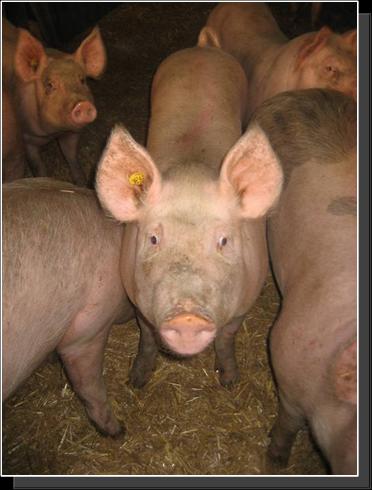
Op weg naar een duurzame varkenshouderij

“Hoe kom je tot een duurzamere veehouderij?” is een vraag die steeds vaker klinkt. Livestock Research Systeeminnovaties komt daarop met ontwerpen van nieuwe stalsystemen. 

Na ‘Houden van Hennen’ en ‘Kracht van Koeien’ is nu de eindbrochure van het derde project  verschenen ditmaal voor de varkenshouderij! 

Varkansen laat drie verschilldende ontwerpen zien voor toekomstige varkensstallen: De Pagode (‘welzijn als waarde’), De Pijler (‘duurzaam efficiënt’) en De Parel (‘band met de stad’). Ieder ontwerp is gebaseerd op behoeften van verschillende betrokkenen:

“Je kunt hele discussies houden  wie nu echt de belangrijke spelers zijn in en om de varkenshouderij. […] Wij hebben gekozen voor het varken, de varkenshouder, het milieu en de burger-consument als hoofdrolspelers, omdat zij in élke vorm van varkenshouderij van belang  zijn. Op die manier kijk je naar behoeften, los van hoe de sector nu in elkaar steekt.”  Onno van Eijk, co-projectleider Varkansen

Op dinsdag 6 april is de eindbrochure aan (demissionair) Minister Gerda Verburg aangeboden.