
By Renee Ciulla – Msc-student attending the course Origin Food: a market for identity
On April 8th, the Origin Food course (see earlier post) was treated to a gastronomic excursion to the Rhederoord estate near the town of Arnhem in De Steeg. Located on 12 ha, the estate provides a magnificent view over the foothills of the IJssel valley and Veluwe forests. The Rhederoord is mainly known for it’s restaurant which offers a fine dining experience, sourcing most of their products from the surrounding countryside or within the Netherlands. However, the estate also caters events, hosts weddings and can accommodate over 250 guests in their 22 rooms. Possibilities also exist to book business and private meetings.
Despite the snowy morning, grey clouds and traffic delays in Arnhem, our group was in high spirits when we saw what greeted us in the foyer of the Rhederoord: a cheerful group of staff awaited to take us to a tastefully decorated coat room followed by a delicious estate-made apple tart on a delicate butter crust. As we mingled with our steaming cups of coffee, the sounds of clinking forks and laughter drifted up the wood-paneled walls and out the large paned windows to the manicured gardens and rolling fields. After our mid-morning feast we sat for an entertaining and inspiring history of the Rhederoord. The goals are to support local farmers and producers in every culinary aspect of their restaurant which they believe is reflected in the flavors and visual appeal. Additionally, the estate tries to educate other chefs and visitors about how to grow their own vegetables and herbs. A garden near the entrance of the restaurant displays various herbs, strawberries and vegetables enabling chefs to see first-hand what these foods look like in their growing state. Sheep and cows are also owned by the estate for their own supply of local meat.
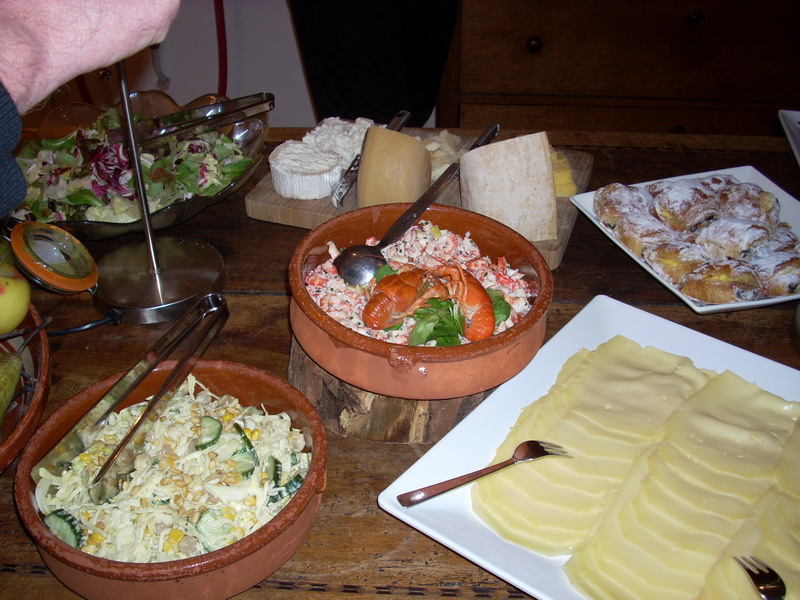
Buffet of local food at the Rhederoord estate
After our outdoor tour we couldn’t have been more surprised when we saw the buffet that welcomed us downstairs. Glowing in the atmospheric, perfectly positioned lights was an assortment of local gastronomic gems: pates, organic sheep, goat and cow cheeses, savory thinly-sliced ham, loaves of freshly baked breads with Dutch wheat, and mounds of warm rolls. Local greens and cabbage made some delicious salads. Meats included blood sausage, sea bass and river lobsters. The food was bursting with flavor and succulent textures- the entire room fell silent during our first ten minutes of eating as everyone floated in their personal eating heaven. A wine tasting of foud Dutch wines followed with ample joking about the quality of Netherlands wine. As for me, I was too distracted with the dessert still sitting on the buffet table: beautiful croissant-type cream puffs filled with fresh-egg custard and pieces of dark chocolate; every bite melted in my mouth.
The entire experience to Rhederoord was reminiscent of a family Christmas dinner. We all left feeling extremely grateful for the learning experience and culinary delights. Thanks to Dirk for organizing a spectacular and delicious trip!


 Rural Sociology Wageningen University