Values and relationships in the diverse economy of De Ommuurde Tuin: an illustrated ethnography

inez thesis coverLast year Inez responded to a RSO thesis advert to join a research team exploring the social economy of food and nature in Gelderland in connection with several science shop projects coordinated by Jan Hassink. Inez completed her research at de Ommuurde Tuin in Renkum, and took the opportunity to further explore visual and creative methods, documenting her results in an illustrated ethnography that was shared with stakeholders at our most recent network gathering Nijmegen. Thanks for being part of our research team Inez ! 

Inez Dekker, MSc student Sociology of Development (MID) Wageningen University

Below please find the abstract of the MSc  minor thesis Values and relationships in the diverse economy of De Ommuurde Tuin: an illustrated ethnography

The full thesis can be downloaded from the WUR-Library by clicking on the hyperlink

Summary : In the last decades a growing number of alternative food and care initiatives emerged in North-America and Europe. Due to uncertain situations within current neoliberal economic systems such as the recent recession, ongoing outsourcing and environmental depletion, and alienation from production (Morgan and Kuch, 2015), these initiatives offer an alternative to an existing neoliberal model. Moreover, they inspire to create a more diverse pallet of economies alongside dominant economic and social systems. Important to mark here is that their decisions and actions are not merely led by dominant economic models, but intentionally done to create worlds that are environmentally and socially just (Gibson-Graham et al., 2013). Often these initiatives fit in an alternative economic framework where a diverse, interdependent, rich and prolific disarray of ‘good life’ are central for their economies. One of such frameworks is the diverse economic research framework based on the work of Gibson-Graham (2008) where the economy is one based on a myriad of human and non-human social relationships that go beyond capitalist economic models. While there seems to be an emerging interest for practices within alternative economic frameworks, such as in community supported agriculture (CSA) or care farms, there is an absence of how human and non-human relationships create values that form an (diverse) economy. Moreover, in conventional economic thinking, practices occurring outside current economic system remain often unrecognized and unseen, though, these are essential for an economy to exist. Therefore, I aim to strengthen a network of diverse economic initiatives focus on initiatives located in the Dutch province Gelderland. To do this, I created a visual illustration that highlights the diverse practices and human and non-human relationships in the organic horticulture business located in Gelderland called ‘De Ommuurde Tuin’. I add to the scholarship of diverse economies by describing and showing the processes that produce a diversity of values in De Ommuurde Tuin’s daily economic practices. These processes are not only led by relationships among humans but include human and non-human relationships as well. To do this, I not only use a written form, but foremost I used visual and sensory research methods that highlights relationships between humans-humans and humansnonhumans. By putting forward the senses, the visual and emotional, this research concerns the processes in daily economic practices through a study of an economy that is lived and experienced. Moreover, I make alternative and diverse frameworks of economy/is more visible for a wider public through presenting my outcomes in a visual manner in booklet form. This approach tries to display and recognize economic alternatives, which helps to connect and build a coherent and powerful social movement for another economy (Miller, 2008; Gibson-Graham, 2008; Gibson-Graham and Miller, 2015)

Register now for RSO55306 – A Global Sense of Place: Place-based approaches to development | Period 5

soap-bubble-406944

In the face of urgent environmental and societal challenges, how do we move towards inclusive futures? What is the role of people in places? And what can be our role as (social) scientists?

In this course, we explore inclusive place-based approaches to development. We analyse how change happens from below and how people take matters in their own hands, shaping the places they live in according to their own needs and values. A relational perspective allows us to see the interdependence between the local and the global, the urban and the rural and the individual and the collective.

Besides engaging with key theories and analysing topical cases, we reflect upon our own role as (social) scientists and explore the tools and methodologies we need in place-based research, specifically focusing on participatory and creative methods.

This advanced MSc course is relevant for all students (including PhD candidates) with an interest in inclusive development, that seek theoretical as well as methodological guidance. The course can help students prepare an MSc thesis proposal and is supported by lecturers from all chair groups involved in the Centre for Space, Place and Society (RSO, SDC, HSO and GEO)

For more information, contact anke.devrieze@wur.nl.


Young people with practical education and sustainable food

Carlijn de Kok, student International Development Studies, wrote her MSc thesis on young people studying cooking, baking or food studies and their engagement with sustainable food. I ask her to share some of her findings.

Why did you choose this topic?

“The literature tends to argue that it is mainly highly educated people who buy sustainable food. It remains unclear, however, to what extent people with a practical education are interested in sustainable food (as well) and if and to what extent they consume sustainable food. Following Karl Marx and his thoughts about the alienation of labour, it can be assumed that people who are engaged with food in their daily lives are more likely to be critical regarding food – and thus to consume sustainably. This is why I decided to focus on people studying cooking, baking or food studies: I expected that their engagement with food in general would lead to more interest in sustainable food.”

What was your theoretical starting point?

“Studies on consumption often use rationalist approaches whereby the individual is taken as a starting point to understand consumption. However, we also know that there is a difference between caring for the environment and changing consumption: this is explained by the ‘attitude-behaviour gap’. This is why I wanted to take a more contextual approach, using Social Practice Theory. This theory puts everyday social practices at the centre of analysis, and considers consumption in terms of its practical, contextual and everyday nature, leaving room for both agency and structure.”

So what practices did you study?

“I defined the general practice of food consumption as a range of sub-practices, including acquisition practices (buying and growing food) and use(r) practices (food preparation-, eating-, and disposal practices), following the work of Sargant (2014). I also made a distinction between how respondents view sustainable food (their cognitive engagement), what they are doing in practice (their practical engagement), and the underlying motivations and reasons for participating in these practices (I called this the narrative behind their engagement).”

Ok, that sounds interesting. But how did you study this?

“In order to understand students’ cognitive engagement with sustainable food and the narrative behind their engagement, I used interviews, a focus group and questionnaires. I interviewed fifteen students following a practical education: five bakery students, five cooking students and five students of food studies. Fifteen cooking students participated in the focus group, and seventy-five students filled out the questionnaire. In order to better understand people’s actual engagement with sustainable food I complemented these methods with food diaries: six of the students interviewed recorded for one to three days what they bought and consumed, where they bought that, and whether there were any sustainability labels on those products.”

And? What did you find?

“There were a few interesting findings. First of all, my respondents are in fact rather knowledgeable about sustainability, the issues in the food system and sustainable food, and they see urgency in acting sustainably. Especially animal welfare, environmental friendliness, a fair price for farmers and naturalness are considered important. All respondents participate in at least some sustainable forms of food consumption. Second, part of the respondents is rather interested in and knowledgeable about sustainable food. This group often performs sustainable food acquisition practices, mostly out of sustainability motivations (for respondents who only occasionally buy sustainable produce, sustainability is less often a motivation). Students of food studies are most often interested in sustainability, followed by the cooking students – for whom sustainability mostly relates to quality.

Thirdly, the extent to which respondents perform food consumption practices sustainably differs per locale. In general, respondents more often act sustainably when they are grocery shopping. They much less do so while eating out, on-the-go or at school or work. In these places sustainable food is less accessible and available, and students feel that their choices have less impact. Finally, I found that respondents’ cognitive and practical engagement with sustainable food does not always align. While some respondents stated to act more sustainably than their food diaries showed, in some cases it was the other way around. These students did not connect much to the concept of sustainability, but they were motivated by certain elements of sustainability such as animal welfare, and so they did make sustainable choices.”

Taking all of these findings into account, what is your main conclusion?

“Young adults who are following a practical educational programme related to food are to a certain extent interested and engaged in sustainable food. Sustainable food plays a role in their daily lives: respondents perform certain food consumption practices sustainably, mostly out of sustainability motivations. The extent to which respondents manage to do so, however, depends on the locale.”

Thesis opportunity: developing a framework for business models that enhance soil quality

The Rural Sociology Group and Business Economics Group jointly offer thesis opportunities on developing business models that enhance soil quality.
Developing a theoretical framework for business models that enhance soil quality in crop and dairy production.

Soil quality is (rapidly) decreasing in The Netherlands, and thereby endangering future income perspectives of farmers. Moreover, reduced soil quality provokes all kind of negative externalities, such as reduced biodiversity, increased climate-change related risks, etc.. Hence, increasing and maintaining soil quality is a prerequisite for sustainable soil use.

This issue affects a multitude of stakeholders, each with different positions and preferences.

Business models, including various stakeholders and aimed at increasing and maintaining soil quality, are essential to enable farmers taking appropriate measures focused on these aims.

Currently, various initiatives have been taken to develop business models, mostly at a smaller scale. However, for mainstream agriculture to getting involved in improved soil management, a thorough theoretical framework, based on scientific analysis and rooted in (at least) economic and sociological theory, is essential. Only then, essentials of balanced business models can be developed which have the pursuit for larger-scale adoption in practice.

Being a pilot study, the aims of this MSc Thesis research are:

  • Qualitative analysis of real costs of soil management (i.e. monetary and non-monetary costs, such as costs for society) through the application of basic economic (cost) concepts;
  • Qualitative analysis of the stakeholder structure;
  • Definition of business cases and performance of a qualitative SWOT-analysis;
  • Evaluation of several existing business cases against the developed framework.

We are looking for a MSc-thesis student with an interest in the topic and a background in (business-)economics and/or rural/agrarian sociology.

Searching for a master thesis topic? Write your master thesis about community fridges in The Hague!


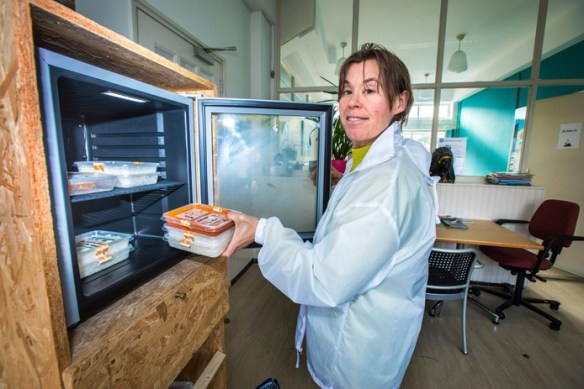
fridge foto hagueWhat are community fridges?

Community fridges are refrigerators located in a public space, for example in a neighborhood or community centre. These refrigerators enable food to be shared within a community. In The Hague, community fridges are utilized primarily to share left-overs from restaurants with people facing hardship, with the goal of offering easy access to fresh, nutritious food. The initiative aims to simultaneously reduce poverty and food waste. To read more about the specific case in The Hague, visit their website: https://www.versenvrij.nl/

vers frij hague

Interested in writing your master thesis about this initiative?

In cooperation with LUMC (Leiden University Medical Center – Campus The Hague), we are searching for a master student who wants to do a thesis research about community fridges in The Hague.

Topic 1: To explore user experiences and the role of these fridges in addressing food insecurity.

Topic 2: To explore how users manage risk and safety in the distribution of surplus food, and the care of community fridges.

We will encourage you to actively design your own research and hope you are eager to use various methods.

You are :

  • interested in the issues of food insecurity and food waste
  • willing to engage actively in designing a research about community fridges
  • willing to conduct research in The Hague (think about travel-costs)
  • experienced in doing qualitative research; e.g. participant observation, semi-structured interviews, the photo-voice method, focus groups
  • interested in mixed methods; combining qualitative with quantitative data (e.g. surveys or questionnaires)
  • a native Dutch speaker and willing to write your thesis in English
  • able to start this spring (possible to start immediately)


If you are enthusiastic about this research topic, please send an e-mail to thirza.andriessen@wur.nl , L.A.van_der_Velde@lumc.nl , & oona.morrow@wur.nl