75th Anniversary: 8) Kyoto meets Wageningen, Political Economy meets Rural Sociology

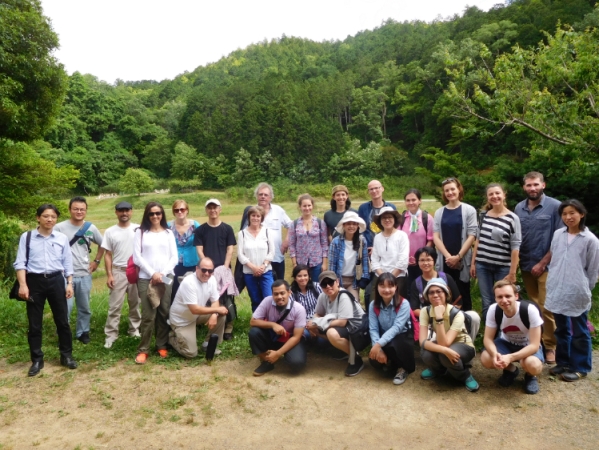
Countryside excursion at the 2016 Graduate Workshop

 Introduction

The collaboration between the group of rural sociology at Wageningen University and the group of agri-food political economy at Kyoto University officially started in July 2014, when we signed a letter of intent to foster international cooperation in education and research. This was first materialised when Kyoto University invited Dirk Roep in February 2015, and Guido Ruivenkamp and Joost Jongerden in March 2015 (http://agst.jgp.kyoto-u.ac.jp/topics/report/376). Their visit to Kyoto kickstarted a series of intensive lectures given by invited RSO members as well as a series of joint workshops between the two groups either in Kyoto or in Wageningen, as explained below. Continue reading

75th Anniversary: 7) Rural Sociology and Resistance of the Third Kind

Women farmers in Rojava (2015)

Introduction

When it comes to the agrarian question, academia has been deeply divided. At the risk of caricature, there is one school of thought that considers the process of capitalist development a force that moves history progressively forward and another that takes the creative agency of people as the primary force of development. Historically, the Rural Sociology Group belongs to the latter school. The work on farming styles, meaningful diversity, new peasantries and foodscapes gave expression to the idea of this creative agency (Hofstee 1982, Ploeg 2008, Wiskerke 2009). In this blog, I will explore the importance of the agency concept through Van der Ploeg’s concept of resistance. Continue reading

75th Anniversary: 6) The Cartophoot: Hofstee’s geographic mapping of difference

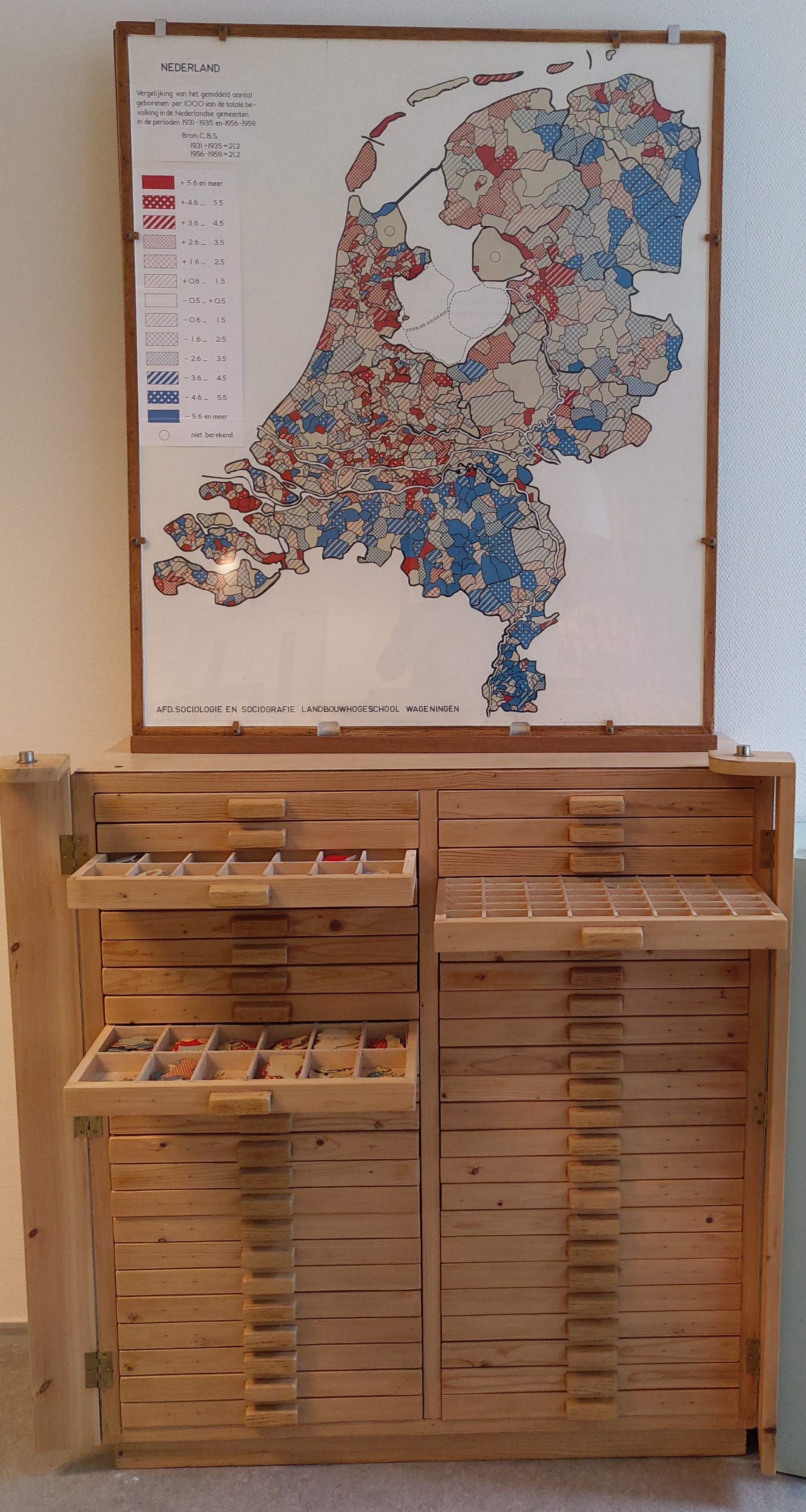
Picture 1. The cartophoot

In 1949, three years after his appointment as professor in social and economic geography, the ‘trojan horse’ through which rural sociology entered Wageningen, Evert Willem (E.W.) Hofstee became the chair of a commission to study the development of fertility in the Netherlands.[1] This Commission for Birth Research (Commissie voor het Geboorte-Onderzoek)[2] was part of the Institute for Social Research of the Dutch People (Instituut voor Sociaal Onderzoek van het Nederlandse Volk [ISONOVO]). Continue reading

75th Anniversary: 5) Sociology as Sociography

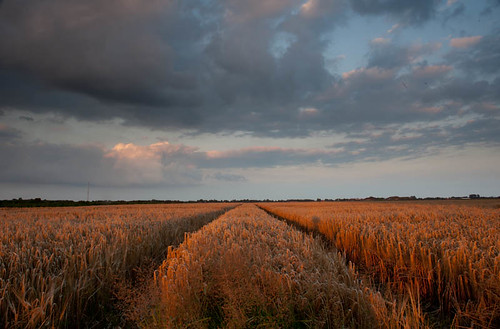
“Korenveld” by Lianne Koster – licensed under CC BY-NC-SA 2.0

When Evert Willem (E.W.) Hofstee, founding father of rural sociology in the Netherlands, started his academic career as a lecturer at Groningen University in 1938, he defined his work as ‘sociography’ (Hofstee 1938). In this, he was clearly following in the footsteps of his teacher and tutor, Sebald Rudolf Steinmetz (1862- 1940), who had created the new discipline from a fusion of sociology and geography (Karel 2002: 2-3). Only later would Hofstee add the word “sociology” to the domain of his work. Thus, the department (“vakgroep”) he established and headed at the Agricultural University in Wageningen from 1954 onwards was named “sociography and sociology” before being renamed as “sociology”, and then, more precisely, “rural sociology”. Nevertheless, until the end of his life, he remained committed to the agenda of “sociography”: a grounded theoretical approach with low levels of abstraction and high probability of practical application (Hofstee 1938, Hofstee 1982; Karel 2002). Continue reading

75th Anniversary: 4) Some thoughts on the overhead projector

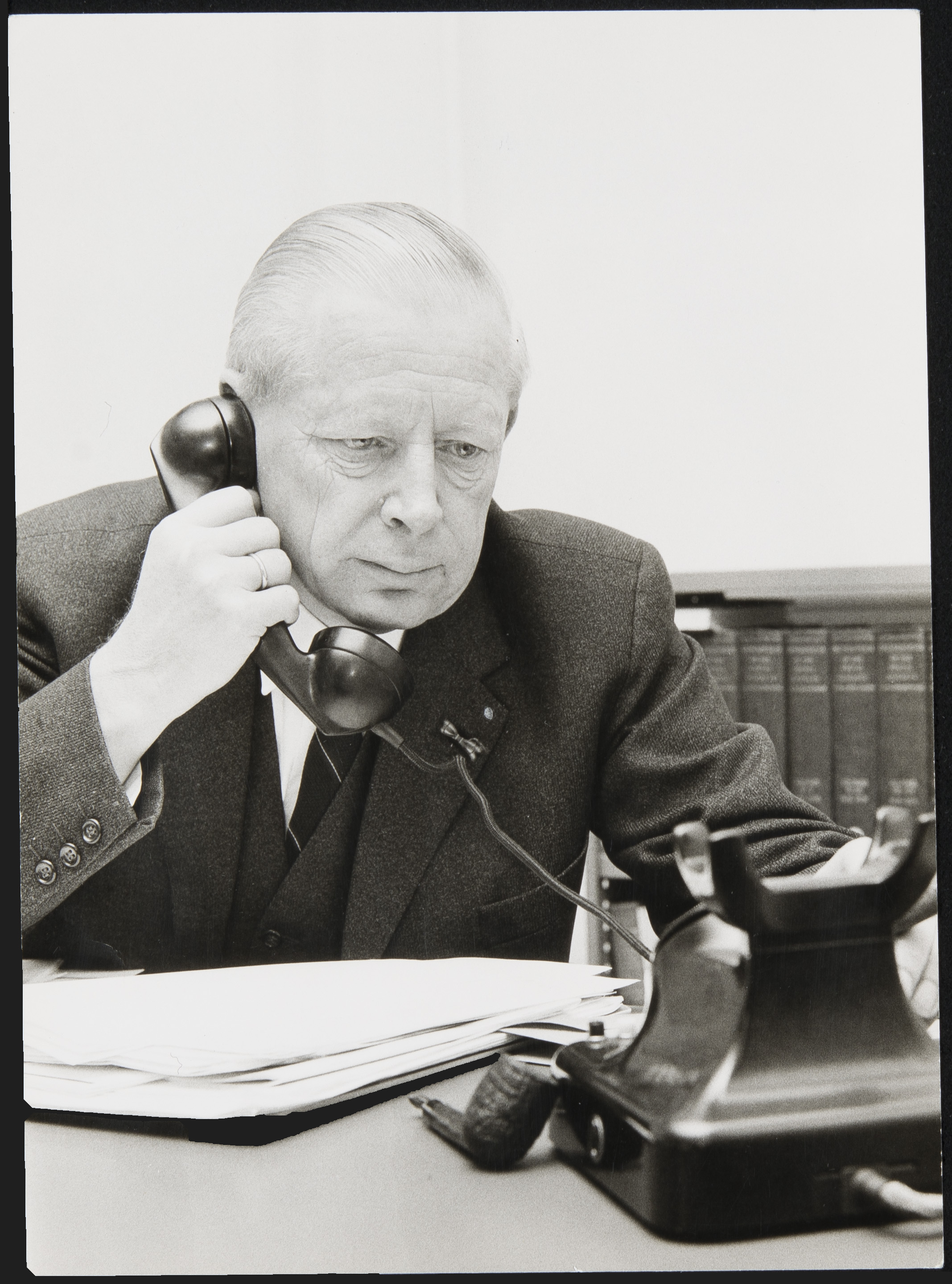
This is a picture of Professor Hofstee. It is clearly an old picture: it is black and white (no filter!), and the clothing looks rather outdated and overly formal. But what also stands out is the phone. I wonder whether he was really making a phone call here, or whether this was staged for the picture. In any case, this bakelite phone (‘bakeliet’, have you ever used the word for something else than a phone?) made me wonder how technology has changed over the last 75 years. How differently we must be writing, teaching, researching, reading, searching for literature than the generations before us! Many of us will have cursed our computers or have been annoyed with having to use yet another digital tool, but for sure technology has made our lives easier in several ways. I can’t imagine having to do my work without email, or having had to type or even handwrite (!) my PhD thesis. Continue reading