Global dynamics and empowerment of the local street food network: a case study on the Ghana Traditional Caterers Association

By Hilde-Marije Dorresteijn, MSc International Development Studies at Wageningen University

For my MSc thesis within the RSO chair group I did research on street food in Ghana. During the master programme I became more and more interested in food issues and its possibilities for local development. These possibilities are beautifully illustrated by the following quotation with which I started my thesis:

“Food provides an answer. Our landscapes and cities were shaped by food. Our daily routine revolves around it, our politics and economies are driven by it, our identities are inseparable from it, and our survival depends on it. What better tool, then, with which to shape the world.” (Steel, 2012 in Viljoen & Wiskerke, 2012:36).
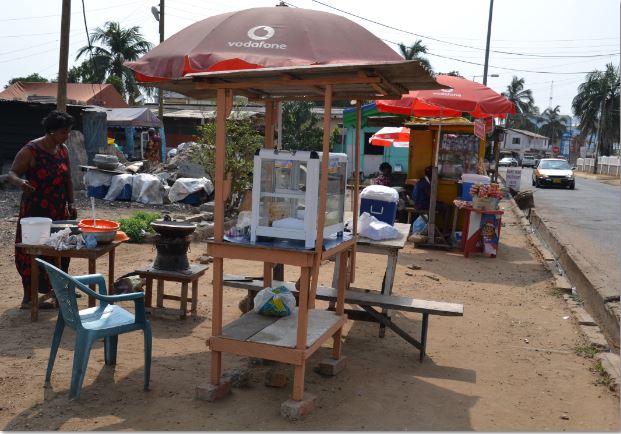
HM Dorresteijn blog picture 1

Despite its importance I found little scientific research on street food, a phenomenon that is particularly relevant in developing countries. Street food can be defined as: ‘ready to eat food or beverages prepared and/or sold in the street and other public places for immediate consumption or at a later time without further processing or preparation’ (FAO, 2012). I decided to look into this topic within the context of Ghana’s capital Accra. An estimated 85% of the urban population in Ghana patronize it, cutting across socio-economic boundaries and thus also designating the important cultural role of street food In Accra, from early morning till late at night all sorts of food are being sold on the streets. Also, there is a great variety in the professionalism of microenterprises. There are many hawkers walking around trying to sell their products, well established enterprises that have fixed stands and seating facilities, and the informal eating houses called ‘chop bars’. Street food make an essential contribution to nutrition of the urban population by providing easily accessible and affordable food, as well as they provide a good livelihood strategy by creating employment and increasing incomes for a large number of urban dwellers. Hereby street food thus makes a great contribution to the local economy. This informal sector requires low start-up capital and low levels of education are needed, making it a good business opportunity for especially women.

The cheapest way to make money, is to cook food. You are a secretary, or you have a shop, and the shop collapses. You can buy a pot, buy silver, cooking utensils, buy water, the pepper, yam and you cook and you’ll get people to buy. Very, very cheap. So day in day out people have been coming into the system. That is why they are plenty. And automatically when you cook, you will get people to buy.” (Mr. Ansong, PRO GTCA, 13 Jan. 2014) Continue reading
(Un)accepted foods: Why are some edible substances considered food and others not?

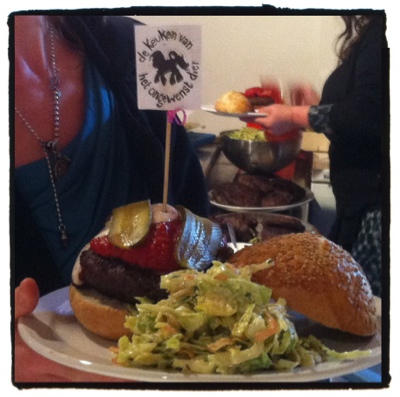
My Little Pony Burger

Last night Stichting Ruw hosted an event on “(Un)accepted Foods”.

The goal of the evening was to learn more about the potential of insects as food and about eating unconventional food products like horse and goose meat. 

There were excellent presentations.

Rob Hagenouw, an artist, spoke about his project Keuken van het Ongewenst Dier(Kitchen of the Unwanted Animal) where they make and sell  “My Little Pony Burgers” and croquettes from geese shot at the airport.

Arnold van Huis, author of ‘The Insect Cookbook’ and Professor of Entomology (see his TED talk here) gave a fascinating talk covering the opportunities and challenges association with the development of an insect eating culture in Europe.

Jessica Duncan, from the Rural Sociology Group, provided a socio-cultural perspective on food categorisation: why are some edible substances considered food and others not. The presentation is available here.

PUREFOOD conference teaser – The many benefits of local food

On May 14 and 15 2014 the PUREFOOD conference entitled “Take action? Collaborative action for more sustainable food systems” will take place in Utrecht (The Netherlands). The morning of the first day (Wednesday May 14) will take place in the Central Museum of Utrecht and consists of three inspirational presentations followed by a reflection by keynote listener Professor Tim Lang and discussions in workshops. In the afternoon there will be three excursions to urban and peri-urban agriculture and food initiatives in and around Utrecht.

The second day of the conference (Thursday May 15) will take place in DeFabrique in Utrecht. This second day is a joint event of PUREFOOD and the Day of Urban Farming, with a keynote speech by Claus Meyer (founder of the New Nordic Cuisine movement and co-owner of restaurant Noma in Copenhagen, which is considered to be the world’s best restaurant) and a wide variety of parallel workshops. For more information see the conference program.

As a teaser for the PUREFOOD conference Creative Beards has made a short animation movie addressing the main issues that have been studied in PUREFOOD.

Tip of the iceberg

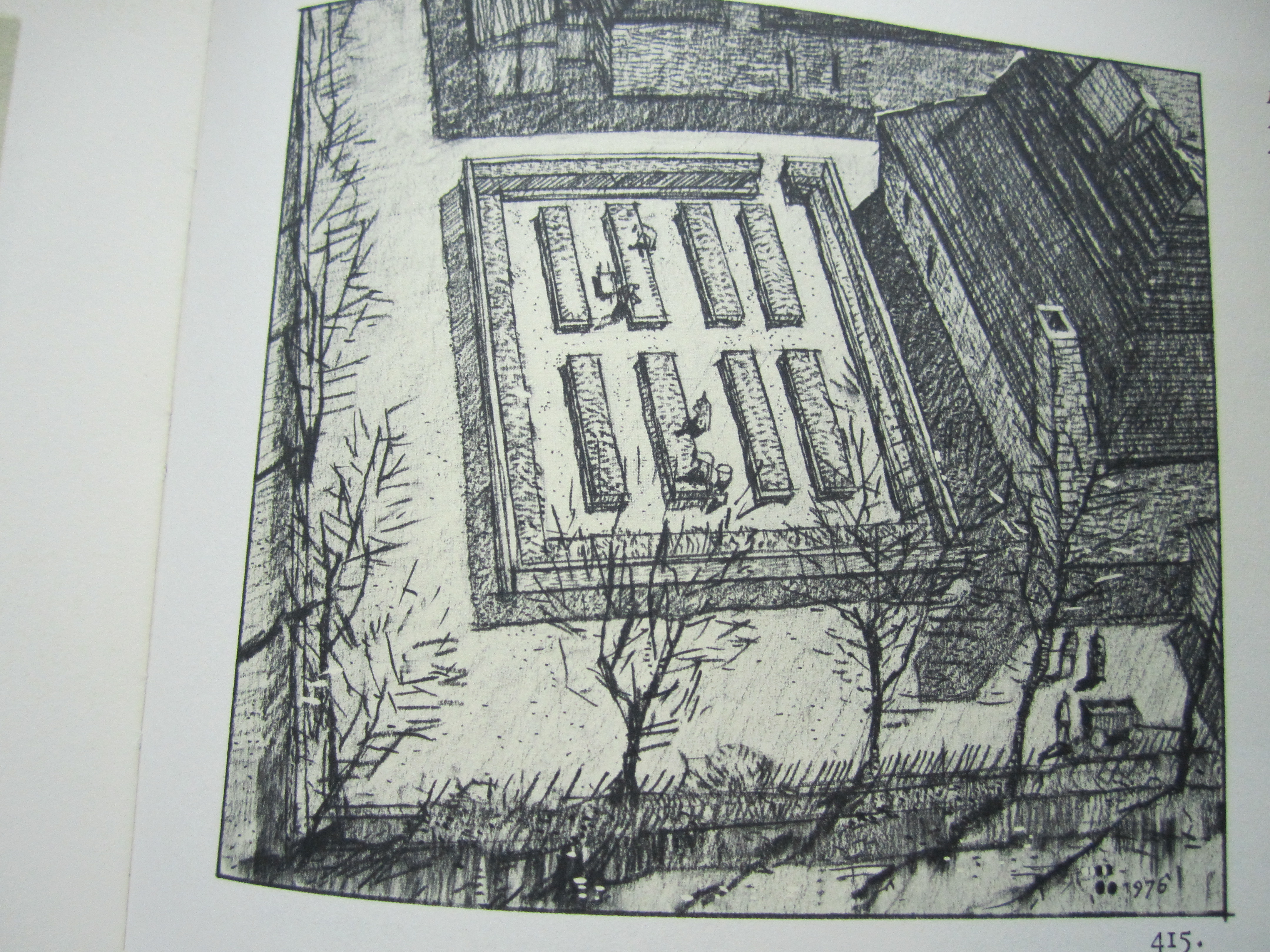
This weekend I gave a lecture twice in ‘Het Klooster’ (The Convent) at Oerol, a famous week-long festival with theatre, performance and music at 63 locations on the Wadden Island Terschelling. Het Klooster features at Oerol this year and in its full capacity next year. The Dutch State Forestry Commission (Staatsbosbeheer) Firma Rieks Swarte and Peergroup will remove the topsoil of lines drawn at a field this year. The lines represent the layout of the Convent of St Gall, a detailed model from the 8th C for a monastery that was never built but nevertheless served as a ‘roadmap’ for many convents all over Europe in the middle-ages. Removal of top soil will give older seeds of rare species a chance while the map will be visible from a tower in the middle of the field and will be part of a theatre show at next year’s Oerol.

IMG_0208What if the monastery was built at Terschelling? The geometric beauty and symbolism of the design is what fascinates Rieks, how man organises man is what fascinates the PeerGroup, and in line with that, what did they eat? That’s where I came in. Food culture before the invention of the printed book in the 15th C is always surrounded with many doubts and insecurities for lack of evidence. But in the case of Convent of St Gall, everything within the walls (a village almost) was detailed to the point of which herbs were grown in the herbal medicine garden. It was fascinating to see the books in which the plan has been studied. My earlier doubts based on other historical sources about how realistic this design would be in practice were confirmed.

One small example; the vegetable garden was divided in 2 x 9 beds of equal size with 1 vegetable planned for each bed. This then meant that cabbage received equal space to dill and that unions were occupying one bed whereas chervil a complete other. While the vegetable garden as a whole was far to small to feed the approx 200 people who would live there (where did we hear that discussion lately?), it seems highly impractical to have as many lettuces as poppy, unless they had a good use for poppy of course……..

Food at the battefields

This 6th and last lecturing period of the year, I run a capita selecta course on Food Culture with some of the students from the regular course in February in which we read and discuss classics in food culture together. Like two years ago, there is a small but dedicated group of students eager to read entire books rather than the usual scientific papers. We just finished ‘Paradox of the Plenty’ by Harvey Levenstein, a very dense but easy and often funny to read social history of eating in the U.S. spanning from 1920s to about the 1990s. One of the stories to which we awed with amazement is about the abundance, diversity and quality of the food supply and diet of American soldiers during World War II. Continue reading