Dawn Cheong is PhD-candidate at the Rural Sociology Group (dawn.cheong@wur.nl) . Her first paper has just been published open access in ‘Agriculture and Human Values‘: Cheong, D.D., Bock, B. & Roep, D. (2023) Unpacking gender mainstreaming: a critical discourse analysis of agricultural and rural development policy in Myanmar and Nepal https://doi.org/10.1007/s10460-023-10502-x.
Abstract Conventional gender analysis of development policy does not adequately explain the slow progress towards gender equality. Our research analyses the gender discourses embedded in agricultural and rural development policies in Myanmar and Nepal. We find that both countries focus on increasing women’s participation in development activities as a core gender equality policy objective. This creates a binary categorisation of participating versus non-participating women and identifies women as responsible for improving their position. At the same time, gender (in)equality is defined exclusively as a women’s concern. Such discourses, as constitutive practices, produce specific knowledge about rural women and new subjectivities that prescribe and govern them solely as subjects of development. Our research suggests that such a limited discursive practice invisiblises gendered power relations and structural and institutional issues, ultimately slowing progress towards gender equality. We demonstrate the importance of studying policy as discourse, beyond the effectiveness of policies or mainstreaming tools, and call for empirical evidence on the impact of these discourses on women’s subjectivities and lived experiences.
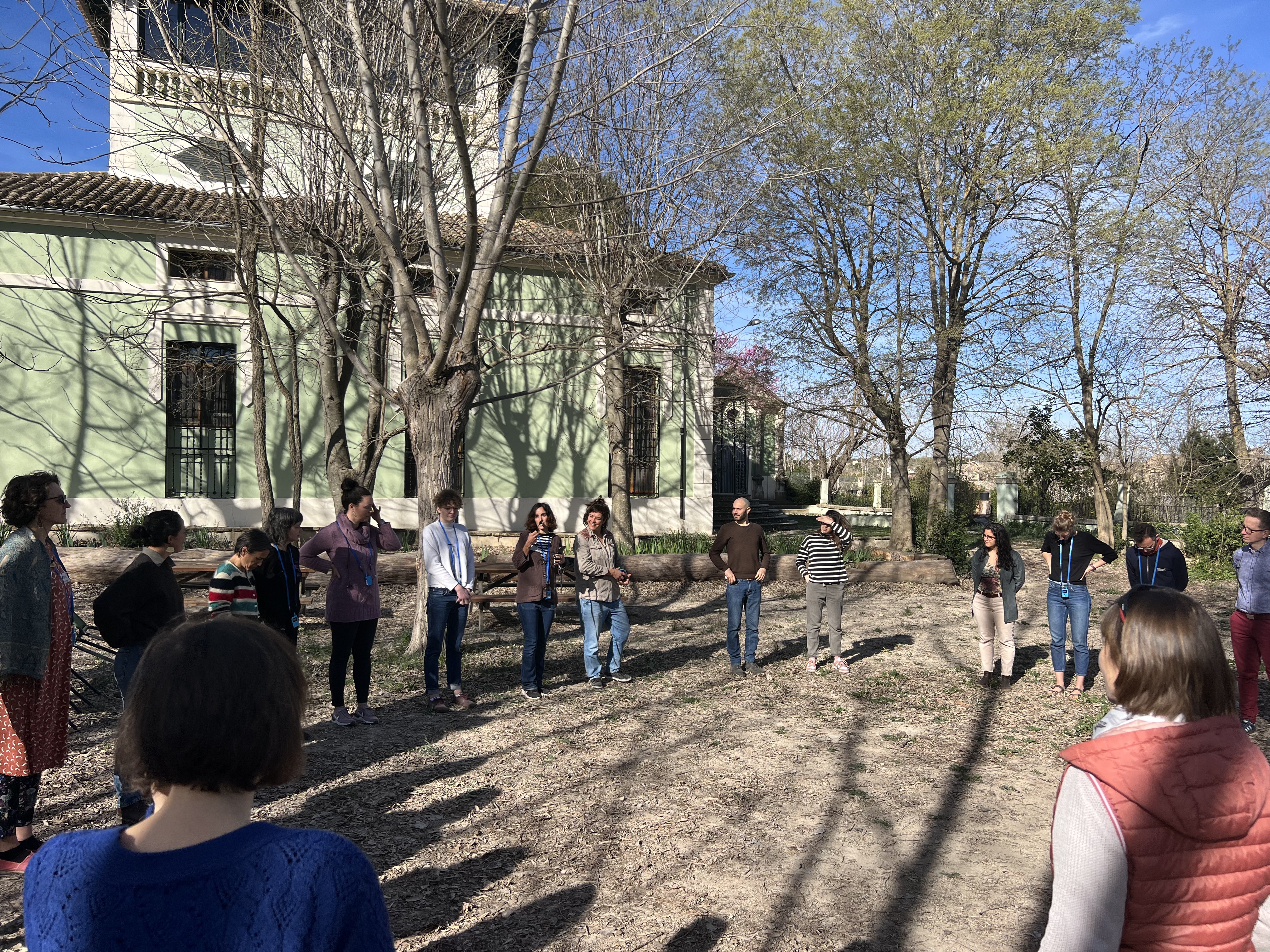
Els Hegger is a farmer and researcher working with RSO on the SWIFT project. In this post, she reflects on the role of women in dominant agricultural debates and her own experiences at the SWIFT project kick-off meeting.
Els writes:
Because of the Brazilians (representing the MST movement), I realised what is going on and how -maybe- there is an alternative. When reading this project proposal I was both very interested and at the same time, I thought: “Didn’t we have this whole feminine thing, is this really necessary? Aren’t women in the Netherlands already empowered? Is this discussion about inclusion, LHBTIQ+ etc., really necessary?” I didn’t raise these questions out of resistance but because I didn’t see it. For me, women have the same opportunities as men. At least… I thought so.
However… women are absent in their fullness. We participate under certain set conditions, set by a white male capitalist-dominated history. It is so entrenched that I guess we don’t fully realize this.
Look at the main agricultural stage in the Netherlands. Yes, we now have Caroline v/d Plas, but is that a female representation? As a farmer, as a woman, as an Agroecological entrepreneur, I don’t feel represented. It’s not my arena. The method, the sound, the non-verbal language. We withdraw because we don’t feel at ease, we don’t feel home. Lethargy kicks in.
So, we need to create our home where we feel at home. Which language fits this? Which stories resonate? Is it singing, dancing, mystica, poems, histories…? Only if we re-create and co-create these, we can connect and only then we can enter the political arena. It’s rather obvious, but at the same time it is so interwoven with everything that we stop realising, it settles in the subconscious.
Within Toekomstboeren we’ve had quite some discussions about exactly this (although not specified through women) as I nearly withdrew from Toekomstboeren. I said I didn’t feel comfortable with the way we enter politics. For me, agroecology (AE) is so different from the dominant narrative that I cannot lobby in a traditional way, being drawn to the tables and tell what we need.
It is not my language and then we are tempted to withdraw. That’s why women are invisible. AE is a way of life, not a job you hold. It is running through my veins, it’s in every cell and bone. AE is not about ecologic farming, the word logic is not fitting. It’s beyond any rationale in a traditional sense; it is like the rhizomes of Deleuze and Guattari. Mapping these could be an interesting insight.
Then there are the Brazilians (and there are more examples), who have developed their own language in a broad sense. They are able to mobilise an energy that truly connects: it is not only hierarchical, vertical talkative way of getting what you want. It is more horizontally moving, feeling as part of something not being united because you’re against something. This Brazilian way of mobilizing creates a togetherness that gives power to act. On a physical level, I feel backed, not such a naked back.
Obviously, this is a language beyond words. It is an all-encompassing language. A body language as much as a nature-language. It knows no race, ethnic origin, colour, male-female, it just is. You could say it is a feminine energy that complements the very overly present male energy. But.. is that correct? Or do we need to redefine? Is it a scale that is round, the edges are stretched so much that the ends are the beginning again? One of the Brazilians said: “Dare to acknowledge the woman inside you.” That goes for everyone, not only women. Vertical and horizontal.
Could you say that we need to tilt this structure of power?
The extremes are voiced, but the big middle group is searching. Is it a Western thing, a capitalistic view on male/female? Power? I think of Indonesia where I saw much more softness with men and at the same time a pride and dignity with both men and women. Equal in a very different sense. How does this result in voicing?
To come back to the beginning: changing the narrative. Which stories do we want to tell, to share, to connect to and built upon? We need to reframe, reconstruct and reclaim the words farmer, farming and food production. Stop talking about nature, start being it. Stop trying to fit in. Empower ourselves through language (including non-verbal language). Which future do we want to live now?
—
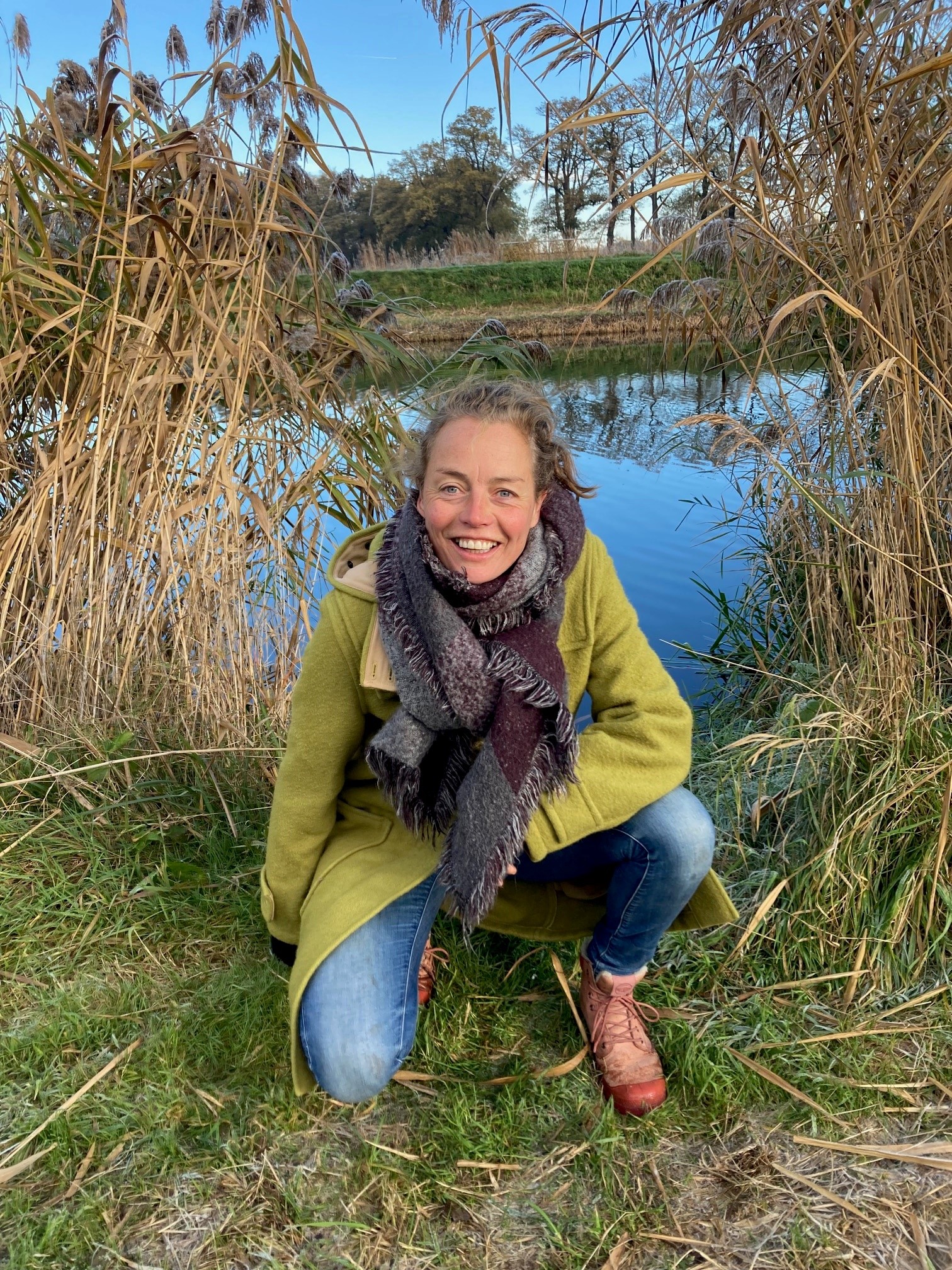
Els Hegger runs a small CSA market garden in the east of the Netherlands. Besides running this small-scale farm, she is an active member of Toekomstboeren and has a seat in the Federation of Agroecological Farmers in the Netherlands. One day a week she is a researcher at the Rural Sociology Group for the SWIFT-project. Els is passionate about flipping around dominant stories of food production and consumption, in order to reclaim truths and recognise the rich diversity of which human beings are an inherent entwined part.
By Sonia Zaharia, MSc-student Organic Agriculture.
Many low-income countries deliberately pursue agricultural specialization to increase yields and thereby lift their population out of hunger and poverty. Trade is supposed to offset the implied lower diversity of food production and deliver a food supply that supports the health of their population. This study challenges this assumption. I investigate the link between the prevalence of overweight and agricultural specialization. Using a fixed-effects panel regression on data from 65 low- and middle-income countries over the period 1975-2013, I find that countries in which agricultural production is more specialized have a larger share of overweight women. The positive relationship is higher in countries with lower per capita income. The correlation is not statistically different from zero for the male population, which confirms existing empirical evidence that malnourishment tends to be more frequent for women than for men. My results suggest that there are negative health implications of agricultural specialization in poor countries.
Wageningen University’s School of Social Sciences (WASS) will be offering a PhD course in May and June 2017 called Gender and Diversity in Sustainable Development. Bettina Bock and Jessica Duncan, both from RSO, will lecture in this course.
Inequality lies at the center of current debates about sustainable development, from which a number of policy issues, including Sustainable Development Goals, emanate. Yet, how social (in)equality contributes to creating sustainable development often remains invisible in research. This course enables participants to recognize linkages between gender and diversity and sustainable development in a contemporary globalising world.
The topics covered in this course are:
Introduction: key concepts in gender studies
Trends form a historical perspective
Economics: macro and micro perspectives
Work and care
Population and migration
Food security and governance
Environment and natural resource management
Global politics
This course will be a seminar. We will take a highly interactive learner-centered approach that combines short lectures with group-based learning activity and discussion. A series of instructors with gender and diversity expertise from WUR and other universities will discuss the relevance of the themes discussed in our class to their own domains.
You are all welcome to the launch of Gendered Food Practices from Food to Waste
Wednesday 22 February 2017 / 15.00-17.00
Impulse / Wageningen Campus, Building 115,Wageningen University
Address: Stippeneng 2, Wageningen
Program
There will be coffee and tea upon arrival. Guest-editors Bettina Bock and Jessica Duncan (from RSO) will give a short presentation and hand over the first copy to professor J.M. van Winter, professor emerita of medieval history, expert in food history, and main benefactor of the Yearbook of Women’s History.
Curator of the National Museum of Education Jacques Dane will give a presentation of his contribution to the volume on Domestic Science in and outside the Dutch Classroom in the period 1880-1930.
In nearly all societies gender has been, and continues to be, central in defining roles and responsibilities related to the production, manufacturing, provisioning, eating, and disposal of food. The 2016 Yearbook of Women’s History presents a collection of new contributions that look into the diversity of these gendered food-related practices to uncover new insights into the shifting relations of gender across food systems. Authors explore changing understandings and boundaries of food-related activities at the intersection of food and gender, across time and space. Look out for intriguing contributions that range from insights into the lives of market women in late medieval food trades in the Low Countries, the practices of activist women in the garbage movement of prewar Tokyo, the way grain storage technologies affect women in Zimbabwe, through to the impact of healthy eating blogs in the digital age.
Editors: Bettina Bock and Jessica Duncan (guest-editors), Eveline Buchheim, Saskia Bultman, Marjan Groot, Evelien Walhout and Ingrid de Zwarte




 Rural Sociology Wageningen University