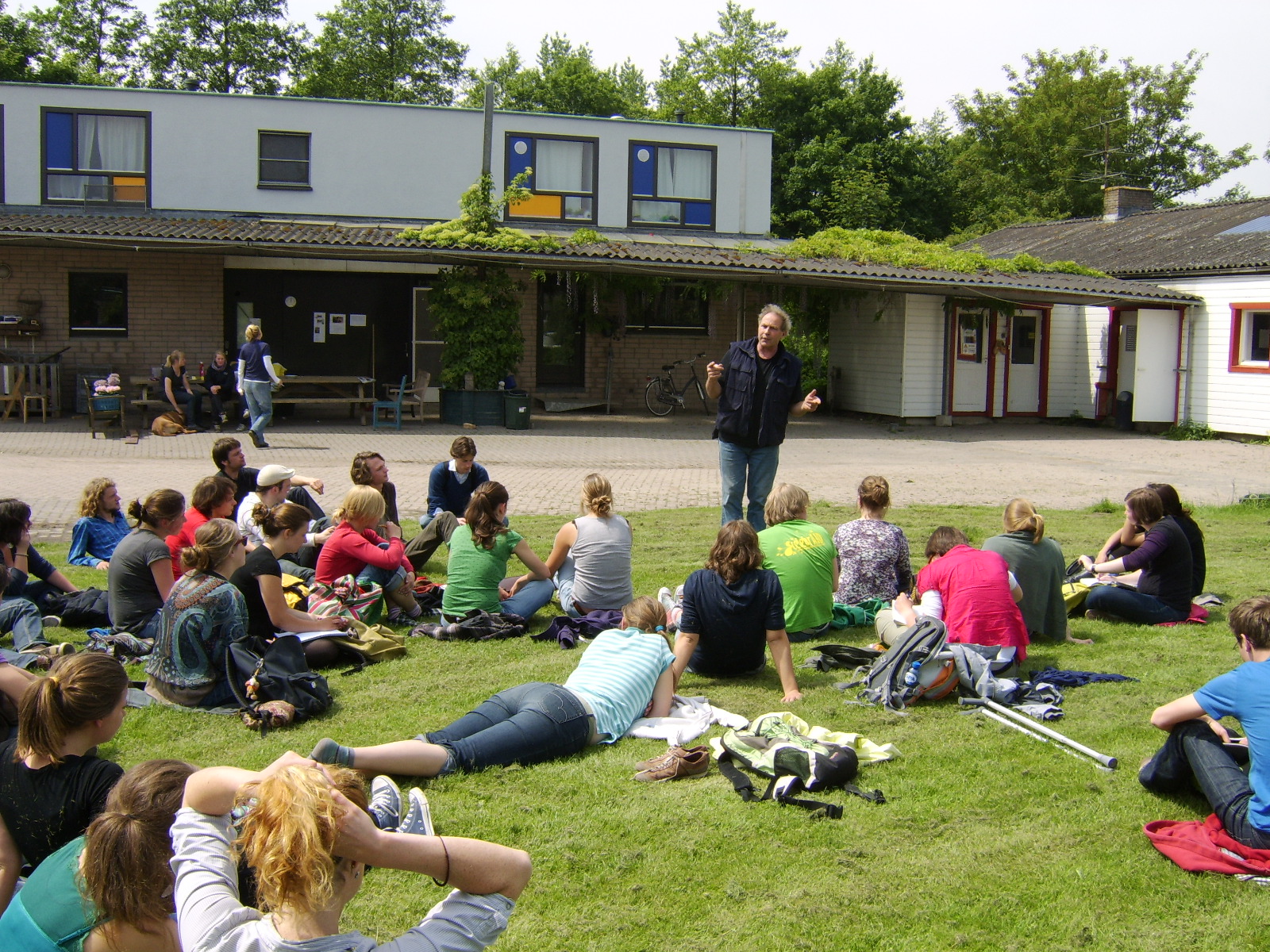
Last week, students of the course ‘Agrarische en rurale ontwikkeling, sociologische perspectieven’ had two days of excursions and could choose from 4 different excursions to see different models of multifunctionality and institutional arrangements in farming (see Birgit’s blog about a different excursion). With our group, we visited the Stadsboerderij Almere and the nearby Zonnehoeve in Zeewolde. Both farms have different other activities related to farming, such as school education, cattle in nature reserves, home sales of products, relations with care institutes.
Both are also organic farms, or better; bio-dynamic farms, which goes a step further in closing the nutrient cycle than organic farming. The nutrient cycle turned out to be the key to understanding the multifunctionality of these farms. At the very core of it all was what Tineke called ‘the black gold’; good quality manure, the essential ingredient for a healthy and productive farm without dependence on external input.
 To illustrate her point, she took a handful of manure from last year and encouraged students to smell it. Hesitantly a few did. To their surprise it did not smell bad. The mixture of straw, urine and feces of the beef cattle was far into the composting process. It smelled more like soil than like shit….
At the Zonnehoeve they heard again about the importance of building soil. Piet told many unusual stories which illustrated that building soil is quite literally building a resilient farm. He showed his long list of activities in which he diversified which dazzled the students (amongst others, a bakery, permanent housing for caretakers, facilities for therapy with horses, internet shop). But starting with his dairy herd, he emphasised the importance of Tineke’s ‘black gold’ too.
The centrality of the herd in the farming philosophy of both the Stadsboerderij and the Zonnehoeve, illustrates very well the theoretical framework which the students had learned in class (see Ploeg et al 2003). Grounding the farm in this vital resource for a healthy nutrient cycle, both farmers deepened their farm strategy by shortening the supply chain whilst delivering high quality organic produce and from that solid base they broadened their farm with new additional functions. Tineke explained this by showing her ‘black gold’, which had brought good economic revenue of their core activity; producing food (e.g. onion, pies, carrots) which made it possible to invest in an entire new facility consisting of a farm-house and barn for a further expansion into care farming.


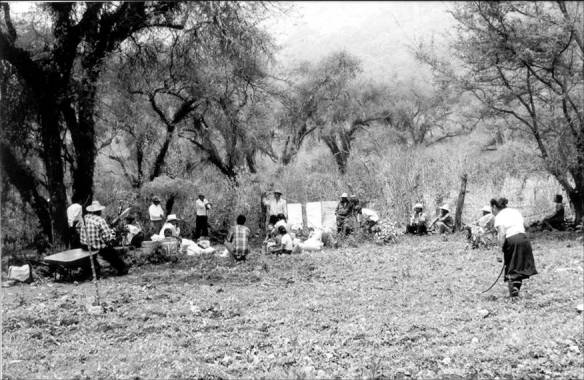
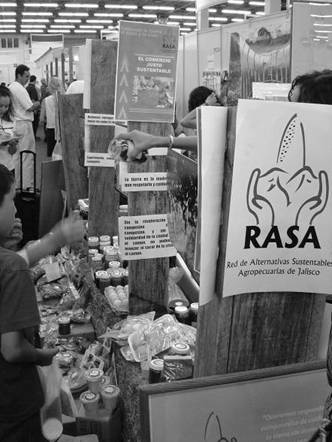 The RASA´s main objective is strengthening a development model that aims to mitigate the local impacts of global processes and that permits the transition towards sustainable local development. In practice, the RASA organizes workshops on organic agriculture and fair trade, and organizes farmer-to-farmer meetings for sharing experiences (including political discussions on the countryside). These activities take place in the rural and peri-urban areas of Jalisco. The RASA also designs and implements new fair trade-channels, mainly in the metropolitan area of the Jalisco state capital Guadalajara. As such, the RASA´s actions are also directed at urban consumers. Finally, articulation with other social movements is actively sought for. Thus, the RASA seeks to create new room for maneuver by establishing strategic alliances with different societal actors.
 Rural Sociology Wageningen University