The ‘Suit’ of Urban Agriculture

Marlinde Koopmans of Van Hall Larenstein presented her thesis results yesterday in a workshop at Stroom, The Hague. Her thesis will be online available in September. For now she presents her main results in the below article.

By VHL student Regional Development Marlinde Koopmans (marlinde.koopmans@gmail.com):
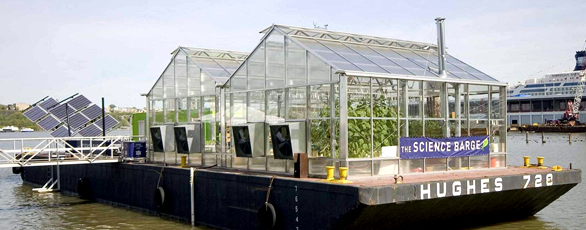
groundworkhv.org/programs/environmental-education/science-barge/faqs/

Lately urban agriculture has gained interests of scholars, policy makers and citizens. Urban agriculture forms a unique integration with the urban system. It uses resources from the city and produces for the city. For the Foodprint program, Stroom has investigated the potentials of urban agriculture for the city of The Hague.In terms of flows of energy and food is a city one giant glutton, consuming tons of high valuable material coming from the countryside and only leaving tons of waste in return. The Hague therefore has, like other cities, to increase its environmental sustainability, for example the reduction and reuse of waste, the improvement of the urban climate.

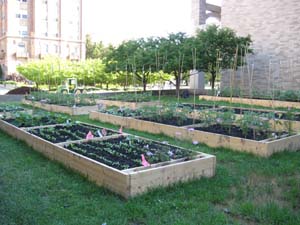
It requires a systematic change of the metabolic system of the city. Various, often costly, measures are undertaken in order to change this unsustainable metabolic system of the city. Yet these are all very specific solutions to specific problems for example: the assigning of ecological protected areas to certain regions in The Hague and municipality buildings being covered with solar panels to supply energy.Since agriculture can form an ecological circular system, urban agriculture will be able to combine a multitude of environmental facets.

The research investigated the potentials of urban agriculture to contribute to the sustainability of The Hague.Organizations active in The Hague were asked about the possibilities to integrate urban agriculture in the city; how and where could this happen, and how can the respondents participate? Continue reading

Second Sustainable Food Planning Conference – Reminder

As I announced in a blog on the 31st of March, the Urban Performance Group of the University of Brighton (UK) will host the second European Sustainable Food Planning Conference on 29 and 30 October 2010. Planning for sustainable food production and consumption is an increasingly important issue for planners, policymakers, designers, farmers, suppliers, activists, business and scientists alike. In the wider contexts of global climate change, a world population of 9 billion and growing, competing food production systems and diet-related public health concerns, are there new paradigms for urban and rural planning capable of supporting sustainable and equitable food systems? This conference will promote cross disciplinary discussions between active researchers and practitioners in response to this question, and related issues articulated during the first European Sustainable Food Planning Conference held in 2009 in Almere.
Working at a range of scales and with a variety of practical and theoretical models, we will review and elaborate definitions of sustainable food systems, and begin to define ways of achieving them. To this end 4 different themes have been defined as entry-points into the discussion of ‘sustainable food planning’. These are:

  1. Urban agriculture;
  2. Integrating health, environment and society;
  3. Food in urban and regional planning and design;
  4. Urban food governance

For each theme we are seeking contributions. Abstracts should be no longer than 500 words, and e-mailed to Andre Viljoen (a.viljoen@brighton.ac.uk) no later than the 31st May 2010.

For more information, see the conference website.

Second European Sustainable Food Planning Conference

As a follow-up of the first European Sustainable Food Planning Conference, which took place on 9 and 10 October 2009 in Almere (The Netherlands), the Urban Performance Group of the University of Brighton (UK) will host the second European Sustainable Food Planning Conference on 29 and 30 October 2010. Like the first one, this second conference will be held under auspices of the Association of European Schools of Planning (AESOP).

Context and aim

Planning for sustainable food production and consumption is an increasingly important issue for planners, policymakers, designers, farmers, suppliers, activists, business and scientists alike. In the wider contexts of global climate change, a world population of 9 billion and growing, competing food production systems and diet-related public health concerns, are there new paradigms for urban and rural planning capable of supporting sustainable and equitable food systems? Continue reading

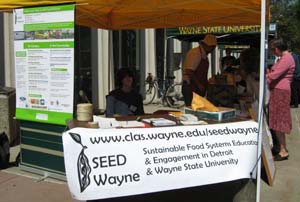
Sustainable Food Systems Education and Engagement in Detroit

Recently, in the process of writing an international research proposal, I had an email exchange with Dr. Kami Pothukuchi, Associate Professor in Urban Planning at the College of Liberal Arts and Sciences of Wayne State University. Dr. Pothukuchi is, together with Prof. Jerry Kaufman, one of the founders of food planning in the USA. She was the first to write about food as a stranger to the planning field in 2000 and is one of the authors of “Community and Regional Food Planning: A Policy Guide of the American Planning Association“. This policy guide was a major source of inspiration for organizing the first European Sustainable Food Conference under auspices of the AESOP.

In our email exchange Dr. Pothukuchi informed me that she has recently become director of SEED Wayne. SEED is the acronym for Sustainable food systems Education and Engagement in Detroit. 

SEED Wayne is dedicated to building sustainable food systems on the campus of Wayne State University and in Detroit communities. SEED Wayne works in partnership with community-based organizations promoting food security, urban agriculture, farm-to-institution, and food and fitness planning and policy development. SEED Wayne embraces core university functions in teaching, research, engagement and operations. 

I think SEED Wayne is a perfect example of the role a university can and should play in enhancing sustainable food systems as well as in creating a learning-by-doing environment for students in which close collaboration with local communities is an intrinsic part of university teaching and research. For those interested in SEED Wayne download the brochure or simply browse SEED Wayne’s website.

Food, agriculture and cities

Recently the Food and Agricultural Organisation (FAO) has published a brochure and briefing note about food and agriculture in and around cities. Like many international public bodies, national governments and NGOs the FAO is concerned about the social, economic, ecological and health consequences of the concentration of the world’s population in and around large cities. In the brochure the FAO states that there is an urgent need to invest in urban food programmes: 

The 4th World Urban Forum cited the need for policies and interventions to ensure that the increasing number of urban poor do not get left behind. The food dimension of poverty in urban areas still has not been translated into sufficient policy action in many countries. Rural-urban linkages will become increasingly important. Urban policies also need to acknowledge the role of urban and peri-urban agriculture in urban development, ensure urban food supply and strengthen livelihoods of poor urban producers. This includes removing barriers and providing incentives for urban and peri-urban agriculture (UPA) as well as improving natural resource management in urban and peri-urban areas. … A paradigm shift in both urban and agriculture development, planning and policy formulation is required in order to ensure access to urban food security, improved environmental management and enhanced rural-urban linkages.

In order to broaden the approaches and to gather new insights for cities both of developing, intermediate or developed countries,  the FAO’s Global Forum on Food Security and Nutrition (FSN Forum) has opened a debate which is, in terms of contributing to the debate, only open for FSN forum members. However, everyone can read contributions to the debate. Furthermore, for those interested in this topic, I can highly recommend the website of the FAO’s Food for the Cities Initiative. It contains a lot of interesting fact sheets and publications about the multiple aspects related to food, agriculture and cities.