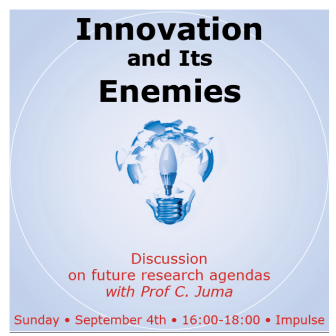
Innovation and Its Enemies: Discussion on future research agendas

Untitled

The Opening of the Academic Year is fast approaching. Register now for an opportunity to discuss the future of innovation research with this year’s Keynote Speaker, Professor Calestous Juma (Harvard University) and  Cees Leeuwis,Professor of Knowledge, Technology and Innovation (Wageningen University).

Date: Sunday September 4 2014
Time: 16:00-18:00
Location: Impulse (building number 115)

Agenda

16:00 Welcome and Introduction by Dr Sylvia Karlsson-Vinkhuyzen
16: 10 Presentation by Prof Calestous Juma
16:30 Reflections by Prof Cees Leeuwis
16:40 Discussion moderator  Dr Jessica Duncan
17:10 Closing remarks by Dr Sylvia Karlsson-Vinkhuyzen
17:15 -18:00 Drinks, snacks and meet and greet
 

calestous_juma-size-custom-crop-1086x724

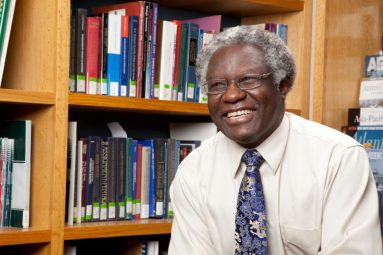
Professor Calestous Juma- Keynote Speaker for Opening of the Academic Year 2016-2017

Farm Experience Internship 2016

This summer the 3ECTS international summer course “Farm Experience Internship” (FEI) will take place at the Wageningen University. From 25 Juli – 19 August 2016, students will learn all about producing food, food sovereignty, the soil, the reality of farmers/ gardeners/ peasants, nutrient cycles, seeds, biodiversity, agroecology and much more! Besides workshops, lectures and excursions, students will work in a farm or garden for two weeks, to experience the reality on the land and learn all about agroecology in practice!

The FEI is organised by de Boerengroep (Farmers Foundation) and Otherwise. The Rural Sociology group is involved in the organisation and examination of the capita selecta connected to this course.

More info and signing up (subscription closes at 20th June):  https://farmexperienceinternship.wordpress.com/

See also this short movie.

Panel Discussion: Strengthening Farmer-led Seed Systems

On June 15, the Boerengroep, together with ILEIA, Louis Bolk Instituut and Biodiversity International organise a panel discussion “Strengthening Farmer-Led Seeds Systems: focus on access and benefit sharing”. For more information,  visit the website of the Boerengroep.

Towards a Common Food Policy for the EU – a 3 year reflection led by IPES-Food

March 17 2016 IPES-Food (Twitter @IPESfood) launched a three-year process of reflection and research entitled: Towards a Common Food Policy for the European Union. IPES-Food will convene scientists, civil society groups, grassroots organisations and policy-makers from various governance levels in order to identify the policy tools that would be needed to deliver sustainable food systems in Europe. Kick-off meeting will be on April 17 in the European Parliament. A concept note Towards a Common Food Policy for the EU can be downloaded. Olivier De Schutter, co-chair of IPES-Food, will lead the process and explained the need for an EU food policy in an address to the European Economic and Social Committee on March 11th in a video:

A glimpse of an organic farm in the Netherlands

By Tian Yu, a PhD candidate at Wageningen University, who’s research focusses on organic farming and rural development.

Since the ecological movement came into being in the sixties, organic farming has kept on developing and now has a history of half century in the Netherlands. Today’s organic farm is different from what it was in the beginning. Some ‘modern elements’ have been added, but the underlying social and environmental principles are still the same.

After doing some readings and interviews about organic farm in the Netherlands, I finally got the chance to experience a real, tangible Dutch organic farm. The farm I visited is located in the famous Dutch ‘polders’ in the Flevoland province, and produces mainly vegetables. It has 75 hectares of land, which is bigger than the average organic farm in Holland. Even though it has no plants or work in the field during wintertime, still I have experienced and seen a lot, especially regarding energy- and labour use on the farm. It’s easy to notice at first that some fuel-based and electricity-based machines were used for planting, harvesting and washing vegetables, which is kind of out of my imagination. But also the so-called new energy – solar energy and methane – are used here.

Continue reading