A school meal in Dois Irmáos (2)

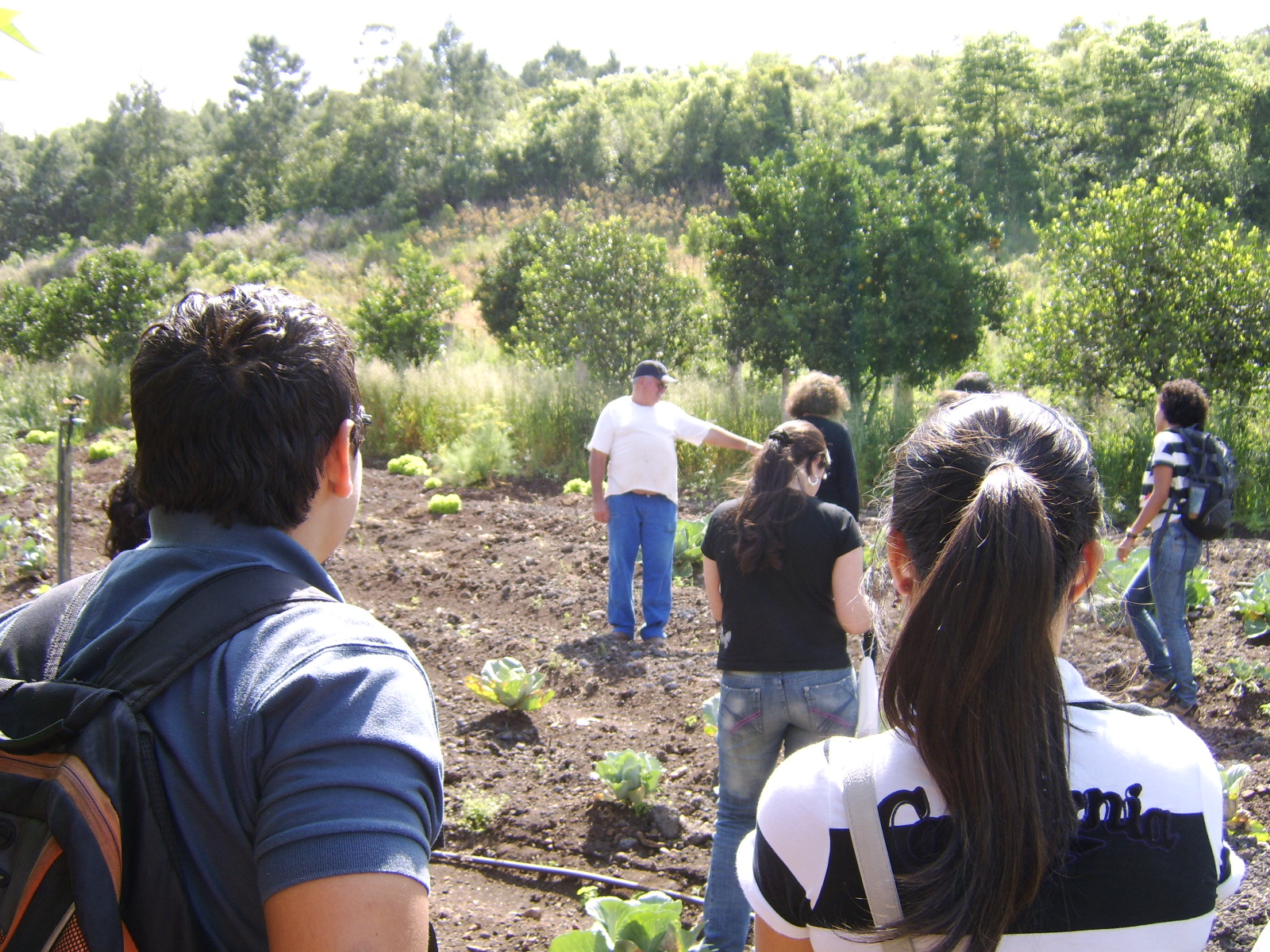
Municipal garden farmer explains

The Brazilian School Food Program underwent a lot of changes and, as posted earlier, the biggest change is related to localisation of the school meals. Previously, national menu’s with national tendering contract for enormous quantities to which only big companies were able to bid competitively were what the program was about. To give an idea, for 2010 the estimation was a total school food procurement market of 3 billion dollar providing food for 47 million students. Now cities and municipalities are responsible for contract tendering and supply selection. This has created opportunities to shorten the food chain although many municipalities still follow the logic of mass production and long supply chains (Triches and Schneider 2010). Therefore, additional Law 11947 created the rule that 30% of fresh produce has to come from the ‘family farm’.

Opportunities, but it has also created challenges. At municipal level, capacity is now assumed for things like the nutritional balance of menu’s based on local products, the legal process of tendering and supplier selection with many more suppliers and overseeing the many other issues such as logistics. Not all municipalities do have this capacity yet. Equally, not all ‘family farmers’ are equipped to supply particular quantities and collaborate with colleague farmers to meet demand.

However, in the State of Rio Grande do Sul many good examples can be found too. One of these is the school food program in the city of Dois Irmáos (see also Triches and Schneider 2010 in Portuguese). The municipality created a municipal ‘huerta’, a vegetable production garden which produces almost all greens for the school meals. Furthermore in collaboration with Rural Extension a pool of 160 family farmers is working with the program. Every 6 months, the municipality calls a tender to buy its supply for the coming half a year. Each time, 10 to 15 farmers of this pool are selected to supply foods like potatoes, onions, milk and meat. Although the bureaucracy involved in this tendering process is one of the biggest problems, the family farmers are not subject to the same legal scrutiny as is normal for other products. Buying from family farmers is done through a separate program PAA (Food acquisition program) where a certificate is needed which proves that the farmer can be classified as a ‘family farmer’ but where the language is different and the product descriptions simpler such as ‘salad’ or ‘potato’ rather than a legal description. The after-school which we visited invested in its own meat-cutting room in response to buying fresh meat from local farmers. Local nutritional studies show that the children like the meat and other food better.

Excursion Biodiversity in Brabant

By Elisa de Lijster

After I completed my MSc-thesis for International Development Studies (see earlier post in Dutch) I’m now working at the Centre for Agriculture and Environment (Centrum for Landbouw en Milieu or CLM) on my second MSc thesis project about the current turmoil in Dutch Nature Policy.

I will explore and hopefully find new and creative ways of managing and realizing nature in combination with agricultural and other – out of the box – practices. For this, I will undertake interviews with actors from State Forestry Service, Agricultural Environmental Cooperatives, Nature Organisations, Farmers’ Union and Governmental Administrators. Apart from the interviews, I will go as participant observer to symposia and meetings organised by several nature organisations which have the aim to discuss the future course of nature policy in the Netherlands.

CLM under the header of the Netherlands Rural Network (Netwerk Platteland) is also organising a field excursion focusing on nature & biodiversity and cooperation between different parties in the Province of Brabant (see the announcement, in Dutch, and the site biodiversiteit in Brabant). We will visit several sites and projects such as the Association of Dune Farmers, the Nature Museum, the project Nature Gate and the project Biodiverse Farm Yards.

The purpose is to exchange knowledge and learn from each others’ experiences and bottle necks. Of course, from an academic and scientific perspective, such a day is an excellent opportunity for participant observation: to meet relevant actors and in my case to see how they perceive the changes in Nature Policy which could affect their livelihoods and planning projects. If you have an interest, see the announcement. 

Elisa de Lijster (elisa.delijster@wur.nl

MSc International Development &  MSc Forest and Nature Conservation

Conference call – Agriculture in an Urbanizing Society (new deadlines)

In June I published a post about the upcoming conference ‘Agriculture in an Urbanizing Society: International Conference on Multifunctional Agriculture and Urban-Rural Relations’, which included a call for Working Group proposals. The deadline for submitting Working Group proposals was 1 September 2011. This post is to announce that the deadline for submitting Working Group proposals has been postponed to 15 september 2011. If you would like to convene a working group but don’t have time to write a proposal, you can also express your interest by sending me an e-mail (han.wiskerke@wur.nl). Have a look at the conference website for an overview of the working group themes that have been proposed by the scientific committee. The deadline for abstracts will also be postponed by 2 weeks to 15 December 2011.

Moonlight farmers and Lump suckers; The ICRPS Summer School in Norway

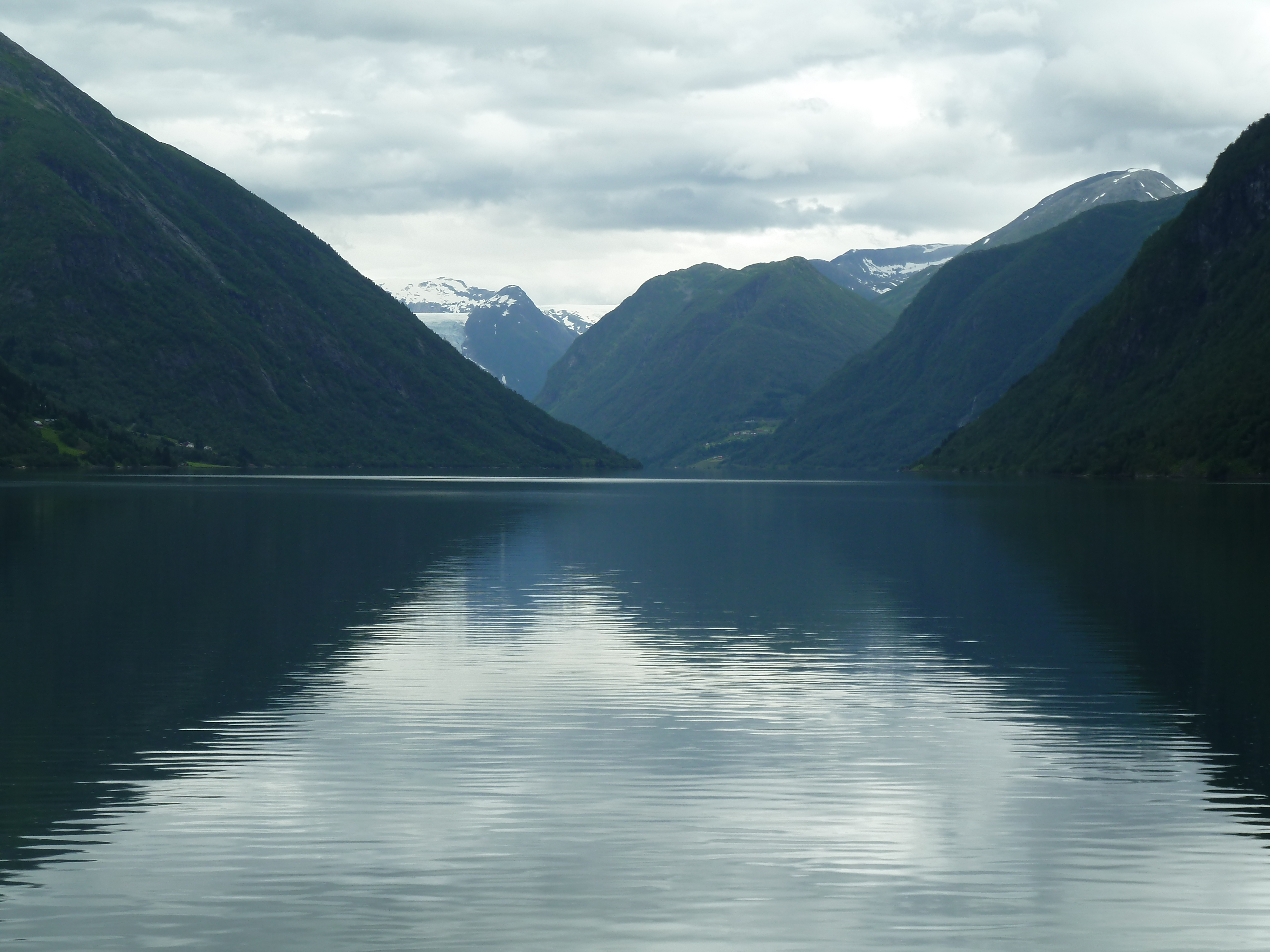
This Summer School about policies for rural development took place from June 25th to July 9th 2011 on 2 locations in Norway, in Oslo and in Sogndal. The course involved a variety of lectures, discussions and group word on issues such as natural resources, community development, rural services, renewable energy, food & agriculture, policy and climate change. The diverse group of students (some of them already working in rural development), faculty members and two OECD researchers included mainly people from Europe and the US (especially Canada) and discussed not only rural development in Norway, but compared this with interesting cases in their own countries. I only attended the second week in Sogndal, a town located between Bergen, Oslo and Trondheim, at one of the most beautiful fjords in Norway. Sogndal is located near the largest glacier in Europe.
Moonlight farmers refers to the agricultural situation in Norway: only 3% of the land is used as arable land, the average size of a farm is small and many landowners have a job which they attend in the daytime, while doing farm work during ‘moonlight’ (in fact in summer the daylight lasts very long in Norway).
Lump suckers refers to innovation in aquaculture in the Norwegian fisheries. Norway is a large exporter of fish, especially salmon. In aquaculture farms salmon is produced under controlled conditions. One of the biggest problems is lice-infection on salmon. An ex-professor which runs a research station and aquaculture farm in Sogndal is developing some important innovations: he grows a special type of fish, called lump suckers, which suck the lice of the salmon. He also experiments with improving the immune system of salmon.

More information can be found on the ICRPS website: http://www.umb.no/icrps2011. The papers and presentations are on the X-drive of the Rural Sociology Group. For a report with some impressions of the lectures or other information you can  mail to lummina.horlings@wur.nl . There is also a special Linked in group: International Comparative Rural Policy Studies Consortium.

Continue reading

Conference Call – Agriculture in an Urbanizing Society

A major demographic milestone occurred in May 2007. For the first time in the history of mankind the earth’s population became more urban than rural. This process of urbanization will continue in an accelerated pace in the forthcoming decades: the growth of the world population from 6 billion people in 2000 to 9 billion people in 2050 will mainly occur in urban areas. By 2050 the urban population will approximately be twice the size of the rural population.

However, this does not mean that urban areas are or will become of greater importance than rural areas. On the contrary, the urban and the rural have always heavily relied on each other and will do so even more in an era characterized by rapid urban population growth. Cities will continue to need resources such as food, fibre, clean water, nature, biodiversity, and recreational space, as well as the people and communities that produce and provide these urban necessities and desires. Hence, key questions for the next decades are how, where and by whom these urban necessities and desires will be produced and provided and if and how this can be done in manner that is considered to be socially, economically and ecologically sustainable and ethically sound.

In recent years the concept of multifunctional agriculture has emerged as an important reference in debates on the future of agriculture and the countryside and its relations with the wider and predominantly urban society. This is an expression of the fact that agriculture is not only valued for its contribution to food and fibre production and the economic development of the agro-industry, but needs to be assessed according to a much wider range of social, environmental, economic and ethical concerns. At farm level multifunctional agriculture is characterized by a variety of entrepreneurial strategies and activities, such as processing and direct marketing of food products, energy production, care for elderly and disabled people, and tourism. But multifunctional agriculture is also expressed at higher scales, such as the regional level (e.g. collective nature and landscape management schemes and regional branding) and the national level (e.g. policymaking and implementation).

Due to the multiplicity of activities, the multi-scalar character of multifunctionality and the geographical contextuality of expressions of multifunctional agriculture, research on multifunctional agriculture and changing urban-rural relations is highly fragmented, disciplinarily as well as geographically. Hence, this conference aims to advance the scientific state of the art in research on multifunctional agriculture and urban-rural relations by bringing together scholars of different disciplines (sociology, economics, spatial planning, land use planning, regional planning, urban planning, crop sciences, animal sciences, soil sciences, architecture, etc…) from all parts of the world.

Working group themes
The conference facilities allow for a maximum of 21 parallel working group sessions. The scientific committee has proposed 21 working group themes (see http://www.agricultureinanurbanizingsociety.com/UK/Working+group+themes/)   and is inviting prospective working group convenors to submit a short (max 500 words) call text for the theme they would like to convene. Proposals for a working group call text can be send to the chair of the scientific committee by email (han.wiskerke@wur.nl) before the 1st of September 2011. The deadline for submission of abstracts will be 1st of December 2011. Abstracts will have to be submitted to the convenors.

More information

Please check the conference website for more information.