The Teacher of the Year Elections 2016 start today!

Video

From Monday October 26th till Friday November 6th, you are able to vote for your favourite Wageningen University teachers, thereby deciding who will become the nominees for the Teacher of the Year 2016.

The Teacher of the Year Award is an expression of recognition of the teacher’s efforts. It acts as a source of inspiration and underlines the importance of good education.

Are you a 2nd-year student or up, then vote for your three favourite teachers by logging in with SSC via this link. By voting you have a chance of winning one of the Wageningen University sweaters!
The Teacher of the Year Award is initiated by the University Fund Wageningen.

Stage bij Stichting Demeter – meewerken aan visievorming op vernieuwing in BD landbouw

DemeterStichting Demeter biedt meerdere stageplekken voor studenten die komend winterseizoen 2015-2016 met boeren willen werken aan een visievorming op kennisontwikkeling en vernieuwing in de Biologisch Dynamische landbouw. Dit tegen de achtergrond van het maatschappelijk debat rond kwesties als: dierwelzijn; het gebruik van antibiotica en antibiotica vrije status; de mannelijke lijn in de veehouderij (wat doen we met stiertjes, bokjes en haantjes) en kalfjes bij de koe. Van ousher heeft de BD zich sterk onderscheiden van de gangbare landbouw in deze kwesties, maar dat zal naar verwachting minder worden. Hoe kan de BD zich dan blijven onderscheiden? Continue reading →

PhD course on spatial thinking in the social sciences

2014 a 2013 IMG_2719Today, the concept of socially produced space appears in publications with little apparent need for justification or explanation. Yet it was not so long ago that “space” was generally ignored in social theory. In this course we critically engage with the spatial turn in social sciences. This spatial turn brings into focus a relational approach, showing how the social comprises the spatial, and the spatial comprises the social.

Building upon a brief introduction about the return of spatial thinking in the social sciences, we will discuss three themes: the construction of the rural, in relation to the urban, our understanding of local in relation to the global, and constructions of nature. The course ends with a special session by prof. Ash Amin of Cambridge University on the spatial dimensions of democratic renewal.

The course “Spatial thinking in the social sciences ” is meant for PhD students in the social, environmental and political sciences. In the course we will switch between close reading of texts, workshops, and discussion. Students following this course will not only learn to think about place as an analytical category, but also learn to ‘work with place’ by applying various perspectives to concrete cases.

The course will be given from April 22 to April 29, 2016.

For more information contact Joost Jongerden at joost.jongerden@wur.nl

RSO student participation in Kyoto University summer school

IMG-20150915-WA0006

By MSc-students Sacha Buisman and Susanne Maenen (pictures).

It is the third day of the Kyoto Graduate Seminar on Economic Development and Sustainability. Three professors, respectively called sensei, from the Kyoto University gave lectures today on topics related to the theme: ‘agriculture, environment and sustainability’. The whole week, we will discuss a wide range of themes with a very multi-disciplinary group of students coming from Thailand, Laos, Korea, Denmark, the UK and Wageningen. In the city where the Kyoto Protocol was signed in 1997 and in the country where there was a massive nuclear disaster in 2011, we will look back at the economic development of the Asian continent while we try to envision possible sustainable pathways for the future economic developments. Today we discussed if, and how, economic growth and environmental conservation can be achieved simultaneously. In the last lecture of today we looked at food security from a Japanese perspective. One of the main challenges that Japan faces, just like almost every other country in the world, is the population shift from the rural areas to the urban areas. The average age of a Japanese farmer is 65 years, which will soon cause the diminishing of active farmers and the utilization of farm-land. How is the Japanese politics responding to this scenario? Mainly by following the US way of reasoning: ‘increase the efficiency and the productivity’. Which might be not the right solution, given the fact that a Japanese farm has an average of 2 hectare farmland. There are multiple Japanese bottom-up movements, such as the shura ku-eino (village farming collectives), who suggest ‘another’ sustainable pathways that focuses on small-scale farming of ‘diverse local actors with a diverse and multi-layered commitment’. Continue reading →

Course Global sense of place in period 2

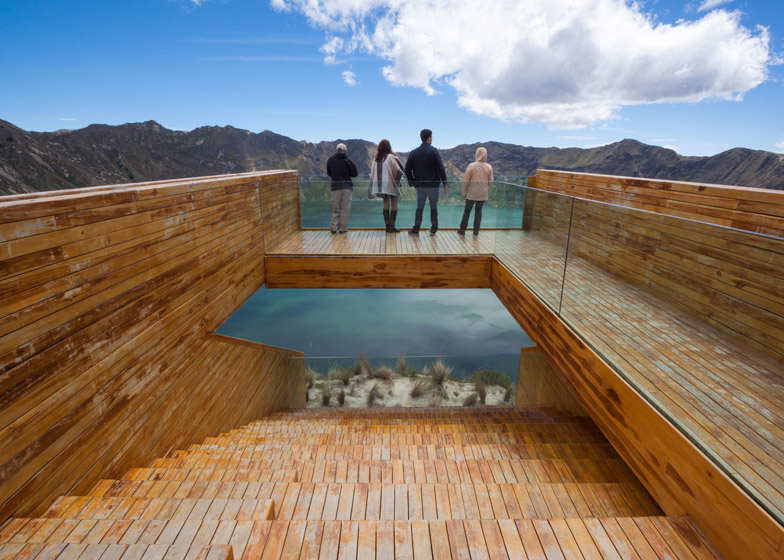
Volcano-crater-observation-deck-by-Javier-Mera-Jorge-Andrade-and-Daniel-Moreno_dezeen_784_3The course RSO-55306 A Global Sense of Place starts soon, so please register if you are interested to follow this. It  is an optional interdisciplinary course on sustainable place-based development for students from various master programmes (e.g. MDR, MES, MID, MLP, MUE, MOA, MFN). The course builds on the BSc course RSO-56806 Sociology and Anthropology of Place-shaping providing an introduction to place-based approaches in development. Knowledge of this introductory course is an advantage, but is not assumed. The course aims to make students acquainted with an interdisciplinary and place-based approach to development.

A relational place-based approach is seen as key to the understanding of interrelated rural and urban transformation processes and ergo sustainable development. In a relational approach places are considered as contingent but in time and space differentiated outcomes of three interrelated interdependent and unbounded transformative processes: political-economic, ecological and social-cultural. Places are time and space specific constructs, like their boundaries and connections.

By means of this course students will achieve profound understanding in key-concepts and methods on place-based sustainable development. Work from key thinkers in sustainable place-making will be critically discussed and examined on the basis of various cases. Guest speakers are invited to reflect on place-based approaches to sustainable development and illustrate these through case studies. Ultimately students will acquire a place-based perspective on development.

Main themes of the course

Central to a place-based approach is the conceptions of place as: 1) Arenas for negotiation, conflicting interests and power struggles; 2) Endowed with meaning and the constitution of identities, subjectivities and difference.

Different interdisciplinary themes will be addressed such as:

  • a relational approach of place and space;
  • key thinkers on place and space;
  • politics of place;
  • community development;
  • cultural approaches of place-based development
  • ‘the human dimension’, encompassing collaboration and leadership
  • ‘defence’ of places and conflicts

For more information, you can contact lummina.horlings@wur.nl