Call for Papers: Gendered food practices from seed to waste

Call for papers for the Yearbook of Women’s History (2016)

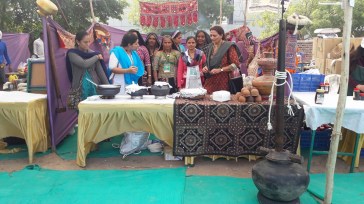
Traditional food festival

Pastoralist women at traditional food fair in Gujarat, India  (photo credit: MARAG)


Gendered food practices from seed to waste
Guest editors: Bettina Bock and Jessica Duncan

About the Yearbook

The Yearbook of Women’s History is a peer-reviewed academic annual covering all aspects of gender connected with historical research throughout the world. It has a respectable history in itself, reporting on issues concerning women and gender for 35 years. The Yearbook has addressed topics such as women and crime, women and war, and gender, ethnicity and (post)colonialism. Overtime the Yearbook has shifted focus from purely historical analysis to a broader historical and gender analysis, focused on women’s and men’s roles in society. By focusing on specific themes, the Yearbook aspires that each issue crosses cultures and historical time periods, while offering readers the opportunity to compare perspectives within each volume. There has been one previous issue related to food: Gender and Nurture (1999). The present volume is a follow-up and aims to testify to differences in scholarly approaches in this field since the 1990s.

About the Annual Issue

In nearly all societies gender has been and continues to be central in defining roles and responsibilities around food production, manufacturing, provisioning, eating, and disposal. Food–related work and practices along with context and cultures serve to construct and reinforce identities and social structures. At the same time, the gendered practices around food are complex and often contradictory. Much of the literature on gender and food explores these complexities and contradictions but continues to make use of dichotomies (i.e., rural/urban; local/global; producer/consumer; large-scale/small-scale; man/woman; past/future) that are increasingly less suited to critical analyses of the fluidity of experiences and science and thus limit our ability to better understand relationships between food and gender.

Continue reading

Feeding Dar es Salaam: where does all the meat come from?

By Marc Wegerif. PhD-candidate at the Rural Sociology Group, Wageningen University and carrying out research on food provisioning in Dar es Salaam. Contact: marc.wegerif@wur.nl

It was a Sunday afternoon, I sat at a table drinking beer and eating a grilled goat’s leg with Larry and Samuel. We were at the Pugu cattle market on the edge of Dar es Salaam and my companions were and are meat traders, butchers I suppose, there to buy some cattle. Dar es Salaam is Tanzania’s largest city with a fast growing population of around 4.5 million making it a major market for animals from across the country. From our table in the shade we could see groups of cattle and observe negotiations going on and the odd fight between bulls and arguments between traders. Continue reading

Urban Agriculture in Romania

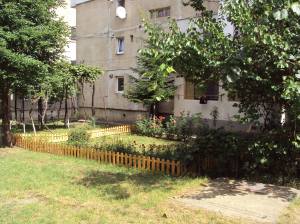
11879645_1022934331074106_583476184_o-2This MSc thesis by Anamaria Alupoaie (MSc Organic Agriculture) investigated the reasons for failure of urban gardens, and the impacts of gardens on resident’s ‘sense of place’, in Dorohoi city in Romania.

Urban Agriculture plays a different role in the food system then agriculture in rural areas. In some cases, it represents a source of income or builds  sociological relations between citizens, through participation in the garden. In other cases, urban agriculture may originate from rural agricultural habits and traditions. With these inherited habits, urban farmers improve the existing environment through their practices, and with these practices they inspire others to take action in maintaining their own ‘green corners’ in the public space.

11882459_1022933601074179_396130938_oThe study was undertaken in Dorohoi region, a city situated on the north side of Romania, a small city with  31,093 inhabitants. In the last 20 years, the city experienced a period of decline due to the closure of big factories that offered jobs for more than half of the inhabitants. Since then the unemployment rate grew, and reached 80-85 %, in 2009. And it is estimated that now over 50% of the population lives below the country’s poverty line, as a result of the loss of the big industry. The availability of resources and income has triggered city dwellers to rely to a greater extent on local food production. Among the existing gardens, new ones started to flourish around the apartment buildings, in urban public spaces, and residents grew their edible greens. As such, in the area proposed for investigation, Dorohoi, urban agriculture continued through the communities of rural people that had moved into the urban center. They developed gardens in the green spaces of the city as a traditional habit inherited from their rural life. But this period of prosperity didn’t last, and about a decade ago, the city gardens were destroyed, with no significant grounds left. Continue reading

Local, fresh and directly from the farmer!

By Potira Preiss, visiting PhD-candidate from Federal University of Rio Grande do Sul State who is doing a doctoral internship at the Rural Sociology Group

That is the slogan carried by De Groene Schuur, where 70 families of consumers cooperate to get good organic food. The initiative started on 2013 and has being growing since. Mobilized by the situation of local farmers struggling to sell their products in the conventional markets, De Groene Schuur offers a market with fair payment for farmer and a lower price for consumers. Few kilometers, little packaging, seasonal products and old fashioned varieties give a special taste to the food!
DSCN5277
Continue reading

Thesis opportunity: Effective strategies for civil society engagement in global food security governance

New Thesis Opportunity with Rural Sociology Group, Wageningen University

Proposed title: Effective strategies for civil society engagement in global food security governance: An analysis of CSO interventions in the Committee on World Food Security

Key words: Food security; civil society; policy; global governance; Committee on World Food Security; Civil Society Mechanism; theories of change

Context: The world food price crisis of 2007/08 shook global food governance. Pressured to find solutions for unprecedented prices increase of led to the development of new global initiatives and the reform of old ones.  One of the most promising actions was the reform of the United Nation’s Committee on World Food Security (CFS), who transformed itself from “the most boring UN body of all” – in the words of an experienced diplomat based in Rome – to the foremost inclusive international and intergovernmental platform for food security, with substantive participation of different actors including member states, civil society and private sector. Continue reading