
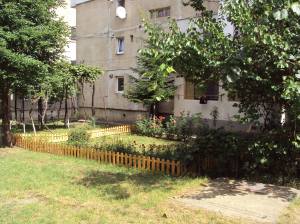
 This MSc thesis by Anamaria Alupoaie (MSc Organic Agriculture) investigated the reasons for failure of urban gardens, and the impacts of gardens on resident’s ‘sense of place’, in Dorohoi city in Romania.
Urban Agriculture plays a different role in the food system then agriculture in rural areas. In some cases, it represents a source of income or builds sociological relations between citizens, through participation in the garden. In other cases, urban agriculture may originate from rural agricultural habits and traditions. With these inherited habits, urban farmers improve the existing environment through their practices, and with these practices they inspire others to take action in maintaining their own ‘green corners’ in the public space.
 The study was undertaken in Dorohoi region, a city situated on the north side of Romania, a small city with 31,093 inhabitants. In the last 20 years, the city experienced a period of decline due to the closure of big factories that offered jobs for more than half of the inhabitants. Since then the unemployment rate grew, and reached 80-85 %, in 2009. And it is estimated that now over 50% of the population lives below the country’s poverty line, as a result of the loss of the big industry. The availability of resources and income has triggered city dwellers to rely to a greater extent on local food production. Among the existing gardens, new ones started to flourish around the apartment buildings, in urban public spaces, and residents grew their edible greens. As such, in the area proposed for investigation, Dorohoi, urban agriculture continued through the communities of rural people that had moved into the urban center. They developed gardens in the green spaces of the city as a traditional habit inherited from their rural life. But this period of prosperity didn’t last, and about a decade ago, the city gardens were destroyed, with no significant grounds left. Continue reading


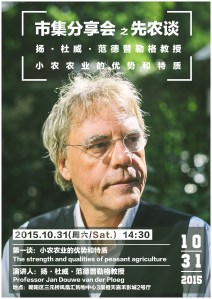 At the end of October I had the opportunity to meet a large group of social activists involved in the development of Farmers’ Markets in Beijing. I gave a short presentation in a meeting with some 150 people (see the announcement). It took place in a cinema with my Power Point Presentation projected on the screen normally used for films. The good thing was that the projected images were now up to 5 times larger than me myself. I felt reduced to the right proportions. Afterwards we had a lengthy conversation on the construction of new markets, peasant agriculture and new peasants. The nearby Farmers’ Market (that frequently changes location: it travels through Beijing) impressed me very much: it was, as it were, a perfect illustration of the discussion we had inside the cinema. Many peasants, many new peasants as well.
