Call for abstracts Agriculture in an Urbanizing Society Conference

The programme committee of the Agriculture in an Urbanizing Society Conference, which will take place in Rome (Italy) from 14-17 September 2015, has opened the call for abstracts. Abstracts can be submitted through the conference system EasyChair until 31 March 2015 for one of the following 23 working groups (click on the working group for description and convenors or download pdf (500 KB)):

  1. WG1 – Connecting local and global food systems and reducing footprint in food provisioning and use
  2. WG2 – Short food supply chains (regional products; farmers’ markets; collective farmers’ marketing initiatives; alternative food networks; CSA)
  3. WG3 – Economic impact at the farm level
  4. WG4 – New business models for multiple value creation
  5. WG5 – Entrepreneurial skills and competences, knowledge and innovation systems and new learning arrangements
  6. WG6 – Transition approaches
  7. WG7 – Regional branding and local agrifood systems: strategies, governance, and impacts
  8. WG8 – Food systems and spatial planning. Towards a reconnection?
  9. WG9 – Land-use transformations
  10. WG10 – Urban agriculture I. Urban agriculture and Urban Food Strategies: Processes, Planning, Policies and Potential to Reconnect Society and Food
  11. WG11 – Urban agriculture II. Grass-root initiatives and community gardens
  12. WG12 – Urban agriculture III: Effects of UA. Urban agriculture: a potential tool for local and global food security, economic, social and environmental resilience, and community health and wellness
  13. WG13 – Care Farming/Social Farming in more resilient societies
  14. WG14 – Rural tourism (agri-tourism) and changing urban demands
  15. WG15 – Local arrangements for agricultural ecosystem services: connecting urban populations to their peri-urban landscapes through the ecosystem services of agriculture
  16. WG16 – Gender aspects of multifunctional agriculture
  17. WG17 – Civic agriculture for an urbanizing society: production models, consumption practices and forms of governance
  18. WG18 – Society Oriented Farming – working on the balance between market and societal demands
  19. WG19 – Food Security: Meanings, Practices and Policies
  20. WG20 – Revolutionary solutions for local food systems
  21. WG21 – Urban forestry, Green infrastructure
  22. WG22 – Food System Transitions: Cities and the Strategic Management of Food Practices
  23. WG23 – Conceptualising and Assessing City Region Food Systems

After a positive evaluation of the abstract the author will be asked to upload a paper of max 10 pages which will be published online on the website of the conference. There will also be the possibility to submit a short paper of max 2 pages enabling the authors to still publish their results in peer reviewed journals after the conference. Short papers will be published in a book of proceedings. The procedures for the papers will be published on the conference website soon.

“The role of civil society organizations and system relationships surrounding participatory organic nutrient waste cycling

Laura Cerrato recently completed her M.Sc thesis entitled “The role of civil society organizations and system relationships surrounding participatory organic nutrient waste cycling.” The following post is a summary of her case study evaluation of the urban De Zuiderhof Voelkstuin community composting initiative (Compoststraat) and its relationship to the city of Rotterdam and the Netherlands.

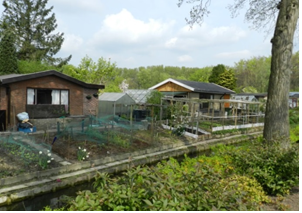
De Zuiderhof allotment

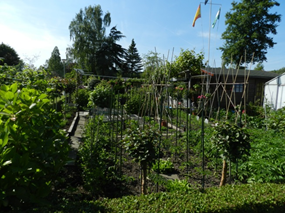
De Zuiderhof allotment

Examples of urban agriculture at the De Zuiderhof allotment garden in Rotterdam.

Examples of urban agriculture at the De Zuiderhof allotment garden in Rotterdam.

Continue reading

Origin Food: a market for identity – course starts March 16 2015

Monday March 16 2015 we will again start with the course RSO-21806 Origin Food: a market for identity.

Montbeliarde cheese made by the Meester Affineurs nearby Wageningen

Montbeliarde cheese made by the Meester Affineurs nearby Wageningen

The main aim of the course is to provide for a broad and scientific understanding of the growing importance of food products with an indication of origin within the globalising agro-food system. The course is obligatory in the specialisation Gastronomy of the Master Food Technology. No specific prerequisite knowledge is asked. The course is open to students from other Masters. Different educational backgrounds is stimulating for an interdisciplinary study of Origin Food Products in groups.

Food products with a geographical indication are becoming more important worldwide, both in economic and cultural terms. In the course a distinction is made between Origing Food Products with a protected Geographical Indication (PDO, PGI or TSG) based on EU-regulations such as Parma ham, Boerenleidse kaas, Café de Colombia and not officially acknowledged Origin Food Products locally sourced by e.g. restaurants, shops or online box schemes.

The course deals with a range of questions on OFPs organised in five themes: 1) Linking people, place and product: the construction of distinctiveness; 2) Regulation and legislation; 3) Marketing and branding; 4) Sustainability impact; 5) Consumers’ appreciation, regional gastronomy and food tourism.

The course consists of a combination of lectures, group assignments to study some Origin Food Products more in detail and a gastronomic excursion, often seen the higlight of the course.

For more information you can contact Dirk Roep (dirk.roep@wur.nl).

Agro-ecology in practice: Farm Experience Internship 2015 – get enrolled!

By Elske Hageraats, Msc. Biology and Msc. Development and Rural Innovation, WUR.

There is a battle for ‘truth’ (Foucault, 1976) and this fight for independent research and education is still going strong: be inspired by the story of the FEI

FEI 2014 LuizaFor my internship I have organised the Farm Experience Internship (FEI) 2014. The FEI is a international summer course at the Wageningen University for students and non-students, intended to bring theoretical knowledge from the University with practical skills and knowledge from farmers. Wageningen University students can get 3 ects credits for their participation in the FEI. Above you can see one of the FEI 2014 participants, Luiza from Brazil, harvesting ‘rainbow carrots’ in the Netherlands. Are you also interested in growing your own food, discovering local knowledge and practices on organic farms in the Netherlands? Do you want to learn about permaculture, agro-ecology and sustainable food systems? Would you like to interact and discuss with farmers to find creative, innovative ways of farming? Then this course is what you’re looking for! Join as participant, as farmer or organise the course at your own university as your internship. Check our website, or send us a mail: farmexperienceinternship@gmail.com.

Continue reading

Internship: the role of dairy in a sustainable diet

Dairy-products-1024x752 There are many definitions of a sustainable diet. A sustainable diet should not only be sustainable, but also be nutritious and healthy. Furthermore, in order to insure compliance, attainability is also an important aspect.

Sustainability, health and attainability all are very broad, overarching terms. In order to create a better understanding of those terms one should break them down in smaller more concrete determinants. E.g. sustainability can be determined by CO2 footprint, land use, water use, animal welfare, ……
In order to understand the role of dairy in a sustainable diet it is important to understand how dairy does score on the different determinants of sustainability. Furthermore, it is important to understand the influence of the dairy production process (from grass to glass) on the different parameters of sustainability.

Once the position of dairy in the sustainability landscape is defined, it is important to include other elements such as health, nutrition, food availability, habits, affordability etc. By taking all those elements together you can determine the position of dairy in a sustainable diet. Continue reading