Growth of local food economy in USA – Ken Meter

Sustainability impact is one of the five themes of the course ‘Origin Food: a Market for Identity’ (see my earlier post for more info). Surfing on internet, looking for some empirical material on the importance of local food for local economies, we came across the work of Ken Meter, president of the Crossroads Resource Center: 

Crossroads Resource Center, a non-profit organization, works with communities and their allies to foster democracy and local self-determination. We specialize in devising new tools communities can use to create a more sustainable future.

Ken Meter is one of the most experienced food system analysts in the United States. His work integrates market analysis, business development, systems thinking, and social concerns. As president of Crossroads Resource Center in  Minnesota, Meter holds 39 years experience in inner-city and rural community capacity building.

As documented ath the site, Ken Meter has promoted 45 local food networks in 20 US-states and one in Canada. He has thus built a record on building local food communities and its impact on local economy. In an interview published in three part on You Tube, he shares his vision and experiences on ‘ Building a local food economy’: see part I, part II, part III. At the CRC website also an example presentation of Ken Meter on the ‘Growth in local food economies‘ in the USA. An eye-opener to all of us knowing that the USA is the worlds largets food exporting country, but actually has to import food to feed their own residents as Ken Meter says.  Anyway, local food seem to be booming in the USA, the internet is loaded with initiatives, as was already documented in the posts of our collegue Petra Derkzen at this blogsite.

University Food Culture

source: crystalinks.com

Last week I ordered Italian at the new and growing campus lunch food market. What started with some Chinese dishes from a scooter has evolved into a small food market with multiple Chinese and also an Italian warm meal provider and long queue’s at the clock of twelve. The new market is popular, especially among Chinese students but more generally among foreign students. Apparently, a latent market is being tapped into, or how would the business economics department analyse this case.

But I guess it is also a matter of both institutional choices and food culture. The dominance of the Dutch lunch culture revolving around (home brought) sandwiches and milk lacks a true appreciation for the full warm lunch meal. Although university catering is trying to provide a ‘warm option’ to the large amount of foreign students and employees, somehow it stays an additional service rather than a serious business. The rather expensive warm dishes often with ‘exotic’ recipes somehow lack a cultural code which is present in the simplicity of the affordable lunch meals in the new food market.

Origin Food – course on Origin Food Products

Over the coming education period, covering eight weeks from March 1 till April 23, our group will again provide the MSc course ‘Origin Food:  a Market for Identity’. The course is compulsory for students of the Specialization Gastronomy of the Master Food Technology, but is open to students for other educational programmes as well.

Prosciutto di Parma

Food products with a geographical indication are becoming more important worldwide, both in economic and cultural terms. In the course a distinction is made between officially acknowledged ‘regional typical products’  with a protected geographical indication (such as Parma ham, Boerenleidse kaas, Café de Colombia) and ‘local food’ sourced locally by e.g. restaurants, shops or online box schemes.

The course deals with a range of questions on OFPs organised around five weekly themes: 1) Originality factors; 2) Regulation and legislation; 3) Marketing and branding; 4) Sustainability impact; and 5) Consumers’ appreciation, regional gastronomy and food tourism.

The course consists of a combination of lectures, guest lectures by experts, a gastronomic excursion and group assignments to study the particularities of Origin Food Products.

Contactperson: Dirk.Roep@wur.nl

Stages; Opzetten van buurtmoestuin in Tilburg

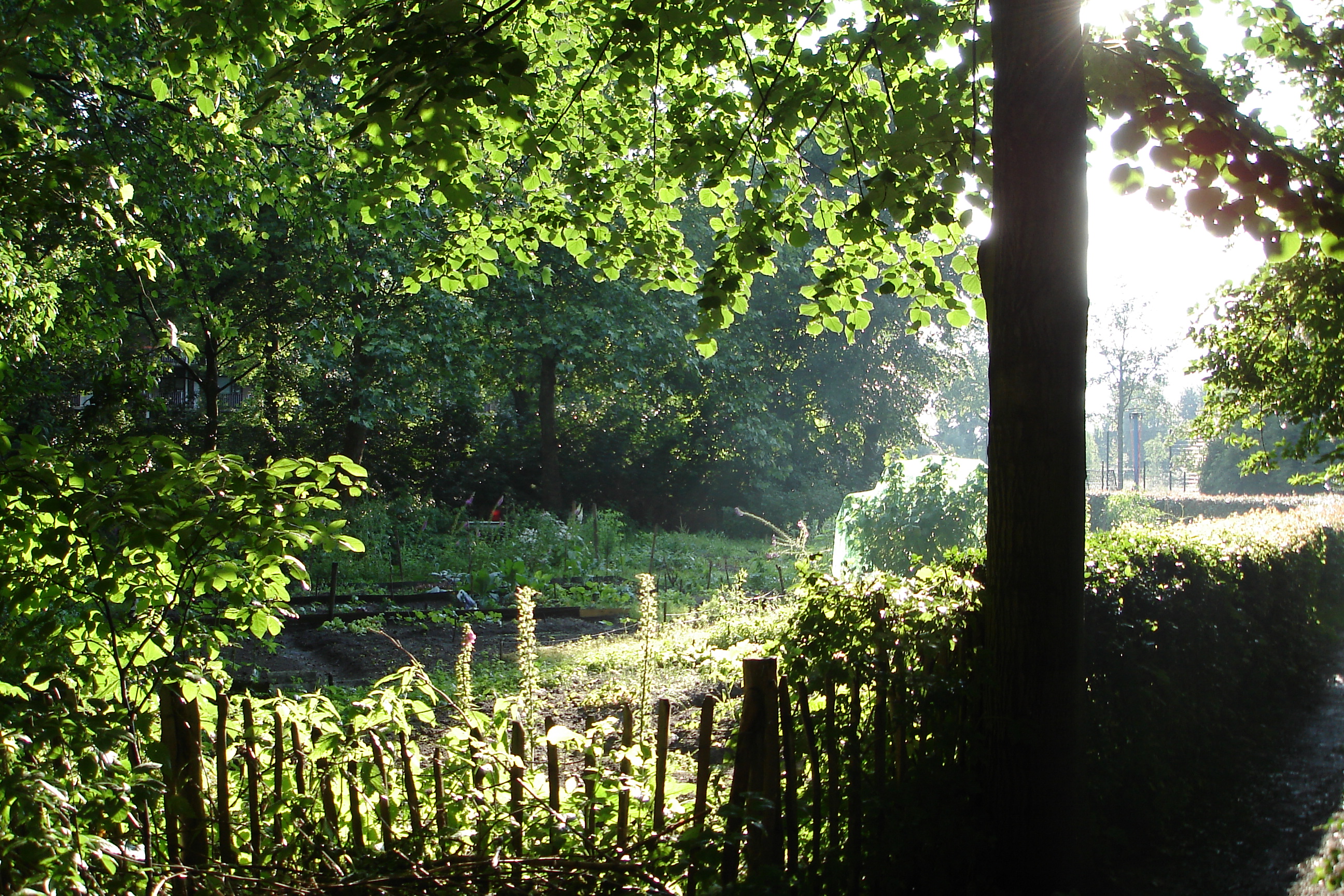
De gemeenteraad van Tilburg heeft ingestemd met het initiatief voor het opzetten van  buurtmoestuinen. Om dit te verwezenlijken zullen Brabantse Milieufederatie en welzijnsorganisatie Twern in samenwerking met de gemeente Tilburg en andere organisaties dit project gaan trekken. De BMF en Twern zullen de leiding hebben over dit project, maar er zal wel nauw samengewerkt worden met de andere partijen.

De Brabantse Milieufederatie is een onafhankelijke belangenbehartiger voor natuur,  landschap en milieu in de provincie Noord-Brabant. De Twern is een welzijnsorganisatie die maatschappelijke diensten levert.

Stage mogelijkheid 1:
Buurtmoestuinen kennen vele positieve effecten voor de buurt en het milieu. Het is de bedoeling dat de stagiair het veld in gaat en dit project realiseert. Beide organisaties beschikken over de nodige contacten en netwerken waar de stagiair volop gebruik van kan maken. Het is de bedoeling dat er uiteindelijk minstens 1 buurtmoestuin is opgestart en dat de organisatie voor de andere buurtmoestuinen in gang is gezet.

Stagemogelijkheid 2:
De gemeenteraad van Tilburg heeft al ingestemd op dit initiatief, maar de BMF en  Twern willen dit ook graag in andere gemeentes van Noord-Brabant gaan realiseren. Andere gemeentes zover krijgen en begeleiden bij het opzetten van buurtmoestuinen is een andere stage mogelijkheid.

Zij zoeken naar een enthousiast iemand die in staat is zelfstandig te werken, doorzettingsvermogen heeft, goed kan organiseren en initiatief nemend is.  Zij bieden een uitdagende leerplek, waarin veel ruimte wordt geboden voor eigen inbreng en wensen.

Looptijd is ongeveer 5 maanden voor de verschillende opdrachten en tot 1 jaar voor de combinatie.

Meer info bij Petra.derkzen@wur.nl of rechtstreeks bij:

John Vermeer
E-mail: john.vermeer@bmf.antenna.nl
Telefoon: 013-5356225 | 06-12579879
Karlijn Verschuren,
E-mail: karlijnverschuren@noord.twern.nl
Telefoon: 013-4553800

Voedsel als brug tussen beleid

Door Simone Plantinga – MSc-student

Eerder verscheen er op deze blog al het persbericht over mijn afstudeeronderzoek. Volgens de toenmalige planning had het rapport er ondertussen al moeten zijn. Helaas is dat niet gelukt. Het onderzoeksvoorstel vergde meer tijd, maar het resultaat mag er zijn (geïnteresseerden kunnen contact met me opnemen door een reactie op dit bericht plaatsen). Op dit moment ben ik bezig met het benaderen van mensen voor de interviews, als het goed is zijn de interviews en het overige onderzoek half maart afgerond. Vervolgens kan ik dan aan de slag met de data-analyse en het schrijven van het eindrapport.

Ik zal een korte samenvatting geven van waar het onderzoek over gaat en wat het doel is. Het onderzoek gaat over stedelijk voedselbeleid. Verschillende Nederlandse steden zijn hier al mee bezig, in reactie op de diversiteit aan problemen die er zijn met en rond voedsel. In Amsterdam is er bijvoorbeeld ‘Proeftuin Amsterdam’, in Utrecht ‘Lekker Utregs’ en in Rotterdam is er ‘Eetbaar Rotterdam’. Deze drie steden zijn verschillend in hun aanpak. In Amsterdam nam de (vooral) overheid in 2006 het initiatief om te komen tot een ‘Metropolitane voedselstrategie’. In Utrecht ontstond het initiatief bij milieucentrum Utrecht en Stichting Aarde. In Rotterdam ligt het initiatief bij onder meer architecten en onderwijzers. Continue reading →