MSc thesis opportunity: Environmental versus/and political ecology explanations of civil war

There is a fierce debate about the origins of the civil war in Syria.

Some argue that the civil war was caused by environmental induced scarcity (climate change). Key environmental factors identified are water-scarcity and climate variability. Drought is said to have contributed to the displacement of rural populations to urban centers, unemployment and the occurrence of food insecurity with subsequent effects on political stability (Gleick 2014).

Others have argued that the relation between drought, migration and conflict is not so clear-cut (Eklund & Thompson 2017). They content that the central causes of the war were the Syrian regime’s agrarian policy and the rural poverty it produced (political ecology). The regime’s social and economic reforms cut the peasantry from subsidies, resulted in a loss of livelihood and brought large parts of the population out of the social reach of the state (Daoudy 2020).  

For this thesis you will evaluate and assess climate change and political ecology centered explanation of the causes of the civil war in Syria. Based on this reading, you are challenged to 1) develop an approach beyond the climate change – political ecology controversy or 2) assess the policy implications of both approaches. For this study, you will analyze scientific articles, reports by international organizations and NGOs, but also consider datasets of FAO and WB.

More info: joost.jongerden@wur.nl

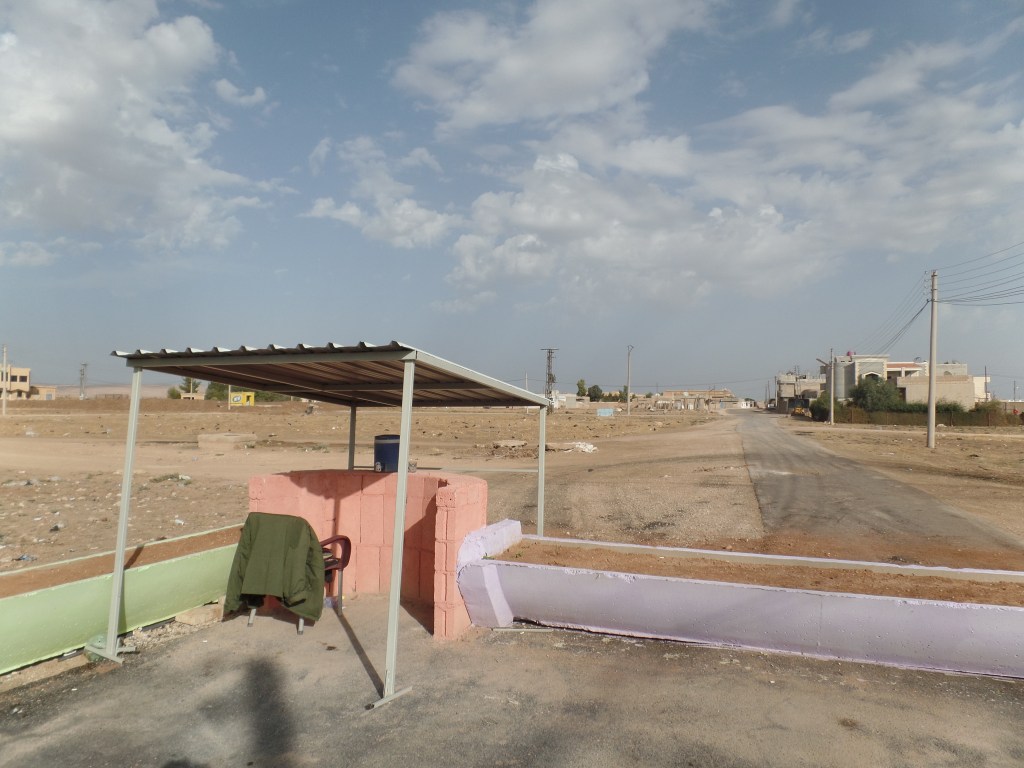
SAMSUNG CAMERA PICTURES

New Book: Achieving Sustainable Urban Agriculture

Book cover Achieving Sustainable Urban Agriculture

This collection reviews key recent research on developing urban and peri-urban agriculture. The first part of the book discusses ways of supporting urban agriculture, from policy and planning to building social networks for local food supply chains. The chapters in the second part of the book survey developments in key technologies for urban agriculture, including rooftop systems and vertical farming. The book also assesses challenges and improvements in irrigation, waste management, composting/soil nutrition and pest management. The final group of chapters are case studies on urban farming of particular commodities, including horticultural produce, livestock, and forestry.

The book targets a varied audience: academic researchers in agricultural science, urban planning and environmental science specialising in urban agriculture; urban planners and policy makers in local government; national government and other bodies promoting urban agriculture.

More information about the book can be found at https://shop.bdspublishing.com/store/bds/detail/workgroup/3-190-83836


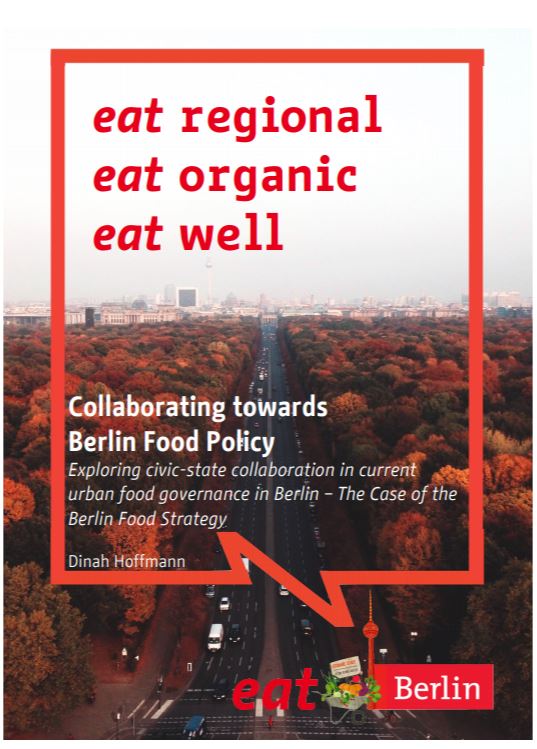
Collaborating towards Berlin Food Policy: Exploring civic-state collaboration in current urban food governance in Berlin – The Case of the Berlin Food Strategy

dinah thesis coverDinah Hoffman, MSc student Communication, Health and Life Sciences
Specialization: Health and Society, Wageningen University

Below please find the abstract of the MSc thesis Collaborating towards Berlin Food Policy: Exploring civic-state collaboration in current urban food governance in Berlin – The Case of the Berlin Food Strategy

The full thesis can be downloaded from the WUR-Library by clicking on the hyperlink


Urban food policy is an area that joins actors from civil society, academia, the local state and the market. To accomplish sustainable changes of local food systems these actors work together in governance arrangements. Two prominent instruments that are used in urban food governance where these actors collaborate are the food policy council and the urban food strategy. Both can be initiated through top-down or bottom-up processes or a combination of both with the relationship of local government and civil society having an impact on the success of the initiatives. One of the cities where civil society and local government engage in collaborative food governance is the city-state of Berlin, the biggest city in Germany, surrounded by the agricultural region of Brandenburg. Drawing on data from 11 interviews and 40 documents, this thesis describes and examines the nature of the relationship and governance arrangement of the two main actors in current Berlin food governance. The collaborative governance framework, a categorization of civic-state relationships found in urban food governance and the concepts of integrated food policy and institutionalization were used to guide the analysis. The objective of this thesis is to understand how civic-state collaboration in urban food governance looks like in Berlin, what impact the local context has on the development of the governance arrangement and what strengths and challenges involved stakeholders perceive. The two main stakeholders were found to be the civic food policy council Ernährungsrat Berlin and the Berlin Senate Administration for Consumer Protection. It was found that the Ernährungsrat Berlin’s food policy activity brought forward a relationship where they are striving for independence but are linked to the government through a secondary agency, being the aforementioned administrative department. Although not embedded in municipal institutions, which has been identified as crucial for a food policy councils’ success, the Ernährungsrat Berlin proved to be an agile and resilient structure able to successfully be an independent advocate for civil society and a valued advisor to the government. Their collaboration resulted in the development of a Berlin Food Strategy. In this thesis I investigate the process of developing this strategy as a form of collaborative governance. Regarding their governance arrangement around the Berlin Food Strategy, the involvement of the Green Party in the current coalition was found to have had a big impact on the position the Ernährungsrat Berlin but also food policy was able to occupy on the urban agenda. This research identified a number of strengths and challenges of the governance arrangement including a strong interdependence, a strong and long history of civic action, the presence of political food champions in the coalition and the administration, the limiting structure and functioning of the Senate administrations and the limited inclusiveness and representatives of the Ernährungsrat Berlin.

Key words: urban food governance, urban food policy, food policy council, urban food strategy, collaborative governance, Berlin food strategy, Ernährungsrat Berlin, Senate of Berlin

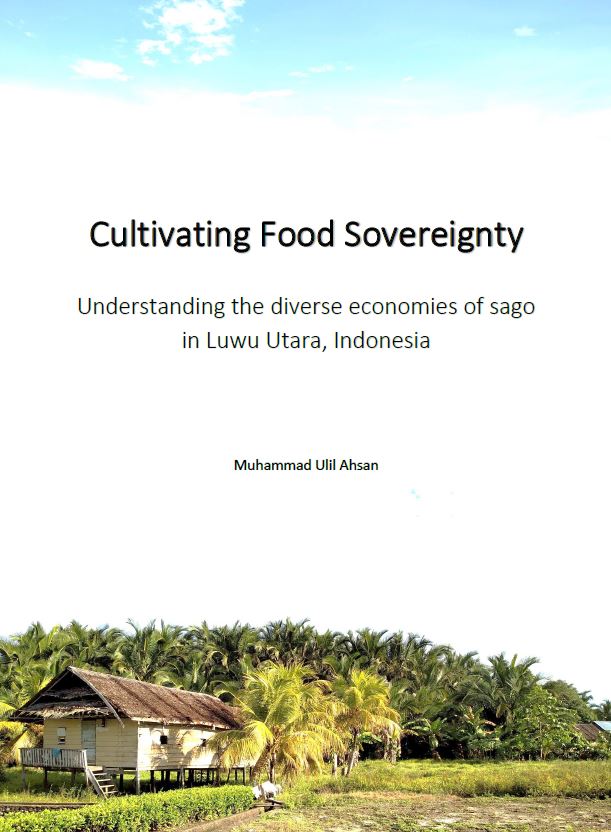
Cultivating Food Sovereignty: Understanding the diverse economies of sago in Luwu Utara, Indonesia

title pg ulilMuhammad Ulil Ahsan, MSc Student Development and Rural Innovation, Wageningen University
 

Below the abstract of the MSc-thesis “Cultivating Food Sovereignty: Understanding the diverse economies of sago in Luwu Utara, Indonesia“.


The full thesis can be downloaded from the WUR-Library by clicking on the hyperlink


Indonesia has taken up food sovereignty in the constitutional document Food Act number 18/2018 that animates the food policy and program implementation in Indonesia. However, it remains largely rhetorical since the food program implementation has undermined the local food system in many places. This study explores the implementation of food sovereignty in Luwu Utara that is predicated with productionist paradigm, where self-sufficiency is the main goal and transnational corporation are involved in the process of enactment. The implementation put pressure on the local food system in Luwu Utara, particularly in relation to sago. The sago food system encompasses complex issues ranging from the relationship between people in the system to their relation with sago. The diverse economy framework is applied to unravel the diverse forms of economies that lie within the sago food system, and to legitimate the value of food sovereignty existing in Luwu Utara. Diverse economies of sago in Luwu Utara are dominated by non-capitalist practices that can challenge the dominant discourse of capitalist economy as food sovereignty against for. The different forms of food sovereignty at different scales necessitates reflection on food sovereignty implementation. Cultivating food sovereignty requires reflexivity, creating the basis of food sovereignty and building recognition are the strategies to develop a multi-scalar sovereignty. Administering multi-scalar sovereignty is a challenge that must be overcome in the development of a democratic food system in Indonesia.

Keywords: Food sovereignty, diverse economies, sago, Luwu Utara

Understanding food systems’ change: the making and the practicing of the school food reform in the city of Porto Alegre, Brazil – PhD-thesis Camilo Lozano

Wednesday, March 13 2019, at 1.30 pm CET Camilo Lozano will defend his PhD-thesis ‘Understanding food systems’ change: the making and the practicing of the school food reform in the city of Porto Alegre, Brazil’.

The ceremony will be live streamed by Weblectures.wur.nl but can be viewed later as well. The full thesis will be available online after the defence ceremony.