WASS-seminar: (Re-)Assembling Rural Places? by Prof dr Michael Woods

Wageningen School of Social Sciences (WASS) seminar: (Re-)Assembling Rural Places?

A presentation by Prof. dr Michael Woods (Aberystwyth University, UK) and prof. dr Sally Shortall (Queen’s University Belfast) as first discussiant.

Tuesday, December 3, 2013, 15.30-17.00, room C67 Leeuwenborch building of Wageningen University

In recent work Prof. Michael Woods explores the prospective application of Assemblage Theory as a framework for analysing the recomposition of rural places through social and economic change. Assemblage Theory builds on the influences of Gilles Deleuze, Manuel DeLanda and actor-network theory to understand social formations as assemblages of heterogeneous elements that can be human or non-human, natural or technical, material or expressive, but which are held together in temporary entanglements which are constantly changing and which cannot be contained but reach out to intersect with other assemblages. The approach has attracted increasing interest among others human geographers that started thinking about places as assemblages. Assemblage theory presents a way of extending the relational approach to rurality pioneered by Jonathan Murdoch, connecting material relations to performative and discursive aspects of rurality. Assemblage theory supports investigation of the re-making of rural places in globalization, resonating with Woods’s description of the ‘global countryside’ as an emergent and contested space and globalization as proceeding through processes of negotiation, manipulation and adaptation within place. In the seminar Prof. Micheal Woods will present his state of the art in working with these notions supported by illustrative examples.

MSc thesis onderzoek Landbouw en Omgeving in Mastenbroek

Hoe zien boeren-ondernemers de mogelijkheden voor hun eigen bedrijf als er vanuit de omgeving beperkingen zijn? Doe mee in het promotieonderzoek van Ron Methorst deze winter.

Ron Methorst is docent CAH Vilentum Dronten en doet promotieonderzoek bij de leerstoelgroep Rurale Sociologie van Wageningen Universiteit. Zijn onderzoek richt op de vraag hoe boeren inspelen op een veranderende omgeving. Vraag Ron voor meer informatie: ron.methorst@wur.nl.  Of bekijk zijn blog over het verloop van het onderzoek.

Een goede relatie tussen het agrarisch bedrijf en haar omgeving is –opnieuw- van belang. Zeker in een dichtbevolkt land als Nederland is er al gauw sprake van ‘spanning’ tussen de omgeving van het agrarisch bedrijf (natuur, landschap, stad) en de ontwikkelmogelijkheden van het bedrijf. Met gebiedsprocessen en projecten worden op allerlei plekken mogelijkheden onderzocht, Mensen ‘om de boer heen’ houden zich volop bezig met de ontwikkelmogelijkheden van die boer. Hoe ziet die boer, die agrarisch ondernemer het nu zelf? Hoe zie hij de mogelijkheden voor zijn bedrijf in zijn situatie? Welke factoren zijn daarin met name bepalend?

Mastenbroek Thesis onderzoekIn Kampereiland, het grootste aaneengesloten pachtgebied van Nederland, is in februari 2013 een uitgebreide enquête uitgevoerd met een goede respons. Deze enquête willen we (aangepast) herhalen in de polder Mastenbroek, een van de oudste polder van Nederland. Beide gebieden zijn onderdeel van  ationaal Landschap IJsseldelta (dus bijzondere landschap en natuurwaarden). Het grote verschil: 100% eigendomsbedrijven en 100% pachtbedrijven.

Continue reading

Leadership and regions: unlocking the potential of communities

Every year the European Commission organizes Open days in Brussels, where EU Members of Parliament, national, regional and local policy/decision makers, Academics, students and researchers, can inform themselves on a variety of subjects. These Open Days host workshops and debates, and exhibition route, presentation of RegioStars -the most innovative projects co-financed by EU Structural and Investment Funds – and “Open Days University and Master Class”. See the programme.

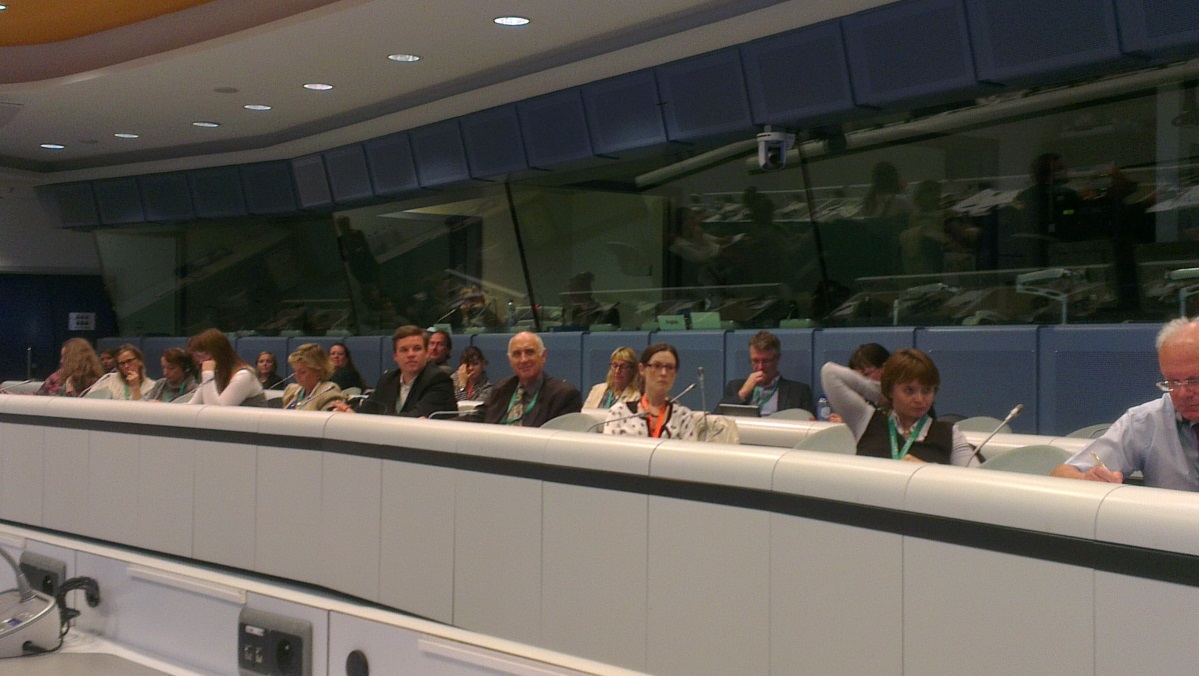
open days 1The Regional Studies Association (RSA)  and the European Commission (DG Regio) organized 4 Master Classes, including a session for more than 100 participants on Oct. 9th 2013, on the topic of ‘Leadership and Regions: Unlocking the Development Potential of communities’, chaired by Prof. Dr. Andrew Beer. Besides Prof. Beer, Dr. Terry Clower (Texas), Dr. Henrik Halkier and myself were the speakers.  This report is based on the their presentations and the discussion with the audience.

Continue reading

Profitable organic farming – contribution to ‘The Broker’ food security blog

Profitable organic farming is a contribution of colleague Ina Horlings the ‘The Broker online‘ blog on food security.  The Broker has four interesting blogs from a manyfold of people across the world.

New course: Sociology of Food Provisioning and Place-based Development

The MSc course “Understanding Rural Development: Theories, Practices and Methodologies” (course code RSO-31806) has been revised and renamed into “Sociology of Food Provisioning and Place-based Development”. The course is mandatory for Master students within the track Sociology of Rural Development of the Master International Development Studies, specializing in rural sociology and a free choice course for Master students of other programmes and tracks. If you are interested in topics such as alternative food geographies, food citizenship, food democracy, urban food provisioning, sustainable place shaping, and regional branding, it may be worth participating in this course. Students who do not have a BSc degree in International Development Studies or related field of expertise may not have the assumed prerequisite knowledge to successfully participate and are therefore requested to contact the course coordinator, Han Wiskerke (han.wiskerke@wur.nl), to see if and how this gap can be addressed.

For more information about the contents, schedule, learning outcomes and educational activities, please click on this link or contact the course coordinator for more information or the latest version of the course guide.