Many new experiences in direct marketing, part 4

By Corinna Feldmann – MSc Student
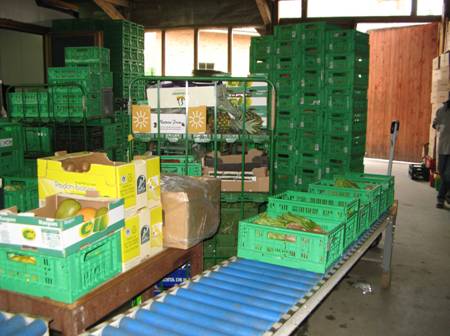
Food boxes

I already spent one month at the farm in Nettelkamp (Lüneburger Heide) – it is quite amazing here. Each day a lot of food boxes are filled with good organic products and delivered to couples, families and companies. I like the idea of supplying about 1300 customers per week with healthy and fresh foodstuff. But it also means a lot of organisation and coordination. We are always very busy with harvesting herbs and vegetables (it is time for asparagus right now), pre-packing, and the ordering of the right amount of products. Many people work in the office and deal with the requests and complaints of the customers. Although we put a lot of effort into the packing of the food boxes, some customers do not exactly receive what they ordered.

Last week I carried out a survey among all the customers to find out more about the reasons why they order an organic food box. Almost all of them sent back the questionnaires. Now I have got a lot to do with the evaluation of this survey. It is also going to be part of my final report.

Since Monday we got support from two trainees – one is from Uzbekistan and the other one from Russia. They help us with the field work and practise the German language.

Every once in a while there are cultural events in the farm barn. This weekend a choir and a group of drum players are performing in the evening. Thus, I made a lot of cake today and prepared dough for pizza. As you can see, it is not getting boring here, although it is quite a small village in a very rural area.
A new place for my internship: Delivery of organic food boxes, part 3

By Corinna Feldmann – MSc Student

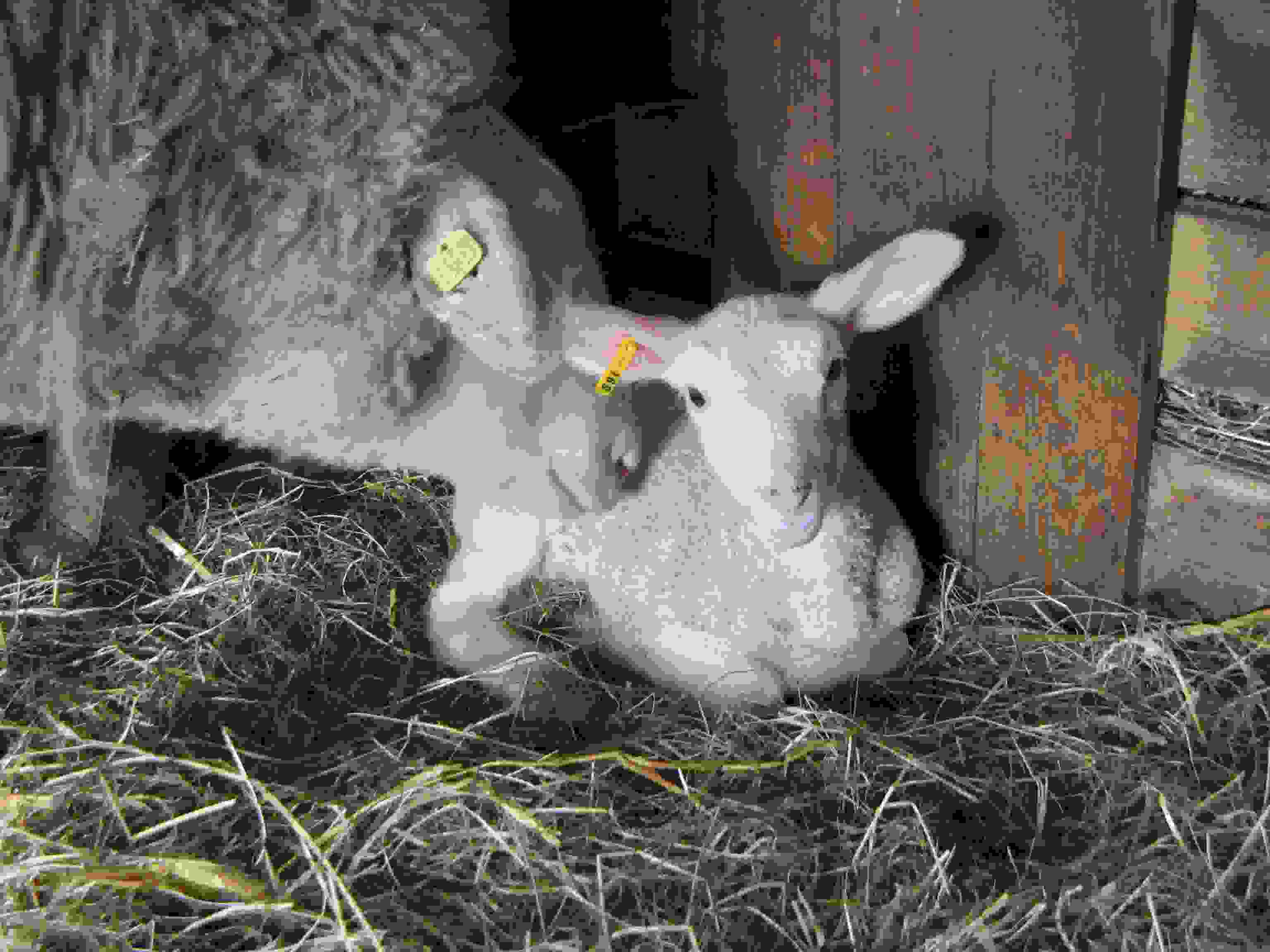
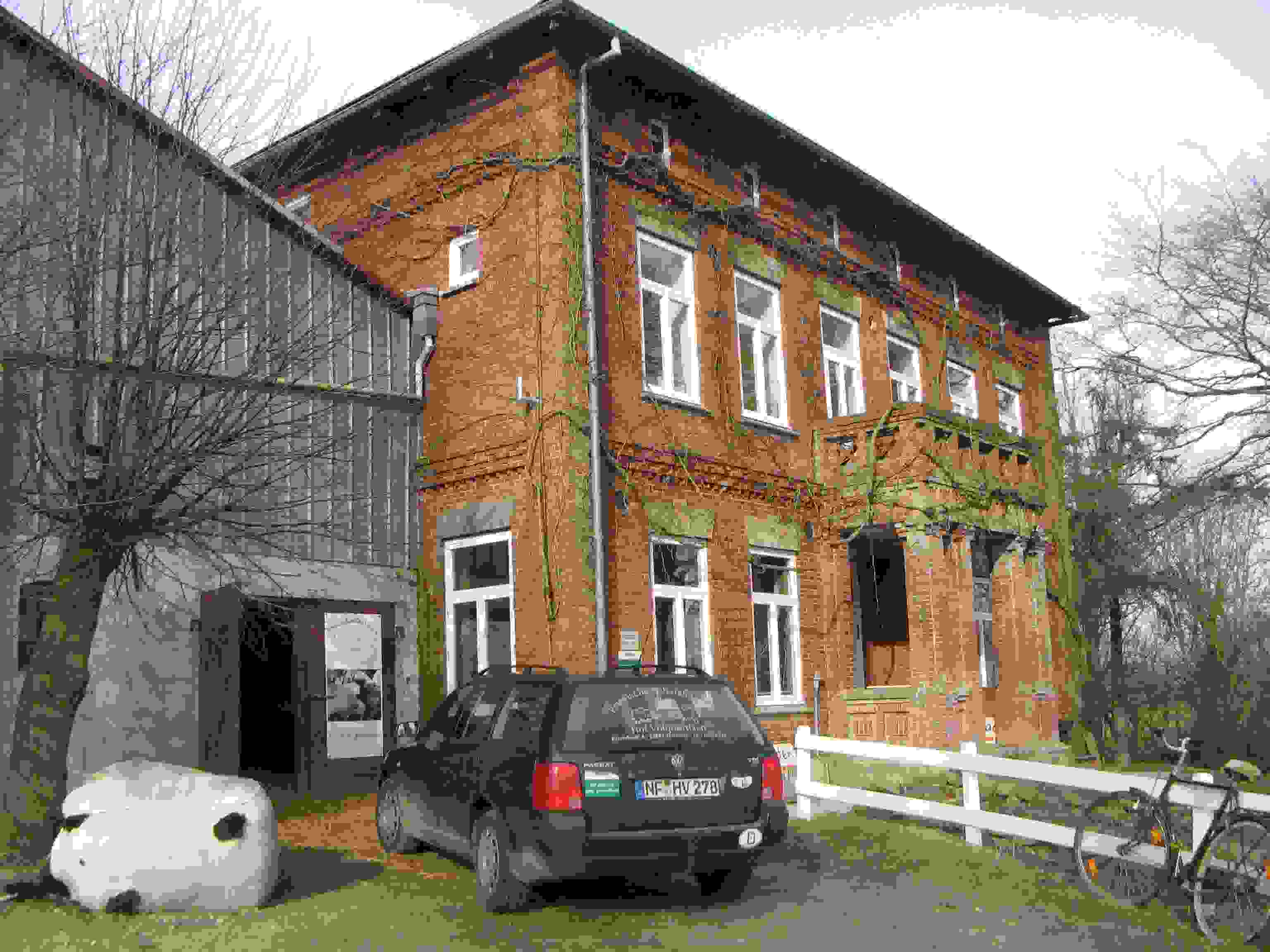
After two months of practical work at the sheep farm and dairy, I decided to leave that place. Working conditions as well as social interaction and communication on the farm became worse and worse; the assignment of tasks and responsibilities was very unclear and often resulted in misunderstandings. Working at the farm was very dissatisfying in the end.

Instead, last week I started working at a farm close to the ‘Lüneburger Heide’ in Northern Germany. This farm is also very engaged in direct marketing. They deliver organic food boxes to 1300 customers in the region. The farm produces a lot of vegetables, herbs, and fruits, as well as some beef and pork meat. The food boxes are supplemented by many organic products from other organic farms and a wholesaler. Consumers can get almost everything they like in their individual food box. For more information you can have a look at the homepage: www.elbers-hof.de.

Second European Sustainable Food Planning Conference

As a follow-up of the first European Sustainable Food Planning Conference, which took place on 9 and 10 October 2009 in Almere (The Netherlands), the Urban Performance Group of the University of Brighton (UK) will host the second European Sustainable Food Planning Conference on 29 and 30 October 2010. Like the first one, this second conference will be held under auspices of the Association of European Schools of Planning (AESOP).

Context and aim

Planning for sustainable food production and consumption is an increasingly important issue for planners, policymakers, designers, farmers, suppliers, activists, business and scientists alike. In the wider contexts of global climate change, a world population of 9 billion and growing, competing food production systems and diet-related public health concerns, are there new paradigms for urban and rural planning capable of supporting sustainable and equitable food systems? Continue reading

AspergeGilde Peel en Maas

Het AspergeGilde Peel en Maas is een samenwerking van 25 aspergetelers uit de gemeente Peel en Maas. De telersgroep werkt samen met een aantal lokale restaurants, kookstudio’s en recreatieondernemers, ook wel de vrienden van het AspergeGilde genoemd. Het AspergeGilde heeft de volgende doelstellingen:

  • promotie van de Peel en Maasregio als aspergeregio
  • bevordering van de aspergeconsumptie door nadere kennismaking met deze groente en de productiewijze ervan

Met doet dit onder andere door het organiseren van aspergearrangementen (bezoek aan een aspergeteler in combinatie met een aspergemaaltijd in een lokaal restaurant), fietstochten door het gebied, kookworkshops, etc… Elk jaar wordt het aspergeseizoen geopend door middel van een aspergemaaltijd voor een grote groep genodigden. Dit jaar vond de seizoensopening plaats op 28 maart.

Voor meer informatie over het AspergeGilde Peel en Maas verwijs ik naar het onderstaande promotiefilmpje.

Growth of local food economy in USA – Ken Meter

Sustainability impact is one of the five themes of the course ‘Origin Food: a Market for Identity’ (see my earlier post for more info). Surfing on internet, looking for some empirical material on the importance of local food for local economies, we came across the work of Ken Meter, president of the Crossroads Resource Center

Crossroads Resource Center, a non-profit organization, works with communities and their allies to foster democracy and local self-determination. We specialize in devising new tools communities can use to create a more sustainable future.

Ken Meter is one of the most experienced food system analysts in the United States. His work integrates market analysis, business development, systems thinking, and social concerns. As president of Crossroads Resource Center in  Minnesota, Meter holds 39 years experience in inner-city and rural community capacity building.

As documented ath the site, Ken Meter has promoted 45 local food networks in 20 US-states and one in Canada. He has thus built a record on building local food communities and its impact on local economy. In an interview published in three part on You Tube, he shares his vision and experiences on ‘ Building a local food economy’: see part I, part II, part III. At the CRC website also an example presentation of Ken Meter on the ‘Growth in local food economies‘ in the USA. An eye-opener to all of us knowing that the USA is the worlds largets food exporting country, but actually has to import food to feed their own residents as Ken Meter says.  Anyway, local food seem to be booming in the USA, the internet is loaded with initiatives, as was already documented in the posts of our collegue Petra Derkzen at this blogsite.