Rural Sociology Wageningen University

Rural Sociology Wageningen University

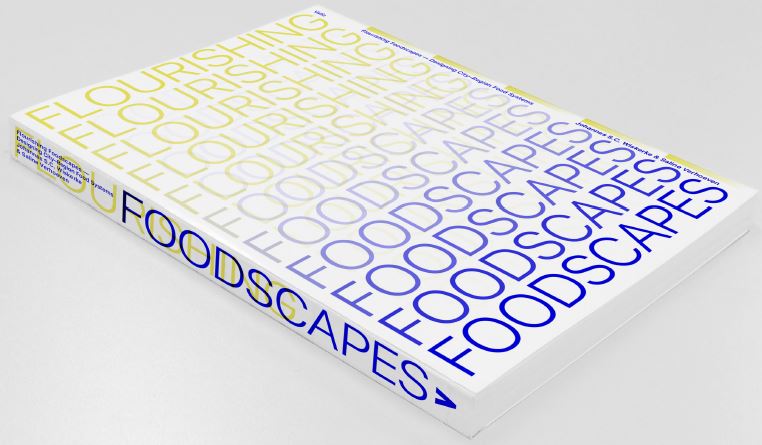
Book Launch – Flourishing Foodscapes: Designing City Region Food Systems

On Thursday 27 September 2018 Valiz and the Amsterdam Academy of Architecture will host a programme dedicated to the launch of the book entitled ‘Flourishing Foodscapes – Designing City Region Food Systems’.

About Flourishing Foodscapes

Flourishing Foodscapes is a book about the the social and spatial organization of networks and systems of food provisioning. It explores, highlights and discusses strategies and designs for creating future-proof city region food systems by addressing the social, economic, and ecological vulnerabilities and sustainabilities of current and future foodscapes, as well as how the spatial qualities of the rural and urban landscape and its use need to adapt and change. A key argument in the book is that food not only has to do with nutrition, but that it links up with and influences a multitude of domains; from health to (eating) culture and from employment to climate change. It has a major impact on the city (especially on consumption and distribution, and, to a lesser extent, on production) and on rural areas (mainly production), but also the relations between city and countryside, close by as well as far apart. Thinking about food-related problems and challenges is becoming increasingly important. These issues influence our planet and way of life, but also our everyday existence.

Flourishing Foodscapes transcends the field of bottom-up initiatives and private projects. If we really want to design more sustainable food systems, we will have to think more structurally about changing food provisioning at different levels of scale. Flourishing Foodscapes links research, case studies and spatial design and takes a step towards a more comprehensive approach to food issues, building on inspiring practices, projects and designs from all over the world.

Programme Book Launch

The book presentation will take place on Thursday 27 September 2018, from 17.00 to 19.30 at the Academy of Architecture (Waterlooplein 211-213, Amsterdam). The programme is as follows:

  • 17:00–17:05 Opening by moderator Saskia van Stein (director Bureau Europa)
  • 17:05–17:10 Welcome by Madeleine Maaskant (director Academy of Architecture)
  • 17:10–17:30 Introduction to the book by the editors and main authors Han Wiskerke (Professor of Rural Sociology, Wageningen University) and Saline Verhoeven (landscape architect and researcher)
  • 17:30–18:00 Reactions tot the book by Froukje Idema (Programme Manager Food, municipality Ede); Martin Woestenburg (rural sociologist and journalist); Arnold van der Valk (Professor emeritus of Spatial Planning and co-founder of the Food Council of the Metropolitan Region of Amsterdam)
  • 18:00–18:25 Discussion led by Saskia van Stein
  • 18:25–18:30 Presentation of the first copy to Hanneke Kijne (Head of Landscape Architecture at the Academy)
  • 18:30–19:30 Snacks and drinks

This programme is free of charge, but if you plan to attend please register via avb-webredactie@ahk.nl
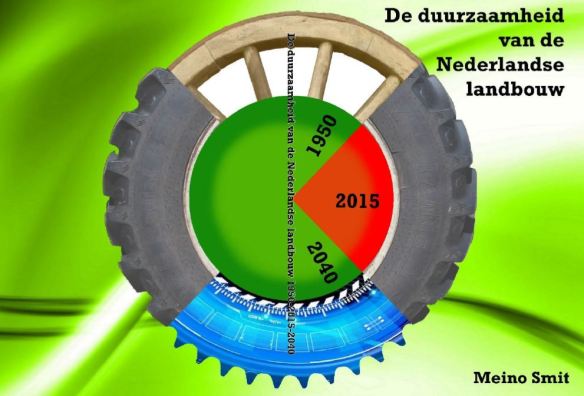


De duurzaamheid van de Nederlandse landbouw, 1950-2015-2040: PhD thesis Meino Smit

Op 11 september 2018 van 13.30-15.00 verdedigd Meino Smit zijn proefschrift getiteld: De duurzaamheid van de Nederlandse landbouw, 1950-2015-2040. De verdediging is live te volgen en ook terug te kijken via weblectures.wur.nl.

Het volledige proefschrift (klik op de link) is te downloaden via WUR-Library. Hieronder de samenvatting uit het proefschrift:

Dit proefschrift gaat over de duurzaamheid van de Nederlandse landbouw. Deze is in de periode 1950 t/m 2015 sterk afgenomen. Dit als gevolg van een toename van het gebruik van energie en grondstoffen, een toename van het landgebruik en een afname van de hoeveelheid arbeid. Verder zijn de opbrengsten en de arbeidsproductiviteit veel minder gestegen dan tot nu toe werd aangenomen. Meer gebruik van energie en grondstoffen betekent ook een hogere emissie in CO2-equivalenten en als gevolg daarvan een emissiereductie die veel groter moet zijn dan in het regeerakkoord is aangegeven. De landbouw moet omschakelen naar een lage-input kringlooplandbouw. Voor het jaar 2040 is een schets gegeven van een duurzaam landbouwsysteem, dat kan voldoen aan de eisen die op basis van het akkoord van Parijs worden gesteld, voldoende voedselzekerheid biedt en een aanzienlijke vermindering geeft van de door de landbouw veroorzaakte maatschappelijke kosten.

Welcome Kees Jansen – Scholar in Critical Agrarian Studies

My name is Kees Jansen. A few weeks ago, I have started in my new job at the Rural Sociology Group. I am very honoured that I can contribute to the international development profile of the group and teach in the domain of critical agrarian studies. Rural Sociology is an exciting group with a long history of remarkable work on redesigning the agro-food system and developing a social justice perspective in agrarian and food policies.

My teaching activities will mainly focus on the courses Sociology of Farming and Rural Life, Globalization and Sustainability of Food Production and Consumption, and Advanced Social Theory.

Latin America is the region where I have done most of my own field work, but shorter stays in a number of Asian and African countries have been important for grasping the significance of comparative research. By working on an organic farm in France, by living with small potato producers high in Andes and with maize-bean producers in Honduras, through interviewing export crop producers in Costa Rica and Mexico, and by visiting farmer co-operatives in the Philippines, I have experienced the multiple pressures on different types of farmers in this globalizing world. In the Rural Sociology Group I will continue my research activities on agrarian political ecology (the greening of the agrarian question; nature-society issues), pesticide risk governance, and theoretical issues in agrarian studies.

The latest examples of my work have just been published in Global Environmental Politics: Business Conflict and Risk Regulations: Understanding the Influence of the Pesticide Industry  (sorry, not yet open access) and in the Journal of Agrarian Change with Jaye de la Cruz: Panama disease and contract farming in the Philippines: Towards a political ecology of risk – open access).

The interesting aspect of doing sociology in Wageningen is the unique opportunity to collaborate with natural scientists on analysing social-technical configurations. Besides my own more specific research topics, I am always interested in exploring new, creative and challenging ideas of prospective thesis students and PhD candidates within the broader domain where international development studies and agrarian studies intersect. Examples are labour conditions of a flexible (often migrant) labour force, the social conditions for agroecology, social responses to risks of agricultural technologies, counter-expertise and social movements, people’s adaptation to climate change, agribusiness strategies, the future of corporate social responsibility, hunger and food security, sociology and politics of knowledge (including interdisciplinarity), autonomy/dependence in agrarian change, and comparative analysis of food sovereignty actions in the Global South. You can read more about me and my work on my website: www.keesjansen.eu.

Do not hesitate to contact me at kees.jansen@wur.nl to talk about your ideas.

Planning for Equitable Urban and Regional Food Systems

There is a new Special Issue of the journal “Built Environment” on the topic of Planning for Equitable Urban and Regional Food Systems.

The Special Issues starts from the question: How does and can planning and design enhance the freedom and wellbeing of marginalized actors in the food system – low-income residents, people of colour, small-holder farmers, and refugees – the very people the alternative food movements purport to serve?

In the Special Issue authors from across the Global North and South explore the role of planning and design in communities’ food systems, while explicitly considering the imbalances in equity, justice, and power.

The collection includes a paper by former Rural Sociology MSc student Maria Vasile and Jessica Duncan.

‘We want to be part of the broader project’ Family Farmers and Local Food Governance in Porto Alegre, Brazil

Brazil has been praised for the development of its agricultural sector, its policies against hunger, and its support for family farming. Yet, the future of small-scale family farmers remains uncertain. In this paper, we question whether food system localization facilitates the integration of small-scale family farmers into food governance processes in Porto Alegre, Brazil. To answer this, we present the City Region Food System (CRFS) as a conceptual approach to explore the relationship between food systems localization and enhanced participation of small-scale family farmers in food governance. After introducing the case study of local food in Porto Alegre, we highlight key structural inequalities that limit family farmers’ participation in local food practices and influence their involvement in food governance. We then examine linkages between local food policy efforts and family farmers’ praxis, attempting to discern mismatches and related implications for the development of an inclusive CRFS. We argue that systematization of local food practices within the city region represents a double-edged sword as it may
translate into a decrease in farmers’ autonomy and ownership of local initiatives and burden them with regulations not fit for purpose. In conclusion, we suggest that a CRFS approach to planning can help to address structural inequalities and power asymmetries in local food governance only if informed by local dynamics and based on context-sensitive mechanisms for participatory governance incorporating a variety of small-scale family farmers (and other stakeholders).

Reminder – Vacancy Assistant Professor in Food Sociology (tenure track)

At the Rural Sociology Group we have a job opening for an Assistant Professor (tenure track position) in Food Sociology. As assistant professor you will undertake independent research and participate in international research projects focusing on the dynamics of food provisioning practices and processes and on the relations between food provisioning and sustainable rural and urban development. You will also teach and coordinate Bachelor and Master courses for the Bachelor and Master program International Development Studies (specialization Sociology of Development), the Master program Food Technology (specialization Gastronomy), and the Master program Organic Agriculture and supervise Master thesis research for these programs. Other aspects of the job include project acquisition, training and supervision of PhD students and participation in various research and/or education committees. About 45% of your time will be spent on education, 45% on research and the remaining 10% on a variety of activities within and outside the university.

For more information about the position (and the Rural Sociology Group) go to the vacancy page of Wageningen University or contact Prof.dr. Han Wiskerke (han.wiskerke@wur.nl). Candidates can apply for this position online. The deadline for application is Thursday 14 September 2017.