Comparing pathways towards sustainability: Lessons on transformative agency from three pioneering farms in Europe – MSc-thesis by Samuel van Rozelaar

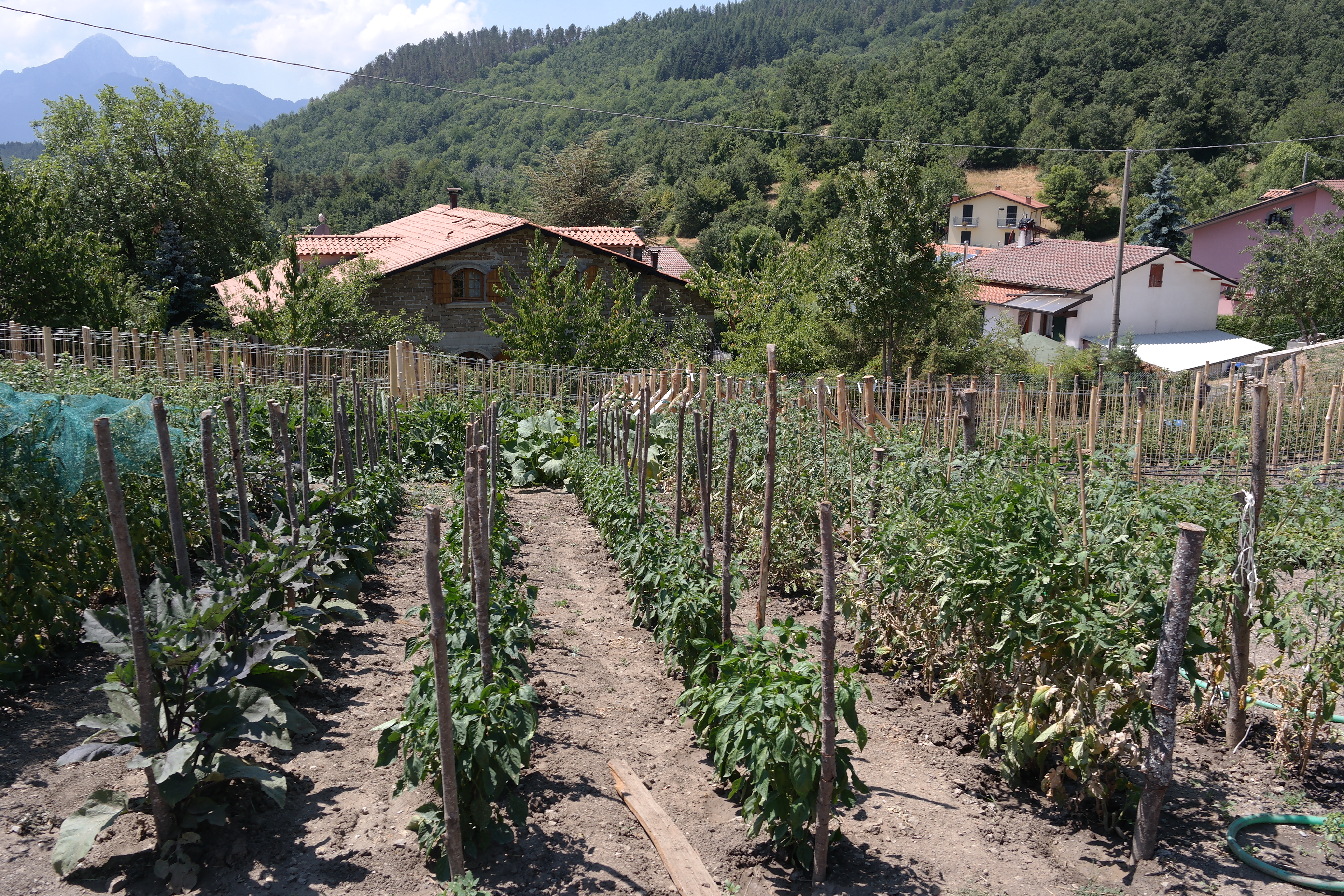
Samuel van Rozelaar is a Master student Organic Agriculture has recently completed an excellent and beautifully illustrated MSc-thesis on the transformative agency of three pioneering farmers, all members of the lighthouse farms network, and meticulously reconstructed their transition pathways towards sustainable farming systems. ‘Comparing pathways towards sustainability: Lessons on transformative agency from three pioneering farms in Europe‘ can be downloaded (click on hyperlink). Below the abstract.

Abstract

This thesis offers lessons on the transformative agency of the farmers behind three pioneering farms. This is done by comparing the transformative strategies they applied in relation to the three-fold embedding of their farms, throughout their pathways towards more sustainable farming systems. To reconstruct these pathways semi-structured interviews and pathway mapping exercises were conducted with the main actors on each farm. This data was then coded, categorized and grouped in dimensions that allowed for a comparison of the interplay between strategies and embedding. The resulting 8 lessons show that these farmers persevered in developing, adapting, and moving towards their dreams and visions, despite many critical moments, by applying a range of transformative strategies. Through these strategies they managed to transform their farms in terms of its practices and relations. Throughout this process of transformation, the farmers continuously moved through a learning process, and as such also personally transformed in terms of thinking and doing, which in turn further enhanced their transformative capacities and strategies. Finally, the lessons show that these farmers have managed to create and navigate complex sustainable farming systems by tapping into the knowledge, skills, and resources of others. This shows the significance of the co-creation of contextual knowledge and the capacities to apply it in the transformation towards sustainable food systems. For future research, it is recommended to test to what extent these lessons resonate with other pioneering farms, but also with conventional farms. In addition, it is worth comparing family farms with non-family farms in their transformations towards sustainable farming systems, with a focus on intergenerational differences. In doing so, the frameworks of resilience of social-ecological systems and the adaptive cycle of transformations could be highly useful. Lastly, future research into transformations should also include the role of the relations to non-humans.

75th Anniversary: 8) Kyoto meets Wageningen, Political Economy meets Rural Sociology

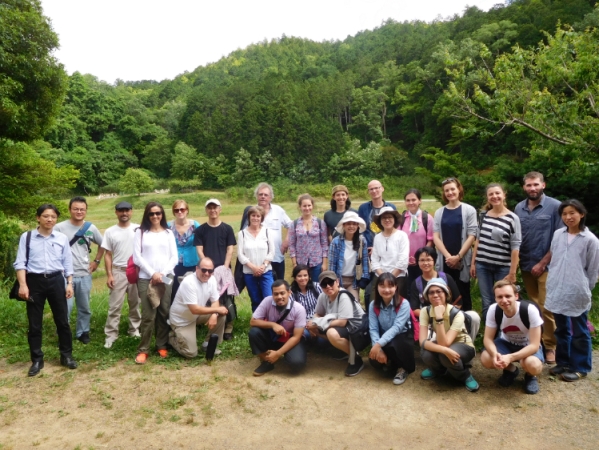
Countryside excursion at the 2016 Graduate Workshop

 Introduction

The collaboration between the group of rural sociology at Wageningen University and the group of agri-food political economy at Kyoto University officially started in July 2014, when we signed a letter of intent to foster international cooperation in education and research. This was first materialised when Kyoto University invited Dirk Roep in February 2015, and Guido Ruivenkamp and Joost Jongerden in March 2015 (http://agst.jgp.kyoto-u.ac.jp/topics/report/376). Their visit to Kyoto kickstarted a series of intensive lectures given by invited RSO members as well as a series of joint workshops between the two groups either in Kyoto or in Wageningen, as explained below. Continue reading

Values and relationships in the diverse economy of De Ommuurde Tuin: an illustrated ethnography

inez thesis coverLast year Inez responded to a RSO thesis advert to join a research team exploring the social economy of food and nature in Gelderland in connection with several science shop projects coordinated by Jan Hassink. Inez completed her research at de Ommuurde Tuin in Renkum, and took the opportunity to further explore visual and creative methods, documenting her results in an illustrated ethnography that was shared with stakeholders at our most recent network gathering Nijmegen. Thanks for being part of our research team Inez ! 

Inez Dekker, MSc student Sociology of Development (MID) Wageningen University

Below please find the abstract of the MSc  minor thesis Values and relationships in the diverse economy of De Ommuurde Tuin: an illustrated ethnography

The full thesis can be downloaded from the WUR-Library by clicking on the hyperlink

Summary : In the last decades a growing number of alternative food and care initiatives emerged in North-America and Europe. Due to uncertain situations within current neoliberal economic systems such as the recent recession, ongoing outsourcing and environmental depletion, and alienation from production (Morgan and Kuch, 2015), these initiatives offer an alternative to an existing neoliberal model. Moreover, they inspire to create a more diverse pallet of economies alongside dominant economic and social systems. Important to mark here is that their decisions and actions are not merely led by dominant economic models, but intentionally done to create worlds that are environmentally and socially just (Gibson-Graham et al., 2013). Often these initiatives fit in an alternative economic framework where a diverse, interdependent, rich and prolific disarray of ‘good life’ are central for their economies. One of such frameworks is the diverse economic research framework based on the work of Gibson-Graham (2008) where the economy is one based on a myriad of human and non-human social relationships that go beyond capitalist economic models. While there seems to be an emerging interest for practices within alternative economic frameworks, such as in community supported agriculture (CSA) or care farms, there is an absence of how human and non-human relationships create values that form an (diverse) economy. Moreover, in conventional economic thinking, practices occurring outside current economic system remain often unrecognized and unseen, though, these are essential for an economy to exist. Therefore, I aim to strengthen a network of diverse economic initiatives focus on initiatives located in the Dutch province Gelderland. To do this, I created a visual illustration that highlights the diverse practices and human and non-human relationships in the organic horticulture business located in Gelderland called ‘De Ommuurde Tuin’. I add to the scholarship of diverse economies by describing and showing the processes that produce a diversity of values in De Ommuurde Tuin’s daily economic practices. These processes are not only led by relationships among humans but include human and non-human relationships as well. To do this, I not only use a written form, but foremost I used visual and sensory research methods that highlights relationships between humans-humans and humansnonhumans. By putting forward the senses, the visual and emotional, this research concerns the processes in daily economic practices through a study of an economy that is lived and experienced. Moreover, I make alternative and diverse frameworks of economy/is more visible for a wider public through presenting my outcomes in a visual manner in booklet form. This approach tries to display and recognize economic alternatives, which helps to connect and build a coherent and powerful social movement for another economy (Miller, 2008; Gibson-Graham, 2008; Gibson-Graham and Miller, 2015)

Searching for a master thesis topic? Write your master thesis about community fridges in The Hague!


fridge foto hagueWhat are community fridges?

Community fridges are refrigerators located in a public space, for example in a neighborhood or community centre. These refrigerators enable food to be shared within a community. In The Hague, community fridges are utilized primarily to share left-overs from restaurants with people facing hardship, with the goal of offering easy access to fresh, nutritious food. The initiative aims to simultaneously reduce poverty and food waste. To read more about the specific case in The Hague, visit their website: https://www.versenvrij.nl/

vers frij hague

Interested in writing your master thesis about this initiative?

In cooperation with LUMC (Leiden University Medical Center – Campus The Hague), we are searching for a master student who wants to do a thesis research about community fridges in The Hague.

Topic 1: To explore user experiences and the role of these fridges in addressing food insecurity.

Topic 2: To explore how users manage risk and safety in the distribution of surplus food, and the care of community fridges.

We will encourage you to actively design your own research and hope you are eager to use various methods.

You are :

  • interested in the issues of food insecurity and food waste
  • willing to engage actively in designing a research about community fridges
  • willing to conduct research in The Hague (think about travel-costs)
  • experienced in doing qualitative research; e.g. participant observation, semi-structured interviews, the photo-voice method, focus groups
  • interested in mixed methods; combining qualitative with quantitative data (e.g. surveys or questionnaires)
  • a native Dutch speaker and willing to write your thesis in English
  • able to start this spring (possible to start immediately)


If you are enthusiastic about this research topic, please send an e-mail to thirza.andriessen@wur.nl , L.A.van_der_Velde@lumc.nl , & oona.morrow@wur.nl

De weg naar duurzame pachtafspraken tussen boer en gemeente: uitkomst ACT-opdracht

Image

Door Amarins Bouman, Jurrian Veldhuizen, Henry Abbink, Robin Kampert, Ester Klein Hesselink en Floor Sluijter. Studenten van Wageningen Universiteit die als onderdeel van hun Master opleiding een Academic Consultancy Training (ACT) opdracht hebben uitgevoerd.

De afgelopen twee maanden hebben wij onderzoek gedaan in het kader van het Wetenschapswinkel project ‘Boeren zonder land: hoe is dat mogelijk?’ in opdracht van Vereniging Toekomstboeren. Met 6 studenten van verschillende achtergronden (consumentenwetenschappen, bos-en natuurbeheer, international development & biologische landbouw) zijn wij aan de slag gegaan met het onderzoeken van alternatieve pachtconstructies. Binnen dit onderzoek is er gekozen voor de gemeente als landeigenaar, waarna er 3 verschillende boeren & gemeenten zijn geïnterviewd. Het onderzoek richtte zich op de sterke en zwakke punten van de pacht- en huurovereenkomsten en hoe deze de (on)zekerheid van duurzame boeren beïnvloeden. Dit is visueel weergegeven in bovenstaande figuur.

Boeren worden in de overeenkomsten met de gemeente vaak geconfronteerd met onzekerheden die verband houden met de duur van hun overeenkomsten en de duurzaamheidsaspecten. Er is vaak geen visie en/of beleid vanuit de gemeente op het gebied van het faciliteren van (duurzame) landbouw. Dit leidt tot de onzekerheidsproblematiek zoals korte contracten en beperkte mogelijkheden tot investeringen voor de lange termijn, zoals die in een goede bodem. Echter blijken de gemeenten en duurzame boeren elkaar te vinden in de waarde die de onderlinge afspraken kunnen hebben voor de lokale gemeenschap. Naast de agrarische functie kan een boerderij in de stad ook van grote maatschappelijke waarde zijn.

Op basis van onze bevindingen moedigen we boeren en gemeenten aan om meer te weten te komen over elkaars behoeften en hoe de pachtovereenkomst in ieders voordeel kan werken. Zie de Infosheet hieronder. In ons rapport kunt u hier meer over lezen.

Infosheet: ‘De weg naar een duurzame pachtovereenkomst tussen boer en gemeente’.