Participate in project Participand

Robin BukenyaWhat are the relationships between the ‘developing’ and ‘developed’ world? How does our perception of the difference shape this relationship? What can then be a basis for cooperation when diversity needs be cherished as a fundamental right to be different? What is then YOUR responsibility as global citizen in your own community? How then can we work together in our community as OUR responsibility to act together?
If you are interested in these questions, please join the meeting on the evening of December 15th!

What?
In collaboration with the Dutch NGOs OIKOS and COS Gelderland our researches feed into a larger project by the Wageningen University ‘Science Shop’ (which aims at giving science more practical relevance). We (Franziska Nath & Robin Bukenya) are part of a larger team conducting an ‘Action Research’ Master thesis project (linking theory to practise) attempting to ‘do’ research differently. The main objective is:
‘Mapping and strengthening of the network of development initiatives and its active and potential actors in the Wageningen region’
There is always room for increased collaboration among individuals, initiatives and fields of knowledge. This research project seeks to actively develop open creative inter-active spaces and sessions where links and balanced inter-action can occur between peoples sharing ideas (across perceptual boundaries) based on their inner motivations.

Who?
Anyone within the Wageningen region (incl. Ede, Rhenen, Bennekom, Doorwerth) whom seeks to be part of this research project to cooperate and complement their development initiatives or fields of knowledge.

How?
Rather than looking only at understanding how to solve problems, our focus is to build on your potential. Past struggles and obstacles have been overcome through the dreams and visions of those whom looked beyond their apparent limitations. So, why not build on what is and drives the vision of what could be, to achieve what may become!
Hope, joy and love are fundamental human emotions and energies of abundance from which creativity flows, overcoming the limits of obstacles. Creativity is the resource that will empower this research. This ‘opportunity’ and ‘dream’ driven research is to be positively steered by all whom are directly or indirectly involved into the research process. The theme is thus enhancing development cooperation in Wageningen. The outcome(s) or limits, YOU decide…

YOU?
We are looking for a varied mix of interested participants for this ‘research project’ whom are willing to venture with us on this endeavour to bring out that which is within us from the local to the global community.
Are you active, or seeking to be, in development cooperation as a professor, student, project manager, founder, researcher, organization, institution, etc. and interested to be part of a different ‘way of doing’ and basis for collaboration? Please email us at Participand.Now@gmail.com for information, ideas and ways of collaborating with this research project.

***First meeting***
On the evening of December 15th there will be an introductory workshop session, initiating the first exploratory phase of the research. It will be held at the Vredehorst, Tarthorst 1 in Wageningen (near the C1000). Note! It will start at 17.30 with a tapas dinner! Places are limited so please sign up as soon as possible (Before Monday 12th December) with your:
• Name
• Age
• Gender
• Nationality(s)
• Name of initiative(s)/organization(s)/institution(s)/company in which you are currently active
• Your position or role in initiative(s)/organization(s)/institution(s)/company
• Your future desired role and dream for development cooperation (be creative!)
• Dietry needs

Questions, comments and ideas? Login to our Facebook site ‘Participand Now’. Send your details to: Participand.Now@gmail.com. You can also show your appreciation of the Platform: http://www.facebook.com/platform
Sign up fast as space for the workshop sessions is. Nonetheless, there will be opportunities for other ways to engage with the research project.

We hope to hear from you soon!

Franziska Nath and Robin Bukenya

Excursion to Los Maklenkes nature reserve

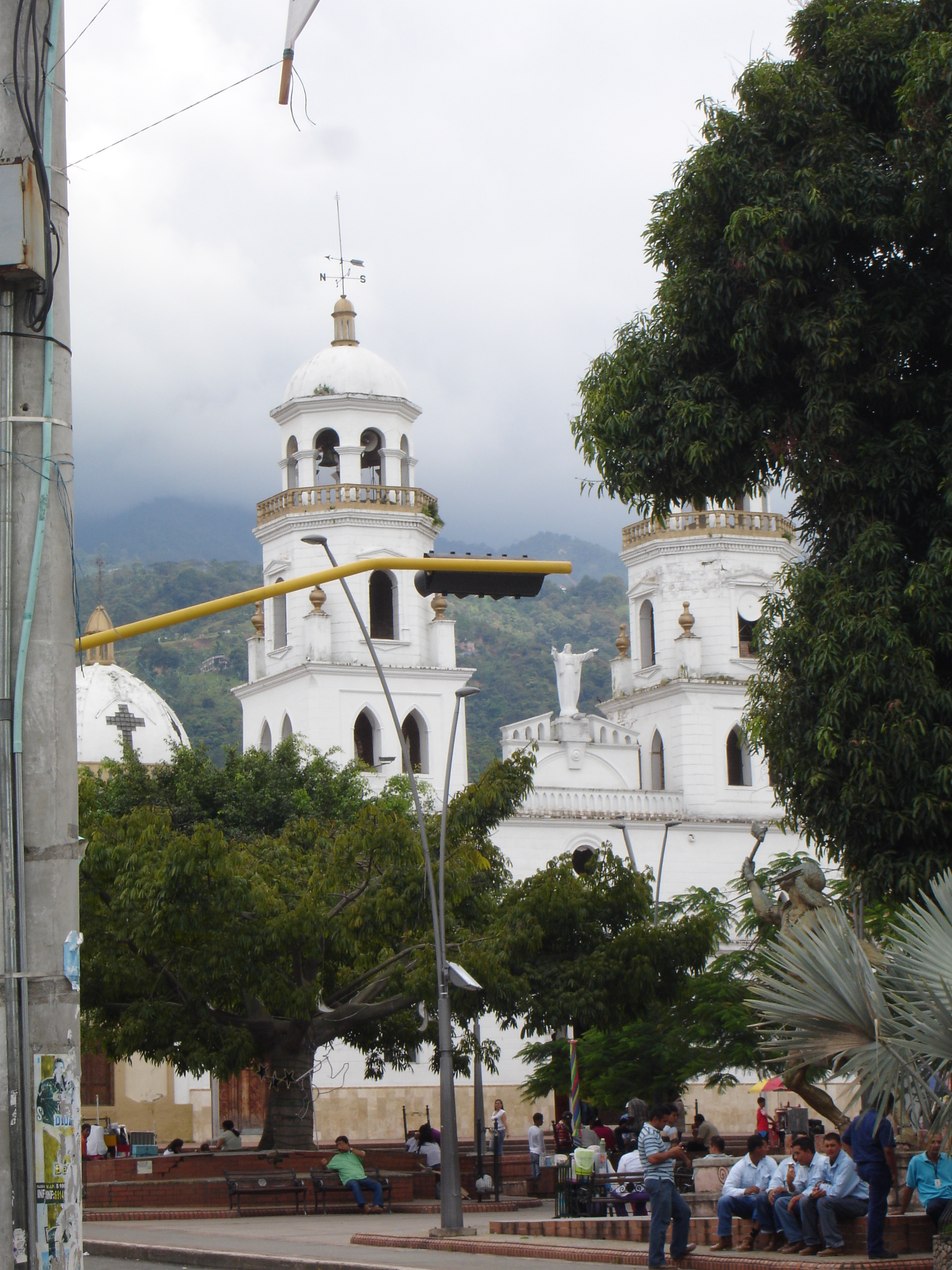
Last Monday (21st of November), I participated in a field trip to Los Maklenkes nature reserve on top of the mountain La Judía in the municipality of Floridablanca, close to Bucaramanga. This nature reserve is managed by the peasants living around the reserve and, amongst others, sponsored by the Dutch state lottery. The field trip was part of the festival for urban-rural dialogue, in which I participated the previous weekend.

Los Maklenkes Nature Reserve, Floridablanca, Colombia

The day started with a gathering of all participants to make our way up the mountain to the nature reserve. It was an adventurous drive with 16 people in one Jeep, going up steeper and steeper mud-paths. I dared not to look to the right where the mountain was falling as steep to the ground as the road was crawling up.

Upon arrival at the entrance of the park, we were greeted by the local peasants and informed about the history of the nature reserve and its aim to protect biodiversity and water reservoirs. Following the introduction, we switched into our rubber boots and commenced with a three hour hiking tour through the reservoir.

Getting ready for our hike

Here, we saw the organic agro-forest farming activities which are being initiated under the facilitation of Fundaexpresión, a local NGO for promoting participatory research activities and education in peasant communities. I saw plantain and banana trees, coffee plants and avocado trees.

Banana tree

Following our hike, we settled in the communal house of the reserve to discuss nature protection activities in the high Andes and their impact on the livelihoods of peasants. At the end of the discussion, it was agreed that the provision of information and the creation of knowledge at local level was the most crucial point in enabling local peasants to deal with the resulting pressures on their livelihoods. The provision of information and the facilitation of capacity building were, however, regarded as poor. It was agreed that more attention must be given to the provision of information and the facilitation of capacity building at local level should peasants be enabled to deal with pressures on their livelihoods resulting from nature protection activities.

II Festival de Expresiones Urbanas y Rurales: Diálogo por la Diversidad y Buen Vivir, Bucaramanga, Colombia

Last weekend (18-20 of November 2011), I was able to participate in the II Festival for urban-rural dialogue in the barrio La Joya in Bucaramanga, Colombia. The festival was visited by peasants (such as fishers, women groups, and farmers), indigenous groups as well as knowledge brokers from all over Colombia, Costa Rica, Venezuela and Cuba. In addition, urban citizens from Bucaramanga, and La Joya in particularly, participated in the event. This mix of participants created a valuable learning environment for everyone (including me), and resulted in new ideas and organisations amongst the participants. In a way, this festival reminded me of the rural cafés I visited in the Westerkwartier, the Netherlands.

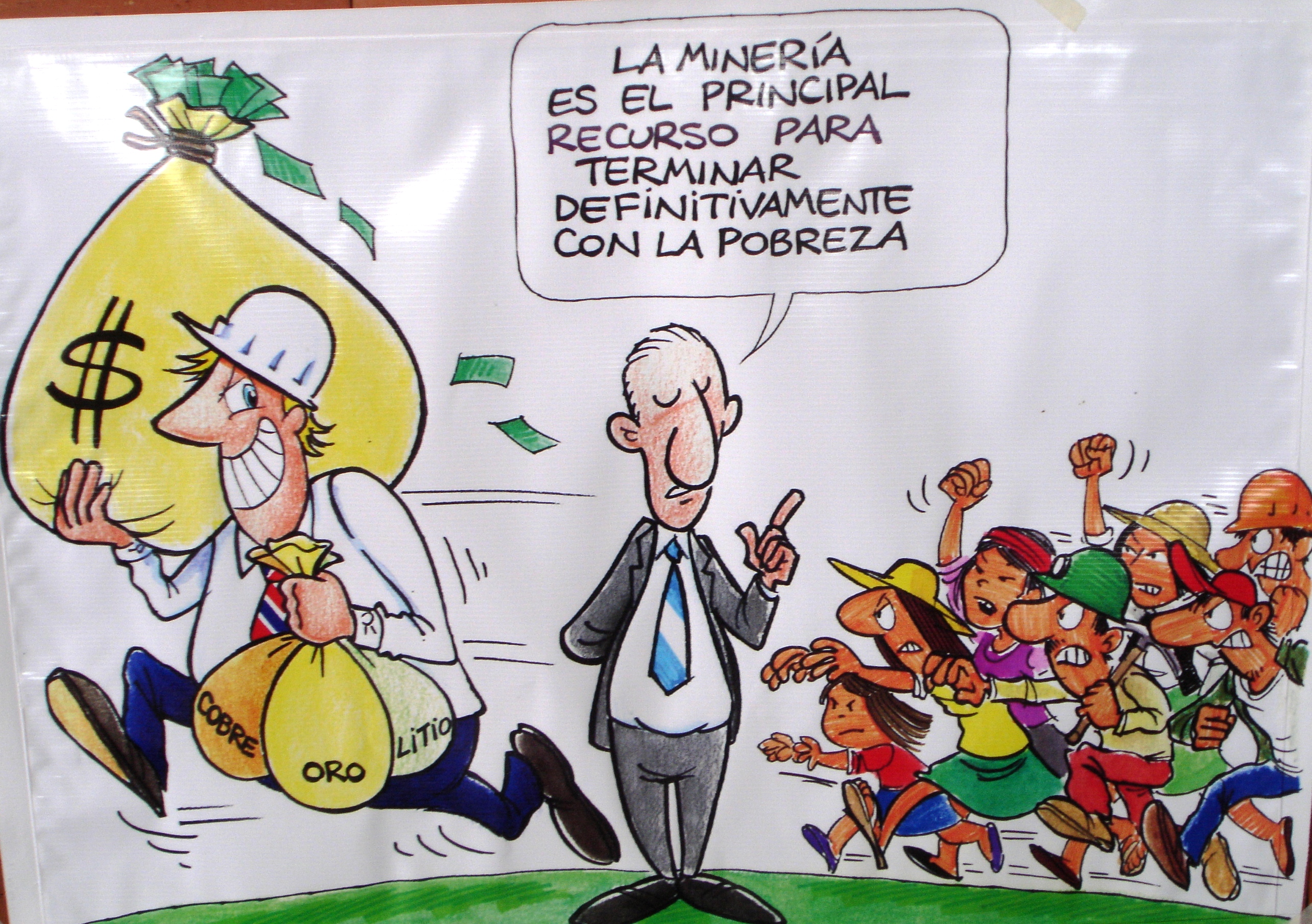
The overall theme of the event was the environmental conflicts in rural Colombia resulting on the one hand from the numerous (and often multinational) economic exploitation activities (e.g. gold mining, hydroelectric power activities and monoculture) and on the other hand from conservation activities.

Poster presented at festival

Continue reading

On the trail of regional learning in rural Colombia

Over the last two and a half years, we have been investigating arrangements to support regional learning in various rural areas across Europe (EU-project DERREG). This intense period of field work and data analysis has given me a first idea of just how complex this subject is, how diverse supportive arrangements can be, and how dependent their success is on the regional contexts in which they are implemented.

As if this complexity is not already enough to ponder about, my curiosity and interest in mutual learning for development has urged me to also investigate this topic outside the European Union. I was particularly interested in questioning how rural regional learning is supported in, what is commonly referred to as, “developing” countries. So, here I am in Colombia,

Downtown Bogotá, Colombia

Continue reading

DERREG – Final conference and proceedings

Two weeks ago, from October 12-13, we had our final conference of the EU-funded research project DERREG (www.derreg.eu)  in Murska Sobota, Slovenia. Here the major findings of the project were presented.

DERREG coordinator prof. Michael Woods first presented (see presentation) an overwiew of the project and an interpretative model (see below) on how regions are affected by and respond to forces of globalisation mediated by various catalyst and he ended with a typology of regional responses based on the research done in the 10 case study regions. See also the DERREG Summary Report by Michael Woods.


Successively the coordinators of the four Work Packages presented the main findings along four themes:

  1. Rural Businesses, Global Engagement and Local Embeddedness (presented by Andrew Copus)
  2. International Migration and Rural Europe (presented by Birte Nienaber)
  3. The Global Environment and Rural Sustainable Development (presented by Joachim Burdack & Michael Kriszan)
  4. Rural regional learning (presented by Dirk Roep and Wiebke Wellbrock)

Each overview was illustrated with findings for two case study areas presented by the respective partners.

A separate session was dedicated to policy perspective on globalisation and rural development in Slovenia and in particular the Pomurje region in the north of Slovenia were Murska Sobota is located and the Final conference took place.

At the end, guest speakers from the Goriška region in Slovenia, the Övre Norrland in Sweden, the Westerkwartier region in the Netherlands and the Steirische Mur-Drau-Bioenergie-Region in Austria highlighted four good practices of how regions can respond to global processes and benefit from it.

All presentations can be downloaded from the DEREG website: http://www.derreg.eu/content/events/final-conference-derreg-project (at the bottom of the webpage).

At the DERREG resource-centre other proceedings are made accessible too, such as the WP reports, the case study context reports and case study summary reports. Look at http://www.derreg.eu/content/resource-centre.  Finally, a database of good practice across the WP theme’s and case study areas has been built and made accessible: look  at http://www.derreg.eu/content/good-practice-database.

Last but not least: video clips are made for each of the ten case study regions and when ready these will be published on You tube and announced at the website.

The project will finish by the end of this year. The partners are now working on several scientific publications in journals and books. By the end of this year and beginning of 2012 DERREG related articles will be published in two special issue of the European Countryside, an online journal (see the content of latest issue). Next will be an edited book published by Ashgate titled ‘Globalization and Europe’s Rural Regions‘  which will capitalise the findings for the 10 case study areas.

Publications will be announced at the resource-centre of the DERREG website, as for the video clips, and information will be posted on this blog.