Summer School ICRPS 2011 in Norway: about the group project

From: Meng, Xiangdan (xiangdan.meng@wur.nl). 

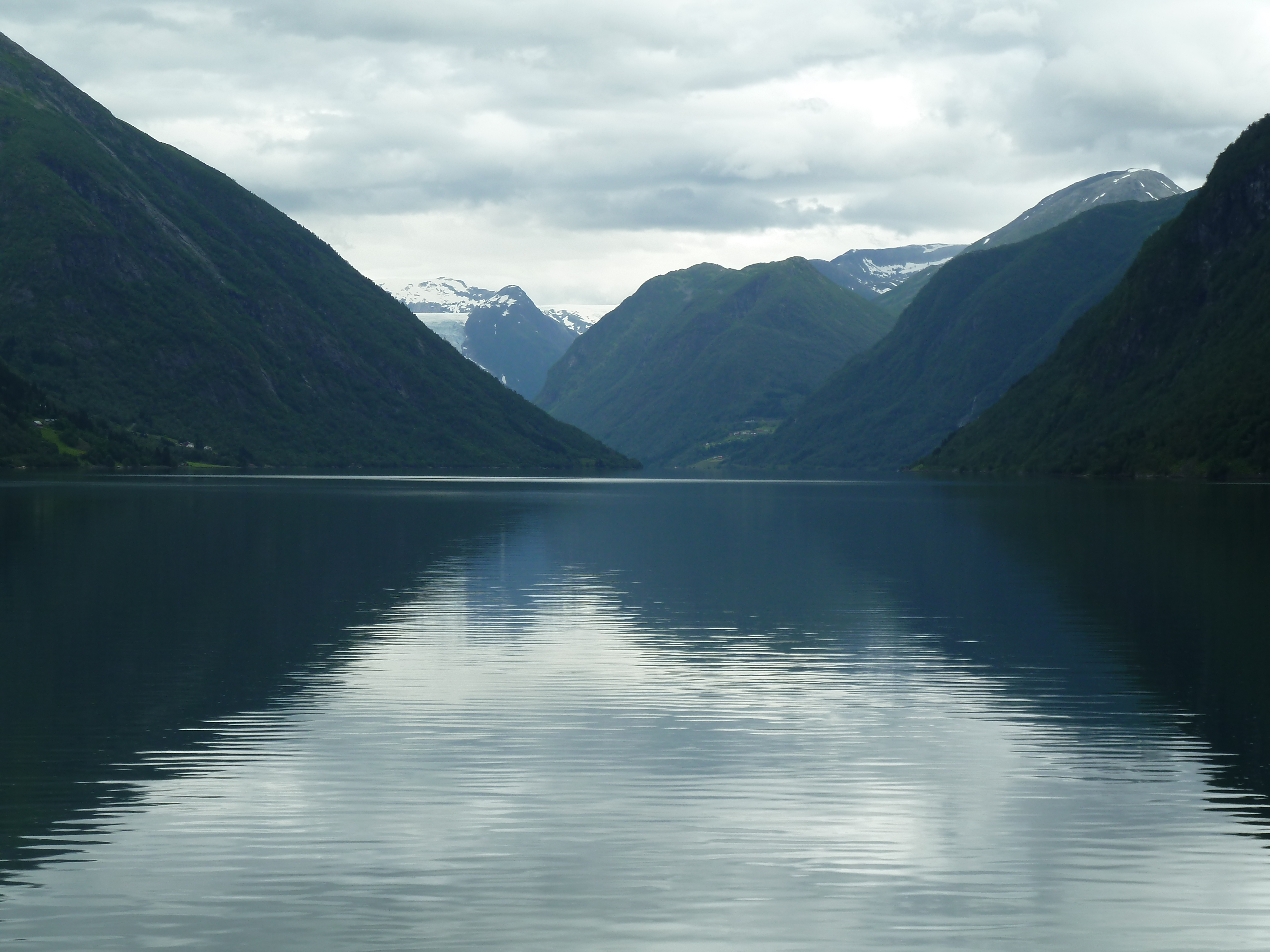
From June 25 to July 10, 2011, I attended the ICRPS (international comparative rural policy studies) Summer Institute in Norway. It is a good chance to know more things about OECD countries, especially rural policies from the comparative perspective.
The summer institute covered some general themes, such as making policies for sustainability, sustainable rural communities and research and analysis methods. We also discussed some Nordic topics about Nordic rural, regional and districts policy, farming and forestry, nature based tourism, renewable energy, and ecological approaches to sustainable development.
These lectures and discussion helped me understand the general situation and also helped me consider some similar issues in my own country, China. However, the most impressive part for me is the project work, which is an effective way to use what you learn. In this summer institute, all the students and professors were divided into 7 groups, which cover seven topics in Sogn og Fjordane in Norway. The seven topics are social structure and change, government and governance, tourism (based on nature and culture), renewable energy and local development, mitigation of climate emissions and new policy initiatives, new direction for farming and food in a challenging environment, and information and communications.
To understand these basic issues is basic thing, but how to use the comparative cases you know or examples from your own country to apply some ideas to Sogn og Fjordane in Norway is more important in my opinion. For example, there were four students (two from America and one from Norway) and four faculty (two from America and two from Canada) in my group, the “social structure and change group”. Based on some demography and policy review, we decided to focus on how to absorb the youth, high-educated women and immigrants to Sogn og Fjordane. The students played the main role of discussion and writing the chapter under the supervision of the faculty. Later, the chapters we wrote can be published as a book. It is really a good way to understand the policies and situation there and also a nice brainstorming method to consider things comparatively.
In addition, you can use the spare time to discuss you own topic with the faculty. Although not always helpful, it is nice to know and keep contact with more academic people by using this network. Many professors told me Wageningen Universiy is a very important university for ICRPS, they really hope more faculty and students from Wageningen could attend the next ICRPS. If you want to know more things about the ICRPS 2011, please see this website: http://www.umb.no/icrps2011/. The next ICRPS 2012 will be in Canada.

Conference Call – Agriculture in an Urbanizing Society

A major demographic milestone occurred in May 2007. For the first time in the history of mankind the earth’s population became more urban than rural. This process of urbanization will continue in an accelerated pace in the forthcoming decades: the growth of the world population from 6 billion people in 2000 to 9 billion people in 2050 will mainly occur in urban areas. By 2050 the urban population will approximately be twice the size of the rural population.

However, this does not mean that urban areas are or will become of greater importance than rural areas. On the contrary, the urban and the rural have always heavily relied on each other and will do so even more in an era characterized by rapid urban population growth. Cities will continue to need resources such as food, fibre, clean water, nature, biodiversity, and recreational space, as well as the people and communities that produce and provide these urban necessities and desires. Hence, key questions for the next decades are how, where and by whom these urban necessities and desires will be produced and provided and if and how this can be done in manner that is considered to be socially, economically and ecologically sustainable and ethically sound.

In recent years the concept of multifunctional agriculture has emerged as an important reference in debates on the future of agriculture and the countryside and its relations with the wider and predominantly urban society. This is an expression of the fact that agriculture is not only valued for its contribution to food and fibre production and the economic development of the agro-industry, but needs to be assessed according to a much wider range of social, environmental, economic and ethical concerns. At farm level multifunctional agriculture is characterized by a variety of entrepreneurial strategies and activities, such as processing and direct marketing of food products, energy production, care for elderly and disabled people, and tourism. But multifunctional agriculture is also expressed at higher scales, such as the regional level (e.g. collective nature and landscape management schemes and regional branding) and the national level (e.g. policymaking and implementation).

Due to the multiplicity of activities, the multi-scalar character of multifunctionality and the geographical contextuality of expressions of multifunctional agriculture, research on multifunctional agriculture and changing urban-rural relations is highly fragmented, disciplinarily as well as geographically. Hence, this conference aims to advance the scientific state of the art in research on multifunctional agriculture and urban-rural relations by bringing together scholars of different disciplines (sociology, economics, spatial planning, land use planning, regional planning, urban planning, crop sciences, animal sciences, soil sciences, architecture, etc…) from all parts of the world.

Working group themes
The conference facilities allow for a maximum of 21 parallel working group sessions. The scientific committee has proposed 21 working group themes (see http://www.agricultureinanurbanizingsociety.com/UK/Working+group+themes/)   and is inviting prospective working group convenors to submit a short (max 500 words) call text for the theme they would like to convene. Proposals for a working group call text can be send to the chair of the scientific committee by email (han.wiskerke@wur.nl) before the 1st of September 2011. The deadline for submission of abstracts will be 1st of December 2011. Abstracts will have to be submitted to the convenors.

More information

Please check the conference website for more information.

The diversity of rural areas as background for place-based policy and planning

Last week June 22 Dr. Sylvia Herrmann gave a presentation titled ‘The diversity of rural areas as background for place-based policy and planning’ (see the Presentation WASS-seminar by Dr Sylvia Herrmann).

Dr Sylvia Hermann is affiliated at the Institute for Environmental Planning, Leibniz Universität Hannover and was coordinator of the EU-funded FP7 research project RUFUS (www.rufus-eu.de). Based on the findings of RUFUS dr Hermann pleads for place-based policy and planning to cope with rural diversity in the EU.

In her lecture she presented findings of the RUFUS project and argued that the specific characteristics of places have to be included in planning and policy to reach a more successful implementation of sustainable and site related policy measures. Ergo: policies and planning need to be more place-based.

In the discussion about future rural development, the diversity of rural areas in Europe increasingly raises the interest of policy makers and stakeholders. The strategic paper Europe2020 states that the common EU targets for future development ‘must be … capable of reflecting the diversity of Member States situations and based on sufficiently reliable data for purposes of comparison’. Rural areas have to be recognised as places with diverse combinations of historical, social, cultural and environmental features and the installation of relations among local actors (Cisilino et al., 2010). This shows that the diversity of rural European areas is more and more recognized as a key potential for intelligent growth. Thus, society seeks for development approaches based on regional diversity to better understand the development opportunities and challenges of diverse types of rural areas in Europe. Consequently, research has to combine quantitative and qualitative approaches to deal with the diversity. It also has to support the improvement of endogenous potential and governance approaches reflecting the diversity of the specific regions.

The EU FP 7 project ‘RUFUS’ (Rural Future Networks) tried to meet these challenges with a research approach supporting politicians with knowledge about the diversity of rural regions. RUFUS combined a set of methods to provide a’ mosaic’ of answers to policy makers and stakeholders. It has created a new classification system to map the diverse combinations of economic, social, and ecological conditions of European rural regions in nine EU countries (the UK, Germany, France, Portugal, the Netherlands, Italy, Sweden, Poland, and Hungary). This could help target rural development policy and provide insight into the need for CAP’s interaction with other policy areas. Maps showing the diverse development potentials of rural areas have been created. By the help of case studies the linkage between the top-down approaches of mapping with the reality in the regions has been established. The findings have been translated to policy relevant recommendations.

Torri Superiore Ecovillage: resisting the abandonment of rural marginal areas in Italy

 MSc-thesis by Alberto Giani

Modernization of agriculture has clearly shown not to be a viable solution for marginalized areas, while a mix of retro-innovation, fantasy and passion is showing a possible novel way forward for the re-utilization of abandoned areas and the revitalization of its socio-economic life.

Torri Superiore Ecovillage is such as case, that I studied in my MSc-thesis (click here for my full thesis report), part of my Master Organic Agriculture in Wageningen Univesity.

Torri Superiore Ecovillage can be defined as a bounded space re-created by in-migrants (new-rurals) that came and establish their lives in a place out from the mainstream society, utilizing external resources (both human resources and capital) and skills to revitalize through a neo-endogenous process the economic potential of a semi-abandoned low productive rural area.

Agriculture in a marginal area can rarely be a remunerative activity. In particular if an area has been abandoned for years and offers no opportunity for mechanization. Making a living in agriculture thus demands a break with the mainstream perspective on agricultural production. A capitalistic approach to land use, based on the integration in markets, is barely impossible in these areas. However from a different rural development approach still work can be created in the production of quality food remunerating a little salary to built a decent life, allowing people to live as much as possible in harmony with the environment without depleting it from its natural resources. Patrimonialization, broadening, deepening, re-grounding, creating local outlets are all strategies that can stimulate the rebirth of a local nested economy embedded in the territory, as is the case in Torri Superiore Ecovillage. This case represents a positive experiment in the restoration of economic efficiency in a marginal rural area.

Current policies discourses do stress the importance of creating proper conditions to make people stay in or return to marginal areas, but in practice the cost of the land, the bureaucracy and the taxes make it almost impossible for anybody to stay in marginal rural areas or for people without any experiences (so called new-rurals) to return to these areas.

Guest lectures on ‘A global sense of place’

In the context of the new Capita Selecta course ‘A global sense of place’ several guest lectures are organized by the Rural Sociology Group. These lectures are open for all students, PhD’s and staff members. Coming up are the following events, please join! More information: lummina.horlings@wur.nl.

Monday May 23th (15.30-17.00, room C63): Will Day.

Will Day is a PhD candidate in Harvard University’s dual PhD program in Middle Eastern Studies and Social Anthropology. His main interests are in economic and political anthropology, Marxist thought and its legacy in anthropology, urbanization and urban political economies defined by displacement and dispossession, and political geography and political ecology. He has carried out two years of ethnographic fieldwork in Diyarbakir, Turkey (June 2007-June 2009). His dissertation is focused on urban livelihoods and cultural politics in Diyarbakir the wake of massive state counterinsurgency campaigns that led to the displacement and dispossession of, very likely, well over 1,000,000 rural Kurds. He is interested in how family histories of rural displacement and dispossession and subsequent urban realities of mass unemployment have resulting in the transformation of not only the practices of work, but also the meaning of productivity, work, and masculinity, wealth, value, masculinity, and, ultimately, political belonging and citizenship and the imagination of political futures in this space of rapid and radical political economic transformations.
Content of the lecture: Will Day will talk about urban development in a place in Turkey. He will focus on ”political economy and urban livelihoods in the city through the lens of Massey’s concepts about thinking spatially which might help to clarify what it means to think of a space (a city, a village, etc) as less a fixed, stable entity and more a temporary, contingent crystallization of dynamic processes that link localities to wider geographies and relations of political community, economic life, and cultural imagination”.

Continue reading