The diaries of a bus buddy: Fieldwork observations as immigrants navigate Spain’s agri-food industry

Merissa Gavin, Master’s Student, International Development Studies at Wageningen University

My daily ‘commute
Beyond the methods and ethics of data collection, something we were taught in fieldwork preparation is that the field is full of surprises. Often you arrive to a reality much different to what your a priori desk research may lead you to expect. 

I came to Huelva expecting to observe and participate with Jornaleras de Huelva en Lucha (JHL), a self-organised feminist and anti-racist group of day labourers in the strawberry industry. My intention, in the best-case scenario, was to live and work alongside the fruit harvesters. Failing this, I was willing to accept visiting where the workers lived, hanging out with them after work and joining unionist action organised by JHL. However, due to the delicacy of immigrant workers’ statuses and the protectionist front of employers, this avenue proved unviable. Employers commonly provide accommodation on site and they are reluctant to facilitate external interactions. In place of JHL, the entry point for my research has been Asociación Nueva Ciudadanía por la Interculturalidad (ASNUCI). ASUNCI is an association that offers its members hostel beds, internet connection and hygiene services, all of which are in high demand amongst workers not housed by their employers, but instead living in roadside settlements without electricity or water.

Continue reading

Migrant workers in Spain’s Agri-Food Industry and the Ceuta ‘March for Dignity’

Merissa Gavin, Master’s Student, International Development Studies at Wageningen University

Re-negotiating precarity: Migrant fruit pickers in southern Spain
For my ongoing thesis research, I am interested in how migrant workers in Spain’s agri-food industry navigate politically induced precarity. Precarity, within the scope of this research, refers to the instability of immigrants’ status in society as they embody the paradox of being essential for the economy yet ostracised from socio-political life and unprotected by the state. To deepen my understanding of this phenomenon, I have come to Huelva, Andalusia, in the south of Spain to meet the people harvesting the fruit supply of Europe, from oranges and lemons, to strawberries and blueberries. An industry kept afloat by the work of undocumented migrants, the seasonal fruit harvest attracts thousands of migrant workers to rural Andalusia every year, with parts of the region largely populated by migrants of African descent living in makeshift roadside settlements, las chabolas. My research focuses on the lived experience of these workers as they struggle for the conditions of a dignified life.

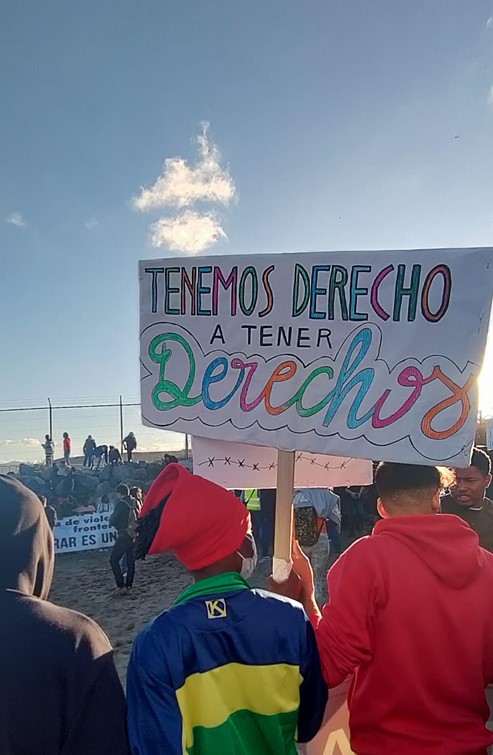
“Tenemos derecho a tener derechos” (We have the right to have rights). Photo taken by the author at the March for Dignity
Continue reading

Caring for people and nature: A summary report on Green Care and place-based sustainability in Finland by Angela Moriggi et al.

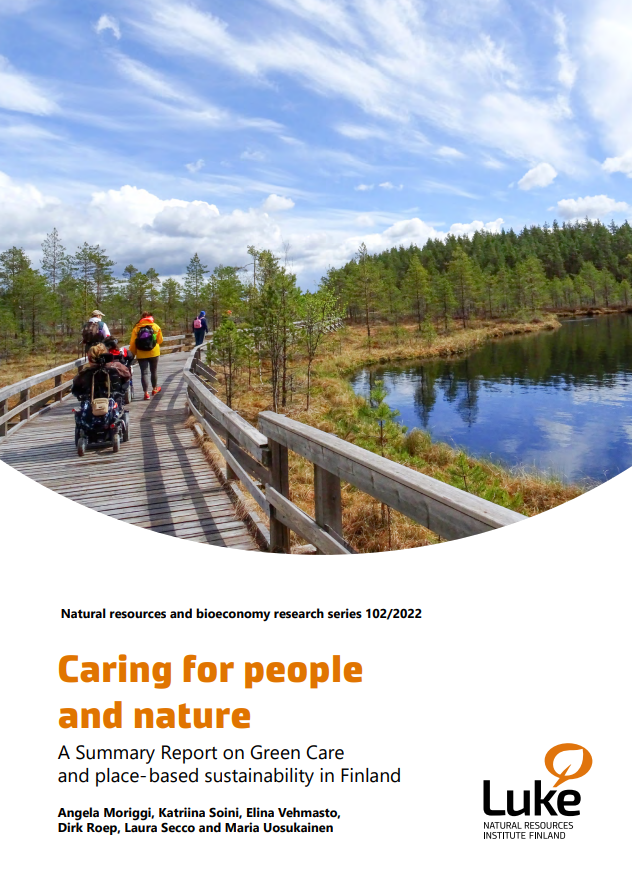
Caring for people and nature: A summary report on Green Care and place-based sustainability in Finland by Angela Moriggi, Katriina Soini, Elina Vehmasto, Dirk Roep, Laura Secco and Maria Uosukainen, published by the LUKE – Natural Resources Institute Finland.

Four highlights of the report

Continue reading

Vacancy: research assistant gender norms in rural innovation in the Netherlands

The Rural Sociology Group and the Business Management and Organisation Group of Wageningen University are looking for a Research Assistant to work on the inventory of gender norms in rural innovation in the Netherlands. This research is part of the joint 3-year EU-funded project GRASSCEILING which started in January 1st, 2023.

The position is for 12 months at 0.4 FTE. The research assistant will be based at the  BMO group.

In this exciting research position:

Continue reading

AUTONOMY IN AGRARIAN STUDIES, POLITICS, AND MOVEMENTS: AN INTER-PARADIGM DEBATE

Kees Jansen and Leandro Vergara-Camus

Autonomy has been a word that has been rolling off the tongues of leftist activists and academics for decades and has been the subject of countless articles and books. It has been theorised from Marxist, Anarchist, Post-Marxist, Foucauldian and Feminist perspectives. Historically, the term autonomy has often been used to express the ability of individuals or collective subjects to escape, in one way or another, the rule of capital or the control of the state. More recently, academic interventions on autonomy have been fundamentally about assessing how global capitalism operates and what kinds of subjects, spaces, and practices can resist it and build alternatives to it. Within agrarian studies and peasant movements, the concept has referred to the ability of peasants to mount collective responses to the dominant actors in the globalised market or within the state, while remaining independent from political parties or politicians. For indigenous movements, the term autonomy has been associated with a struggle or a project to take back control over their ancestral territories by challenging the nation-state. Discussions about autonomy are thus necessarily about the collective agency of social subjects within capitalism.

The idea of a special issue on autonomy in agrarian studies, politics and movements then was triggered by discussions within the Agrarian Change Working Group at the IIPPE annual conference in Lisbon and Pula. We followed this up with a workshop with contributors, hosted by Kees Jansen, at Wageningen University in the Netherlands in December 2019, just before the pandemic. This was a unique workshop where we debated, as social scientists, ontological and epistemological questions: the current nature of capitalism, its different manifestations in rural settings across the world, the ways different rural groups are inserted within it, and the struggles that different agrarian movements have led to resist it economically, politically and culturally. Coming from different theoretical traditions or positions, we had different understandings of markets and market relations, the role of collective action as well as the dialectical relationship between agency and structure.

This lack of consensus has been preserved in the Special Issue as well, which we hope can contribute to an inter-paradigm debate within agrarian studies on this topic. At the same time, in keeping with the tradition of the Journal of Agrarian Change, the different uses of the term (and the perspectives on) autonomy have been critically discussed from a critical agrarian political economy approach and placed within contexts of contradictory and complex class, ethnic and gender relationships.

The contributions critically analyse and assess different experiences of autonomy (peasant, indigenous, women, and guerrilla) by focusing on the varying spheres from which autonomy is sought (the market, the state, development, patriarchy) and on the type of collective action adopted by the different groups (economic, political, ethno-cultural). It includes contributions covering Latin America, the Middle East, and South-East Asia that are organised around the following four themes:

i) Capitalism in the Countryside and in Agricultural Production: The first discussion of autonomy revolves around a critical assessment of the type of agency that emerges around the demand and search for autonomy and the conditions that make it possible. Characterisations of contemporary capitalism in the countryside, the nature of small-scale farming, and the class position and consciousness of subaltern agricultural producers are central to this discussion. Natarajan and Brickell engage with feminist scholarship on women’s reproductive labour and combine it with Henry Bernstein’s critique of the notion of the autonomous ‘peasant’. They explore how the deeper market integration of women in rural Cambodia, through distress sales of land or use of land as collateral for microfinance borrowing, simultaneously renders women more dependent on markets whilst also constituting a temporary path towards an aspirational autonomy. Jansen, Vicol, and Nikol, on the other hand, develop a critique of van der Ploeg’s book The New Peasantries which presents the struggle for autonomy as central to the peasant condition. They dissect the book’s peasant bias, the usefulness of the notion of autonomy in a human society saturated with social relationships and the neglect of the complexities of agrarian class formation and differentiation at the local level.

ii) Autonomy from the Market or via the Market: The second discussion of autonomy has to do with the different ways of conceptualising markets, especially the relationship between capitalist relations and non-capitalist relations. Sankey shows how different histories, levels and types of market integration within Colombia lead to different kinds of exposure to the imperative of the market and responses to the crisis of small-scale agriculture triggered by neoliberalism. Using the case of O Circuito, an extended market in Brazil constructed by a peasant movement and its urban allies, the paper by van der Ploeg and Schneider develop the notion that autonomy is a political collective project that can rest on the construction of ‘nested markets’.

iii) Social Movements, Autonomy in State and Non-state Politics: All the contributions address questions of class, state and politics, but these questions are the central focus of the contributions by Bretón et al., Guimarães and Wanderley, and Jongerden. Bretón et al. draw from four emblematic cases of peasant and indigenous autonomy in Latin America (the MST in Brazil, the indigenous movement in Ecuador, the indigenous and Afro-descendants in the Pacific Coast of Nicaragua, and the peasant movement in Mexico) to critically analyse the promises, achievements, and contradictions of projects of autonomy during the era of neoliberalism across four dimensions: political independence, economic relations, ethno-cultural goals, and the internal politics.

Following a fundamentally political understanding of autonomy inspired by Cornelius Castoriadis, Guimarães and Wanderley build a Polanyian analysis of the different forms of organisation and struggles that indigenous peasants adopted in Bolivia. Still another approach emerges in the paper by Jongerden who argues that agricultural development by the Kurdish movement in Rojava and North and East Syria is better seen as a third, self-constituting, or autonomous mode of ordering. He traces the influence of Murray Bookchin’s autonomist thought on Kurdish intellectuals and discusses the recent Kurdish agrarian policies in Rojava to rebuild the war-ridden agrarian economy on the principle of autonomy.

iv) Autonomy and Technological Revolutions: While several other papers discuss this theme tangentially, for Stone, the question of autonomy is centrally one of technology and knowledge. He shows how the emerging surveillance farming seems to be replicating earlier phases of agricultural development. Stone also raises concerns about how the big data revolution in agriculture could lead to agricultural deskilling and loss of farmer’s autonomy.

A deeper understanding of autonomy in political theory and practice, as developed through this Special Issue, sheds new light on how to conceptualise class within the continuum of a basically economic category or the outcome of a political process. It asks what makes certain social subjects, be it peasants, indigenous peoples or revolutionaries develop an ideology and political projects that present autonomy (from the market, the state or development) as a desired horizon.

Read the full introduction by the Special Issue editors here.

Read the full Special Issue here – Free access for three months.