BSc Thesis opportunity: The Human Factor in Place-shaping

We are looking for motivated BSc students that are interested in writing a thesis with the Rural Sociology Group on the topic of place-shaping. The student will engage in a literature-based study, starting literature will be provided by the supervisor. The report will preferably be written in English.

  1. The (re-)appreciation of places; paying attention to socio-cultural practices; people’s sense of place; regional identities, narratives and story-lines, and branding of places[1];
  2. Individual values and collective culture as the ‘inner’ dimension of sustainability; addressing questions such as: why would people get engaged in sustainability initiatives and self-organization; how and why do people value places but also oppose to the spatial planning of new projects, such as wind-energy parks; how are citizens initiatives and place-shaping influenced by awareness, culture, identities and values; Which ‘policy scripts’ can be identified addressing the role of culture in places?
  3. Collective agency, emerging grassroots initiatives, alliances and coalitions; addressing the questions: how can spatial development enable the ‘energetic society’? How do people on the local and regional administrative level reflect on and negotiate the conditions of their engagement in place-shaping, how do they express agency and create a countervailing power in rural and urban development; how can effective (public-private) alliances and coalitions be build?
  4. Leadership of place; which acknowledges the role of shared, collaborative (knowledge) leadership in building collective agency, in attuning the institutional setting to the specificities of place, thus enabling a place-based approach.
  5. Methodology; Qualitative case-study research; Participatory approaches; Action-research; Value-oriented approach, Appreciative Inquiry.

Continue reading

BSc Thesis Opportunity: Social Value of Neighbourhood Apps

In recent years several ‘apps’ have been developed in order to help people exchange both tangible items such as materials or food, and intangible issues such as knowledge and information. Examples are ‘nextdoor’, created to exchange news and other information between neighbours, ‘peerby’, designed to help people lend each other tools and utensils, and ‘thuisafgehaald’, a website facilitating people to cook for others in their neighbourhood. Besides offering practical solutions to ‘use the power, the knowledge and the stock of the masses’, such applications are also often viewed in terms of social cohesion and strengthening neighbourhoods.
workstation-405768_1920 Continue reading

Urban Agriculture in Romania

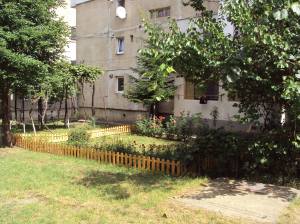
11879645_1022934331074106_583476184_o-2This MSc thesis by Anamaria Alupoaie (MSc Organic Agriculture) investigated the reasons for failure of urban gardens, and the impacts of gardens on resident’s ‘sense of place’, in Dorohoi city in Romania.

Urban Agriculture plays a different role in the food system then agriculture in rural areas. In some cases, it represents a source of income or builds  sociological relations between citizens, through participation in the garden. In other cases, urban agriculture may originate from rural agricultural habits and traditions. With these inherited habits, urban farmers improve the existing environment through their practices, and with these practices they inspire others to take action in maintaining their own ‘green corners’ in the public space.

11882459_1022933601074179_396130938_oThe study was undertaken in Dorohoi region, a city situated on the north side of Romania, a small city with  31,093 inhabitants. In the last 20 years, the city experienced a period of decline due to the closure of big factories that offered jobs for more than half of the inhabitants. Since then the unemployment rate grew, and reached 80-85 %, in 2009. And it is estimated that now over 50% of the population lives below the country’s poverty line, as a result of the loss of the big industry. The availability of resources and income has triggered city dwellers to rely to a greater extent on local food production. Among the existing gardens, new ones started to flourish around the apartment buildings, in urban public spaces, and residents grew their edible greens. As such, in the area proposed for investigation, Dorohoi, urban agriculture continued through the communities of rural people that had moved into the urban center. They developed gardens in the green spaces of the city as a traditional habit inherited from their rural life. But this period of prosperity didn’t last, and about a decade ago, the city gardens were destroyed, with no significant grounds left. Continue reading

Thesis opportunity: Effective strategies for civil society engagement in global food security governance

New Thesis Opportunity with Rural Sociology Group, Wageningen University

Proposed title: Effective strategies for civil society engagement in global food security governance: An analysis of CSO interventions in the Committee on World Food Security

Key words: Food security; civil society; policy; global governance; Committee on World Food Security; Civil Society Mechanism; theories of change

Context: The world food price crisis of 2007/08 shook global food governance. Pressured to find solutions for unprecedented prices increase of led to the development of new global initiatives and the reform of old ones.  One of the most promising actions was the reform of the United Nation’s Committee on World Food Security (CFS), who transformed itself from “the most boring UN body of all” – in the words of an experienced diplomat based in Rome – to the foremost inclusive international and intergovernmental platform for food security, with substantive participation of different actors including member states, civil society and private sector. Continue reading

Request for a MSc student on leadership of place

Picture leadershipThe Rural Sociology Group is looking for a MSc student who is willing to do his/her master thesis research on leadership in 2 Dutch regions in the context of an international comparative research in the spring of 2016.
The central question is how leadership plays a role in rural and metropolitan regional development. Continue reading