75th Anniversary: 23) On RSO education: 75 years teaching rural sociology

Diving into the archives of Wageningen University Library, I stumbled upon overviews and information on education. I was particularly interested in the teaching of rural sociology at the university. This is the first of a few blogs on RSO Education: the historical overview of sociology and specifically rural sociology at the Wageningen University timeline.

The pre-sociology era (1918-1956)

First students at the Landbouwhogeschool in 1879 (source: wur.nl)

In 1918, the Wageningen University was still called the Landbouwhogeschool (Agricultural College). Students could choose 5 study programmes: Dutch Agriculture, Dutch Horticulture, Dutch Forestry, Colonial Agriculture and Colonial Forestry. These remained the study programmes of the university for 24 years. It was not until 1945 that the university evolved into wider oriented institute. In 1946, sociology gained grounds through a new study programme on home economics. In his book chapter, Kooy (1971) calls this an “entrance in disguise” sociology was always marked with the adjective “agrarian”.  This marked the beginning of sociology in the educational programmes of the university. In 1956, The university added 11 new study programmes to the Wageningen university. Two of these additions were the study programmes Agrarian Sociology and Agrarian Sociology of Non-Western Areas. Continue reading
Open letter on the EU’s ‘Farmers for the Future’ Report and the Farm to Fork Strategy

Open letter of European scholars to (in English, French and Spanish):

  • Frans Timmermans, Executive Vice-President of the European Commission
  • Janusz Wojciechowski, European Commissioner for Agriculture,
  • Norbert Lins, President of COMAGRI of the European Parliament.

Re: ‘Farmers for the Future’

Wageningen, 10th of March 2021

Dear Sirs,

In 2020 the European Commission released ‘Farmers for the Future’ (EUR 30464 EN), a Science for Policy Report, prepared by the Joint Research Centre (JRC) of the European Commission. This policy report is intended to contribute to the further elucidation of the EU’s Farm to Fork Strategy which is a key element of the European Green Deal. It has, at its core, a description of 12 profiles that are attempt to categorize the likely diversity and range of professional farming styles in European agriculture in 2040. The report asks, and tries to respond to, the following question: “ Who will be the key players of the EU next generation agriculture, the farmers of the future?” Continue reading

75th Anniversary: 22) Vormende krachten, veranderende verhoudingen: reflecties op de studie van een veranderend platteland

“Noem je dissertatie nooit deel 1” schreef de Wageningse professor agrarische geschiedenis Pim Kooij (Kooij 1991: 9) in zijn inleiding tot het boek “Het Oldambt, deel 2: nieuwe visies op geschiedenis en actuele problemen”. Achteraf bezien was het wellicht niet eens zo’n heel slechte keuze van E.W. Hofstee om zijn proefschrift in 1937 “Het Oldambt: Vormende Krachten deel 1’ te noemen (Hofstee 1937). Zelf kwam de grand old man van de rurale sociologie er niet meer aan toe hier een deel 2 aan toe te voegen, oorspronkelijk beoogd als een integrerende en concluderende afsluiting van het voorafgaande deel. Maar zijn toevoeging ‘deel 1’ heeft anderen uiteindelijk de uitdaging doen aangaan om met een vervolg te komen. Al was het meer dan 50 jaar later, en niet zo zeer concluderend, maar reflecterend. Continue reading

75th Anniversary: 21) Geographies of power and rebellious social sciences

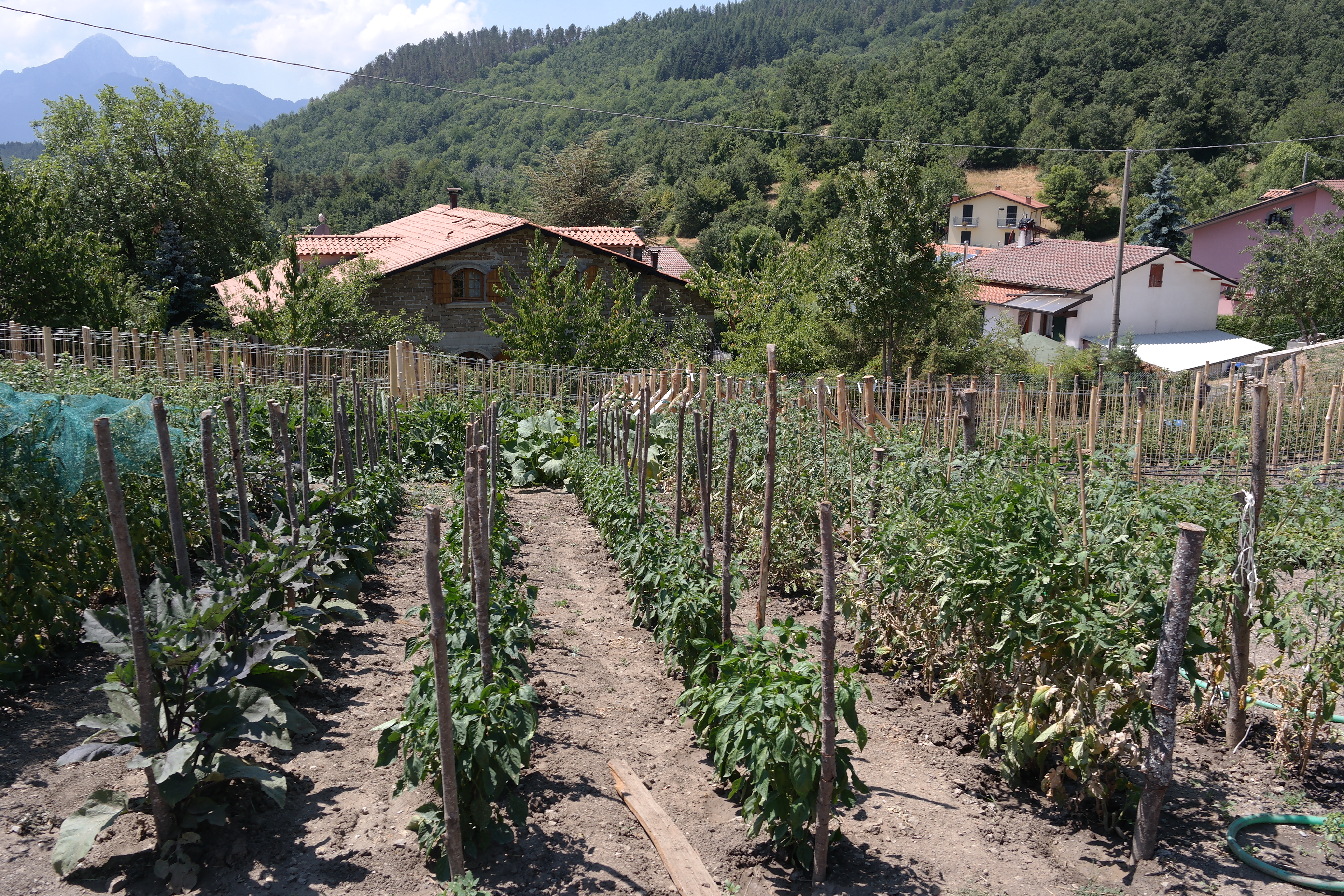
Garfagnana, Italy – picture by Jordan Treakle

by Jordan Treakle

My path to WUR’s Rural Sociology Group (RSO) differed from most of my fellow Masters students when I first arrived to Wageningen in August 2015. As a second-year student in the International Masters in Rural Development (IMRD) programme[1], I had spent the first year of my programme nomadically exploring the academic halls of the University of Ghent (Belgium), Humboldt University (Germany), and the University of Pisa (Italy) with my 27 fellow IMRDers. This unique and fast paced academic tour of Europe gave me a range of academic lens on agricultural economies and cooperative development in food systems that were enriching and informative. But these perspectives generally had not touched on the complex geographies of power and agency that I found most compelling. Luckily WUR’s small but worldly campus, with all of its contentious influences of corporate agribusiness research and rebellious social science scholarship, offered a critical forum to both intellectually digest the lessons of the other academic institutions I had visited during the first year of my programme, as well as dive into rural sociological concepts that reconfigured my relationship to place and later guided young career in farmer advocacy and agricultural policy. Continue reading

75th Anniversary: 20) Boerengroep

Boerenprotest tegen melkprijs- ongedateerd, archief Boerengroep

Het is al weer 50 jaar geleden dat de Boerengroep[1] werd opgericht in een roerige tijd van grootschalige boerenprotesten. Een Europese demonstratie van boeren in Brussel op 23 maart 1971 liep uit op een confrontatie met de politie. Er gingen tientallen auto’s in vlammen opgingen en één boer vond de dood (klik op deze link voor een nieuwsverslag over deze betoging uit 1971)[2]. De demonstratie maakte duidelijk dat er onder boeren en boerinnen grote ontevredenheid was over het gevoerde Europese landbouwbeleid. Continue reading