Working group at 24th ESRS congress in Chania, Greece 22-25 August 2011: Call for papers

Imre Kovách ( Institute for Political Science of the Hungarian Academy of Sciences, Budapest), Petra Derkzen and I are organising a working group on “the governance of semi-subsistent food and farming strategies in the countryside and city- a compartive perspective” at the 24th ESRS congress in Chania (Greece) from 22-25 of August 2011. We would like to invite all interested researchers to submit their papers dealing with empirical or theoretical reflections on the driving forces, structure and mechanisms of semisubsistence food and farming strategies in the countryside and-or cities, both within developed and developing countries. Abstracts may be submitted  to Imre Kovach (ikovach@mtapti.hu) AND chania2011@agr.unipi.it until the 30th of April 2011.  For a more detailed description of the workshop please read further…

Courtesy of European Forum on Nature Conservation and Pastoralism

Continue reading

FoodWorks – New York City’s innovative and ambitious food strategy

On November 22nd, the New York City Council presented a comprehensive plan that sets a bold vision for a more sustainable food system. The plan, ‘FoodWorks’, addresses sustainability and health issues at every phase of the food system – from agricultural production, processing, distribution, consumption and post-consumption. The objectives of FoodWorks range from combating hunger and obesity to preserving regional farming and local food manufacturing to decreasing waste and energy usage.

FoodWorks contains 59 policy proposals spanning five phases of the food system. The proposals include new legislation, funding initiatives and far-reaching goals that present a long-term vision for a better food system.

  • Agricultural Production – Support regional farmers, strengthen regional linkages, and increase urban food production 
  • Processing – Generate growth and employment in the food sector
  • Distribution – Improve food distribution channels into and within the city
  • Consumption – Fresh food must be available to New Yorkers regardless of where they live
  • Post-Consumption – Seize opportunities to reduce and recapture waste

The New York Council worked with experts including farmers, gardeners, chefs, partners in government and labor, as well as hunger and environmental advocates throughout the process of developing the Food Works report.  Both content-wise and process-wise New York City’s food policy FoodWorks is innovative and ambitious and can serve as an inspiration for many city councils across the world.

Students, Broilers and Sustainability

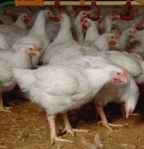
Last week about 60 Msc students followed a week on socio-cultural sustainability of organic production chains, as part of the course ‘Analysis and Management of Sustainable Organic Production Chains’. Each week of the course focused on a specific component of sustainability (consumer, socio-cultural, environmental, economic), given by a different chair group. Last  week was under supervision and teaching of our Rural Sociology group.The lectures and assignments focused on socio-cultural sustainability and discussed chain perception from a societal point of view and the context dependency of indicators for socio-cultural sustainability.

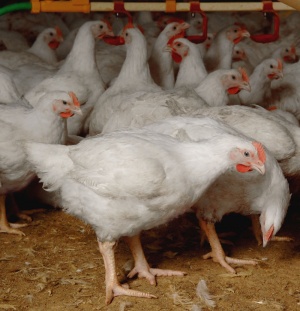
During the course, the students worked in multidisciplinary and multicultural groups of 6 students. Each group represented a stakeholder in the broiler production chain (e.g. fodder company, farmers, retailers, animal welfare organization, slaughterhouse). Of the 60 students, only 1 student had a background in sociology. Others were involved in economics, agronomy or other natural-science based disciplines. Consequently, it was challenging for many of the students to change their way of thinking and reasoning to a more sociological mindset.  Moreover, one week is extremely short to do this. This resulted in hard working students and heated debates among group members.
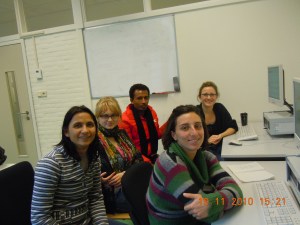
By the end of the week, the students were requested to  – on the basis of earlier assignments that week – come up with actions that would make the broiler production chain more socio-cultural sustainable  from their stakeholder perspective. Several groups raised suggestions  like shorter production chains, more regional production and stronger embeddedness in the region. Although these themes were not explicitly tackled during this week, I was happy to hear these suggestions, because our Rural Sociology group is engaged in such themes.  

Overall, it was a week of hard working – for the students as well as the teacher 😉 – but when I look back, it makes me happy that the students themselves came up with interesting and creative ideas in just one week!

Staggered by Queen’s speech

Yesterday Queen Beatrix held her annual Queen’s speech (Troonrede). I was astonished by her words about the Dutch agricultural sector. The text – written by our ‘demissionary cabinet’ – promoted a production- and export-oriented agriculture based on new technologies and innovations.

  “Nederland is de op één na grootste exporteur van land- en tuinbouwproducten. Het innovatieve en duurzame karakter van onze agrarische sector staat wereldwijd hoog aangeschreven. Ons land kan een belangrijke bijdrage leveren aan de mondiale voedselzekerheid door te blijven werken aan verbetering van de huidige technologieën. De overheid schept hierbij randvoorwaarden voor duurzame productiemethoden.” – Troonrede 21 september 2010 

These words could have been written decades ago – in the era of maximizing agricultural production when high levels of technology promised to solve the problems – only this time such promises are headed under the name ‘sustainable production methods’. But by now, we should have learned our lessons over time; technology can help to find solutions, but only if these also fit into our social and cultural world.

Listening to the Queen’s speech, maybe I am the one who’s mistaken here. Apparently, we are in this era of maximal production, maybe even more than we have ever been. Despite alarming societal organizations and increased social concerns about for example the way animals are treated in our society, ‘we’ keep on producing food in a production-oriented way. I was astonished by the lack of the nuances in this speech: what about regional production? and organic agriculture? What about animal welfare issues? What about environmental load? What about the consequences of our production for African agriculture and food supply? Do the writers of this speech really believe that we can solve such issues by merely focusing (and hoping!) for new technologies?!

I appreciate – just as many citizens in my research (see former blogs) – several achievements of technological developments, but it is all about making trade-offs. How far do we want to go? Unfortunately such decisions are often money-based without giving much thought to social consequences. I am really disappointed that our ‘demissionary cabinet’ carries out such a message. Moreover, my concerns about the future of agriculture and equal food production – both in the Netherlands and world-wide – had been confirmed: Where are we going?! I had hoped for a more nuanced vision, including themes such as regional production, animal welfare and the environment.

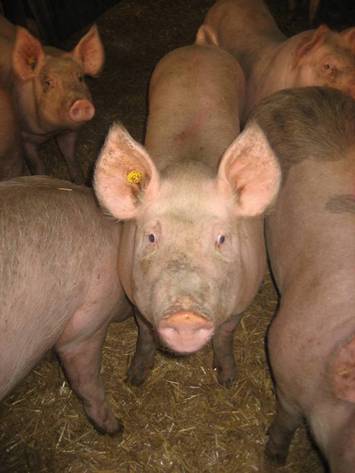
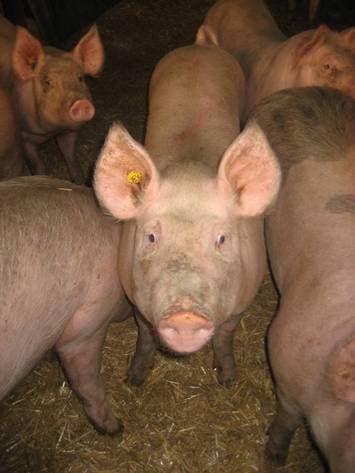
Kijkje in de varkensstal

Op Foodlog is gister een filmpje geplaatst over de varkens van Dinie en Paul Jansen. Zij ontvangen daarmee één beter-leven-ster van de Dierenbescherming.  De blog eindigt met de oproep “Vertel wat u vindt, voelt, ziet en wat zou u nog meer willen weten na deze kijk in de stallen”.  Dat prikkelt mijn zintuigen en snel kijk in naar de reacties die reeds geplaatst zijn. Annechien ten Have schrijft “Ik ben heel benieuwd hier op foodlog te horen wat de niet-varkenshouders vinden van deze stal”. Dat is precies wat ook ik graag wil weten, want we zijn momenteel een onderzoek naar burgerpercepties van de varkenshouderij aan het afronden. Voor dat onderzoek hebben we met burgerpanels varkensbedrijven bezocht.

 Aan de ene kant staan er veel positieve reacties, met name over het welzijn van de varkens. Zo schrijft Robin: Ze zien er blij en happy uit. Zo’n bal met een belletje erin lijkt me ook wel wat voor ze”. Maar er staat ook een uitgebreide reactie van Flourine Boucher die haar zorgen uitspreekt: “Het spijt mij, maar ik weet niet goed wat ik hier van moet denken. Blijkbaar is dit een voorbeeld van goede varkenshouderij. Het ziet er schoner en ruimer uit… Toch wordt ik er niet blij van. De massaliteit staat me tegen” Haar zorgen hebben met name betrekking op het niet naar buiten gaan van de dieren en beperkte mogelijkheden tot het uiten van gedrag. Ze zegt er nadrukkelijk bij “Gedegen kennis van varkensgedrag ontbeert mij. … Mijn tegenstrijdige gevoelens bij het zien van dit filmpje beletten mij een beredeneerd oordeel te vormen.”  Franka sluit zich hierbij aan en heeft “ook wel last van ambivalente gevoelens”.

Interessant! Herkenbaar! – zijn de woorden die direct in mij opkomen zodra ik hun reacties lees. Om twee redenen.

Ten eerste, Nederlanders hebben weinig ervaring meer met de veehouderij en deze reacties laten zien hoeveel vragen zo’n filmpje oproept. Bijvoorbeeld over diergedrag (vechten of spelen?), handelingen aan de dieren (staart couperen of niet?), het staltype (hoeveel staloppervlak per varken?) en de productieketen (waar komen de biggen en het voer vandaan?). Tijdens de bedrijfsbezoeken kwamen dezelfde soort vragen en onderwerpen aan bod. Deelnemers stelden veel vragen aan de veehouder en de meeste deelnemers vonden het dan ook een hele leerzame dag. Het mooie van dit foodlog is dat varkenshouder Paul Jansen de vragen van de lezers persoonlijk beantwoordt en de lezers zelfs uitnodigt om een kijkje te komen nemen op het bedrijf. Dat is mooi, want zo kunnen mensen zelf zien en ervaren wat een bedrijf inhoudt en op grond daarvan hun mening vormen.  

Ten tweede, geven de twee bovengenoemde reacties de kern van de resultaten van eerdere onderzoeken weer: ambivalentie. Men vraagt zich bijvoorbeeld af wat goed is voor de varkens en tegelijkertijd goed is voor de veehouder – die moet er immers een boterham mee verdienen. Dergelijke ambivalentie verwijst naar de ‘two faces of modernity’ : Aan de ene kant wordt moderniteit gewaardeerd dankzij technologische vooruitgang en ontwikkeling en bijkomende voordelen zoals efficiente voedselproductie. Maar aan de andere kant kunnen diezelfde ontwikkelingen een bedreiging vormen voor tradities en natuurlijkheid in de veehouderij. Dan komt bijvoorbeeld het welzijn van de dieren onder druk te staan. Op Foodlog laat varkenshouder Paul zien hoe hij hiermee omgaat en welke keuzes hij heeft gemaakt. Zo heeft hij eerder gezegd: “Ik weet één ding zeker: ik wil niet zo groot mogelijk en zo industrieel mogelijk. Dat is voor mij niet de weg om te gaan. Ik geloof in een boerenlandbouw met oog voor de menselijke maat.”  Het is inspirerend om te zien en lezen hoe Paul het gesprek met de samenleving aangaat, door zijn eigen verhaal te vertellen!