Romashki or a Life Less Ordinary, part 3

By Thomas Macintyre

…Belka the squirrel had been swishing her tail back and forth, and when I looked at her she held out a walnut for me to take. “This is a present” she said, as I took the nut. “It is a nut that was too high for you to reach in the tree. We must all help each other you know – humans and animals and all other life on earth.”  Having thanked Belka I waved a last farewell to my friends and began the walk back through the reeds. Just as I was about to begin the walk up the hill I heard a loud croak from Irenushka the frog and then the words of the Water Fairy being sung across the reeds: “Tom, we also have a gift for you. Keep walking, you will feel it soon.” I heard soft chanting words blowing in the breeze: “Earth fire wind and hail; open the realm of the fairytale.”

Soon after, as I reached the road that would take me to that other world, I heard a roaring thunder and saw the heavens open up as a torrential rain began to pour. Soaked in seconds I trudged along, my socks squelching in unison with the klomp, klomp of my wooden shoes on the road. For a second I felt a twinge of annoyance at being wet and cold, but then I stopped on the road and felt a sense of goodness swell up inside of me. Looking up at the sky as rain drops pounded my face I thought to myself: ‘the blessed water in a fairytale – the parting gift from Romashki.’ (Excerpt from page 153). Continue reading

Who’s ‘the’ farmer?

Yesterday (Tuesday) 42 first year students , Paul Hebinck and I visited two Dutch farms for the course ‘Agricultural and Rural Development: Sociological Perspectives’ (RSO 20806 ).

We firstly visited the multifunctional farm ‘Eemlandhoeve’ of Jan Huigen. In an inspiring talk, Jan explained about the development of the Eemlandhoeve and the future plans. The farm has different functions, such as care farming, recreation, herb production, beef production and education for schoolchildren. After a nice walk around the farm and the calming farm yard (see picture), we walked to the neighbouring farm. 

The neighbouring farm ‘Hoeve ‘t Witte Schaap’ follows another path of development: a large scale dairy farm, with about 300 dairy cows and four milking robots. For most students, it was the first time they visited such a large dairy farm. The shed is large and high, with a lot of light and fresh air. Gerrit (the farmer) talked engaged about his farm, including the technology and animals. Two workers take care of the cows and by feeding them and looking after their health. The cows are fed with grass and maize of the farm and hardly received any concentrates (only in the milking robot). The farmer applies all the manure on his land. In fact, his way of farming is not that far from organic regulations.

After both visits we gathered, where Drees of ‘Willem & Drees’ gave an inspiring talk about regional production and sale of fruit and vegetables in five regions the Netherlands.

During the discussion, the students raised interesting questions. Firstly, one of the students asked Jan Huigen ‘How much of your income comes from food production?’ This – of course – was a limited amount and several students seemed concluded that he was not ‘a real farmer’, but more an entrepreneur in the countryside. Thereafter, the large scale farmer was asked how often he was actually among his animals, which was limited, since he had two workers to take care of the animals. The students seemed to conclude that he was neither ‘a real farmer’, because he had limited animal contact. Instead, he was more a ‘manager’.

To conclude, it was an inspiring excursion, which showed two very different development paths of contemporary farming in the Netherlands and gave students a great opportunity to think about the question what a farmer is nowadays.

Citizens and Animal Welfare: Methods, Findings and Policy Implications

Last Thursday (20th of May) I participated in an interesting workshop about citizens and animal welfare.  The workshop was organized at Aarhus University in Denmark and dealt with questions like: Whose opinion on animal welfare counts? How can one integrate the different perspectives of,  for example farmers, citizens, (animal) scientists and the government? We already know that citizens consider animals’ ‘naturalness’ a very important feature of ‘good animal welfare’. But what is naturalness exactly? Can you implement this in animal farming systems? Can you measure it? And what if the choice for naturalness is in conflict with other aspects, such as animal health? How do citizens make trade-offs between such dilemmas in animal farming? And how should one involve citizens in animal welfare research? Via surveys, farm visits, consensus conferences or are there other ways to be explored? To be short, although much research has already been done on animal welfare over the last decade, there are still many questions surrounding the animal welfare debate when it comes to citizens’ participation and involvement.

Raising new questions is of course a characteristic of research: finishing a research can give you the feeling that you answered some questions, but in the end it will always result in more questions. That’s what keeps us going. What in addition keeps me going, is the cooperation and discussion with other researchers in the world. Particularly after doing a PhD for six years on my own, it is really nice to exchange ideas and cooperate with other researchers in this field, like Jan Tind Sørensen of the Department of Animal Health and Bioscience and Peter Sandøe of the Danish Centre for Bioethics and Risk Assessment . During my PhD I often had the feeling I was one of the very few researchers who is interested in public perceptions of animal farming. But recently, the importance of the public opinion of animal farming is more and more acknowledged, also in the field Animal Science, of which this workshop was a good example.

Intensive Program Slovakia

By Marlies Meijer, MSc student

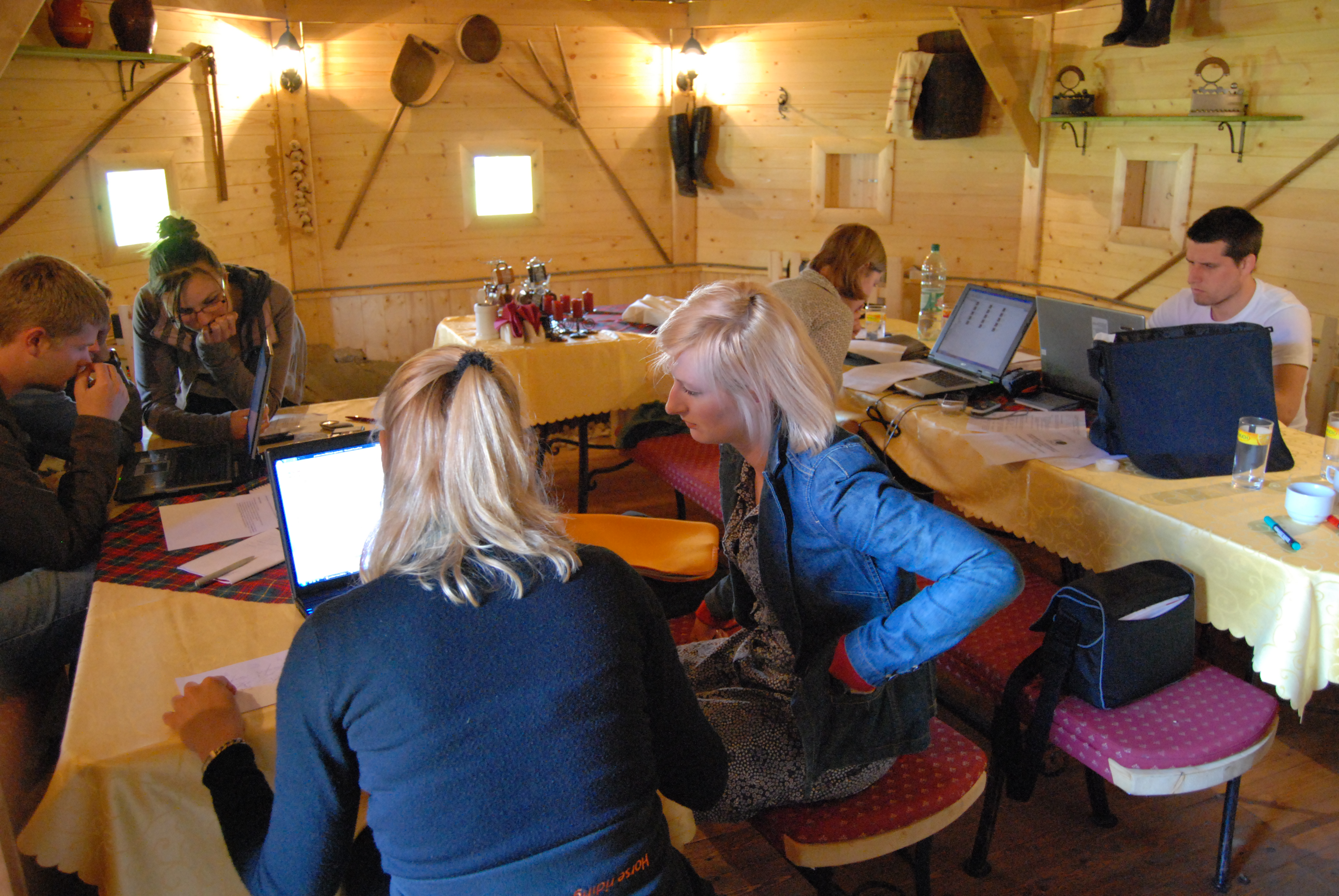
When I first heard about the Intensive Programme in Slovakia, I did not really know what to expect. The core of my MSc lies at land use planning, but for my thesis I choose a combination with rural sociology. What triggered me the most was the country. I’ve never been to Eastern (or Central) Europe and saw in the IP a great opportunity to experience transition from communism to capitalism and into EU-membership recently. On the first day the exchange with other students (about 40 from 12 universities, and even more countries) turned out to be just as interesting. Encouraged by cheap beer we had long discussions about everything, but still, mostly about the role of agriculture in the different countries.

For me the three day excursion to different villages in the Nitra-region was definitely a highlight. We were divided into small groups, each with a different region. My group stayed in a small cottage, north of Nitra. We were introduced to mayors of the small villages. I liked to see the differences between the Dutch planning system, where everything is arranged from paving stone to strategic master plans for 2030; and the project-based development in the little Slovakian villages: “if we have the money, we’ll think about constructing a sewerage system next year”. It makes all problems we have on the Dutch countryside (like “verrommeling”) relatively small.

The second day we went to a large cooperative farm. The size was overwhelming: 3000 ha., 120 employees, 800 cows and immense fields of rapeseed. But this was not everything; the cooperative farm (a legacy from communist times) had supporting departments in almost all layers of the market. We visited a bakery, a tool shop and a local grocery store (“Our Home”), all embodied in the cooperative. It put quite a different perspective on the development of short-supply-linkages. Small farms struggle in Slovakia, and we did not see many small scale (innovative) initiatives. What surprised me the most was that agriculture seemed to be disintegrated from all kinds of regional developments. There were no relations between local administration and the agricultural sector, and agriculture was not seen as a positive contribution (or even part of) to the landscape. Moreover the EU LEADER programme focussed in this region on social and economic developments; agriculture was not mentioned in the main objectives. Not surprisingly, since many villages suffer from more urgent problems, like ageing, unemployment, depopulation and a lack of basic social services.

But still, it pointed out that rural development cannot be just about agriculture, it is about the development of rural region entirely as well. Apart from farmers there are so many local actors that also could and should be included. For me it also pointed out that land use planning and rural development are not so different in essence. While approaches could be different, in the end it is about the same: sustainable development of (rural) regions.

Developing Czech Sitopia

How to get good quality food from your own region? Where to buy fresh and organic food which is in season in the Czech region of Dvur Kralove and in cities such as Trutnov and Broumov? How to get a network going of (potential) producers and (potential) consumers? These were among the questions discussed during a seminar about quality food and permaculture which was held at MIZ in Zdoňov, near the Polish border around 3 hours northeast from Prague on the 14th of May.

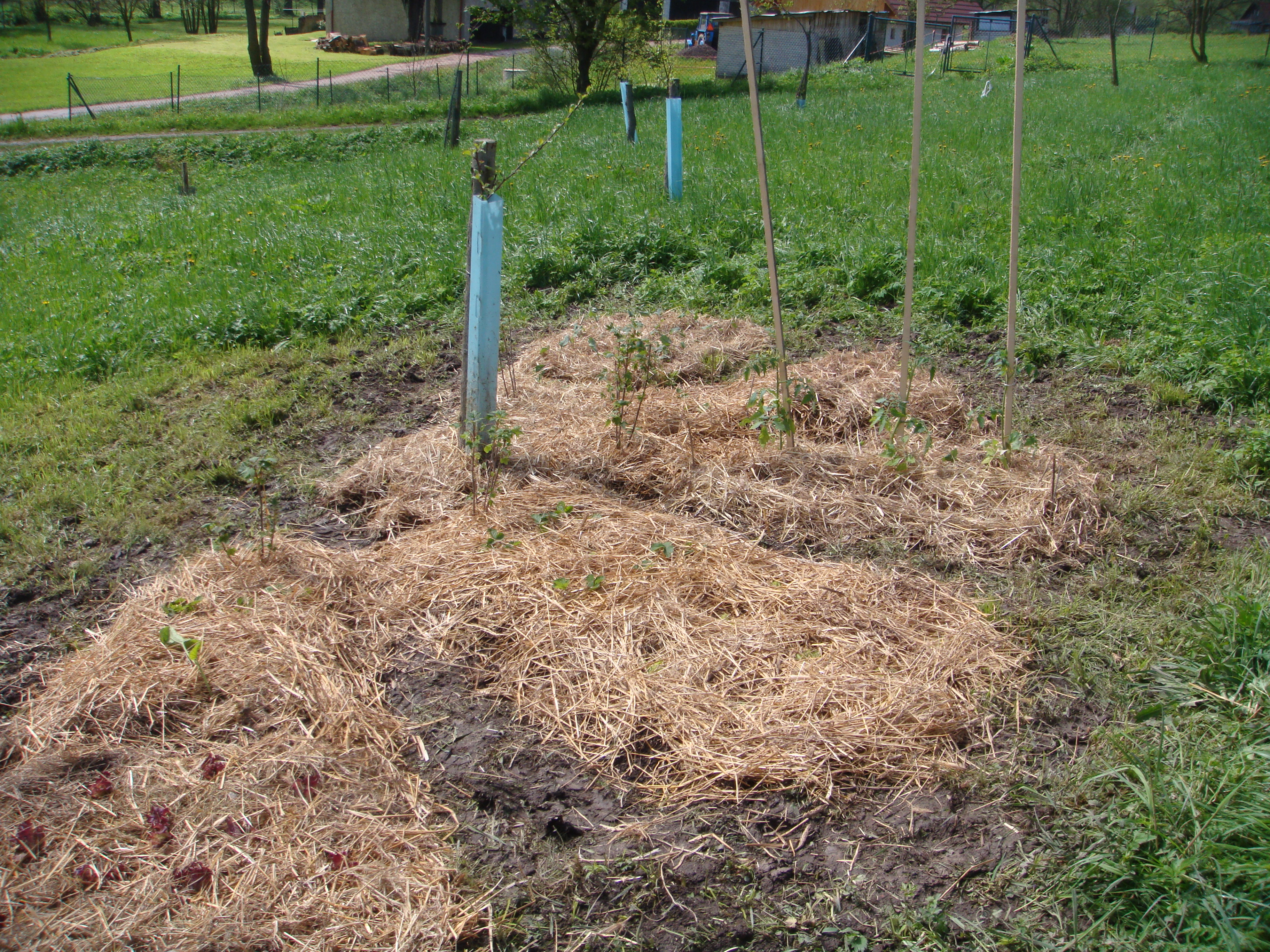
During the seminar different aspects of permaculture were presented in both Czech and English to the 10 participants mainly from around Zdoňov. We discussed how to enhance biodiversity, how to build fertile soil, how to start ecological farming and how to set up a regional food network. The seminar concluded with a joint initiative of three presenters to get themselves and their aims known in the region so that other people with similar interest, both consumers and producers can respond.

In a way, this was a tiny start in making Sitopia, I realized today listening to the guest lecture of Carolyn Steel for the Bsc course ‘Agrarische en rurale ontwikkeling; sociologische perspectieven’. Sitopia, she explained is derived from the words “Sitos” and “topos” meaning “food” and “place”. Making place through food, through meals, through sharing, through caring about the origins of your daily meal and thus, searching for a kind of human connection to food which can hardly be expressed in the anonymous context of the supermarket. In this Czech region, there is not much infrastructure yet beyond the faceless produce from globally operating supermarket chains. But just like in many other countries, mentality is shifting and new networks are born each day.