Many new experiences in direct marketing, part 4

By Corinna Feldmann – MSc Student
Food boxes

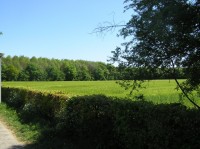
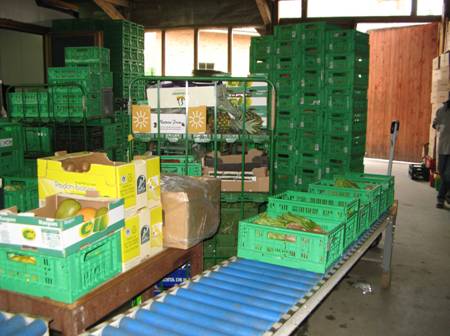
I already spent one month at the farm in Nettelkamp (Lüneburger Heide) – it is quite amazing here. Each day a lot of food boxes are filled with good organic products and delivered to couples, families and companies. I like the idea of supplying about 1300 customers per week with healthy and fresh foodstuff. But it also means a lot of organisation and coordination. We are always very busy with harvesting herbs and vegetables (it is time for asparagus right now), pre-packing, and the ordering of the right amount of products. Many people work in the office and deal with the requests and complaints of the customers. Although we put a lot of effort into the packing of the food boxes, some customers do not exactly receive what they ordered.

Last week I carried out a survey among all the customers to find out more about the reasons why they order an organic food box. Almost all of them sent back the questionnaires. Now I have got a lot to do with the evaluation of this survey. It is also going to be part of my final report.

Since Monday we got support from two trainees – one is from Uzbekistan and the other one from Russia. They help us with the field work and practise the German language.

Every once in a while there are cultural events in the farm barn. This weekend a choir and a group of drum players are performing in the evening. Thus, I made a lot of cake today and prepared dough for pizza. As you can see, it is not getting boring here, although it is quite a small village in a very rural area.

Pleidooi Duurzame Veeteelt

Er is nogal wat commotie rondom het ‘Pleidooi Duurzame Veeteelt’. Het pleidooi is inmiddels ondertekend door ruim 200 hoogleraren, ook vanuit Wageningen, zoals Noëlle Aarts, Paul Struik, Cees Leeuwis, Olaf van Kooten en onze ‘eigen’  Han en Jan Douwe.

Het pleidooi staat voor een drastische verandering van de intensieve veehouderij, in navolging van het rapport van Commissie Wijffels in 2001: 

“De intensieve veehouderij moet ingrijpend worden veranderd. Dieren moeten meer ruimte krijgen voor natuurlijk gedrag, zoals het buiten rondscharrelen. Het transport van levende dieren moet worden beperkt en het fokken van vee moet niet uitsluitend gericht zijn op toename van de productiviteit.”

Het debat rondom de intensieve veehouderij speelt al tijden en laait met enige regelmaat weer op. Met dit actuele pleidooi lijkt het stoplicht voor de intensieve veehouderij nadrukkelijk op oranje te staan… Kunnen en willen we op deze wijze dierlijke producten blijven produceren in Nederland of niet? Oftewel, accepteren we de huidige manier van produceren – het stoplicht blijft groen – of zeggen we  ‘STOP, het is tijd voor een andere veehouderij’?

De keuze is aan jou. Velen – inclusief ondergenoemde – zijn je inmiddels voorgegaan en hebben het pleidooi ondersteund.

Integrated-regional food paradigm

In the current second year Bsc course ‘Agrarische en rurale ontwikkeling; sociologische perspectieven’, students have to make assignments in groups connected to documentaries which subsequently provide input for discussion tutorials. During the first week we worked with the concept of ‘paradigm’ and compared current competing agro-food paradigms. The agro-industrial paradigm (see e.g. Ploeg 2010) and the integrated-regional paradigm (see e.g. Wiskerke 2010).

It led to interesting discussions on feeding the world and the future of our resources. Very remarkable was that the integrated-regional paradigm changed names in the student reports to the ‘traditional’, or ‘local & artisanal’ paradigm. When asked, this turned out to be no conscious choice. It revealed implicit images of the integrated-regional paradigm which influences judgements about the feasibility of this alternative. It also revealed that the practice and future potential of this paradigm is still partly unimaginable.

Earlier this year, other Msc students went to see the integrated-regional paradigm in practice in Hemmen, just at the other side of the river Rhine. Here, several entrepreneurs in organic agriculture and retail are integrating their businesses while keeping their independence and are regionalising their practices step by step. This may still sound abstract. A true explanation needs more than one blog. Here, for now an example of what ‘integrated’ could mean.

Organic arable farm Lingehof (aprox. 80 hec. and 14 mainly contract crops) includes in its rotation scheme space for the gardeners of the Stroom, who run an organic vegetable box scheme for approx. 200 households. Together they also make it possible for people to adopt a (high-stem) apple tree. The dairy farm Opneij and the Lingehof together function as a mixed farm, exchanging manure and straw, rotating grassland and fodder crops. Organic shop the Smidse sells vegetables from the Stroom, meat from Opneij and bread from wheat of the Lingehof. Last year they also started collaboration on another level through the ngo Stichting Hemmens Land (and see earlier blog). One of the activities of this ngo is to set up thematic excursion arrangements to offer groups (such as the Wageningen students) the possibility to visit all involved entrepreneurs around a coherent (educational) program such as closing the nutrient cycle. This can be seen as an integrated (farm)diversification strategy and will create a source of extra income.

Repeasantisation in Araponga, Brazil – a quest for space

By Leonardo Ayabe van den Berg, MSc graduate International Development Studies

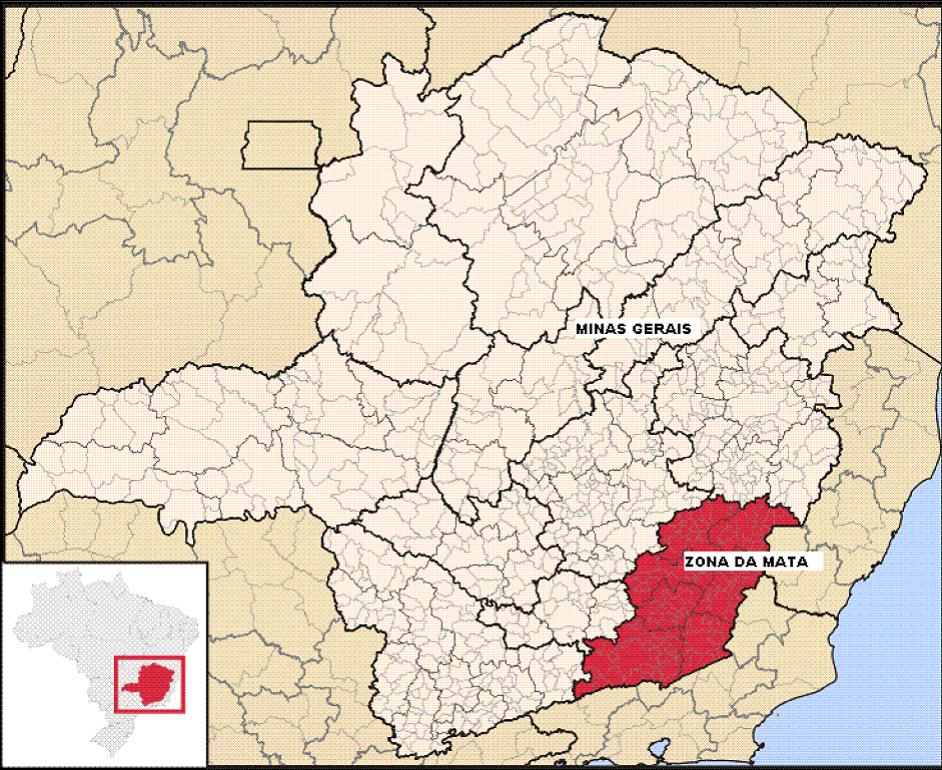
Recently I completed my MSc-thesis. The thesis research is set in the municipality of Araponga in Brazil, where (re)peasantisation occurred and continues to occur. Here I describe some of the findings of my research.  When interested you can downlaod a pdf of my thesis ‘Invisible peasant movements: A case study of (re)peasantisation in Brazil‘.

Araponga

Araponga

When I started to read about the peasantry there were two major things that occurred to me as striking. First, in policy peasants are often considered as a group of laggards: who are unable to take care of themselves and therefore need social assistance; who rely on primitive forms of technology and therefore must be modernized; or who are impeded by a stagnant, traditional mentality and must therefore be converted into small entrepreneurs. The peasant mode of farming is seldomly considered in its own right. Second, in academic theory peasants are predicted to disappear, weaken or live a life of poverty as a result of their inferior mode of production and their helplessness. Departing from the assumption that actors are driven by a specific economic-rational logic, neo-liberal approaches roughly theorise that peasants commoditize, compete with other farms as a result of which there will be regional growth. Tradition or culture can block economic rationality and the transition from peasant to entrepreneur. The peasant will then be doomed to poverty. In contrast to the neo-liberal approach, neo-Marxist approaches, most of which also assume that the peasant is driven by an economic logic and commoditize, theorise that commoditization will either lead to the destruction of the peasant enterprise or to a fate of poverty. This is the result of price fluctuations, squeeze in agriculture (caused by the trend of decreasing produce prices and increasing input prices for farmers), or newly emerging food networks (through which income from weaker, peasant, parts of the chain are squeezed in favour of the more powerful, retailers, part of the chain). These predictions and preconceptions contradict with what happened in Araponga, a rural municipality in the state of Minas Gerais in Brazil where there was a rise in the number of peasants and an increase in welfare. The objective of this thesis was to find out how this was possible: how had (re)peasantisation occurred in Araponga. Continue reading

A new place for my internship: Delivery of organic food boxes, part 3

By Corinna Feldmann – MSc Student

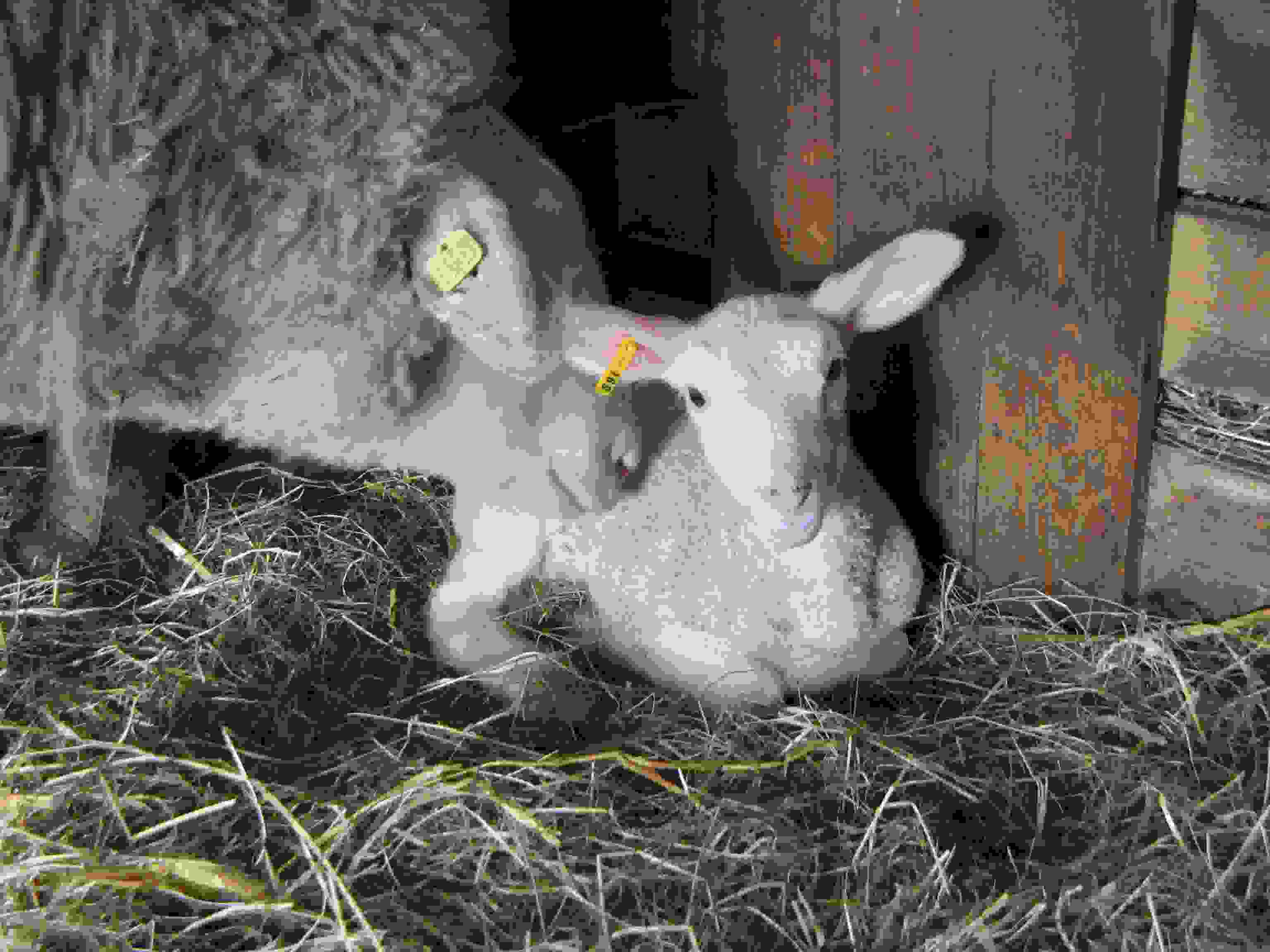
After two months of practical work at the sheep farm and dairy, I decided to leave that place. Working conditions as well as social interaction and communication on the farm became worse and worse; the assignment of tasks and responsibilities was very unclear and often resulted in misunderstandings. Working at the farm was very dissatisfying in the end.

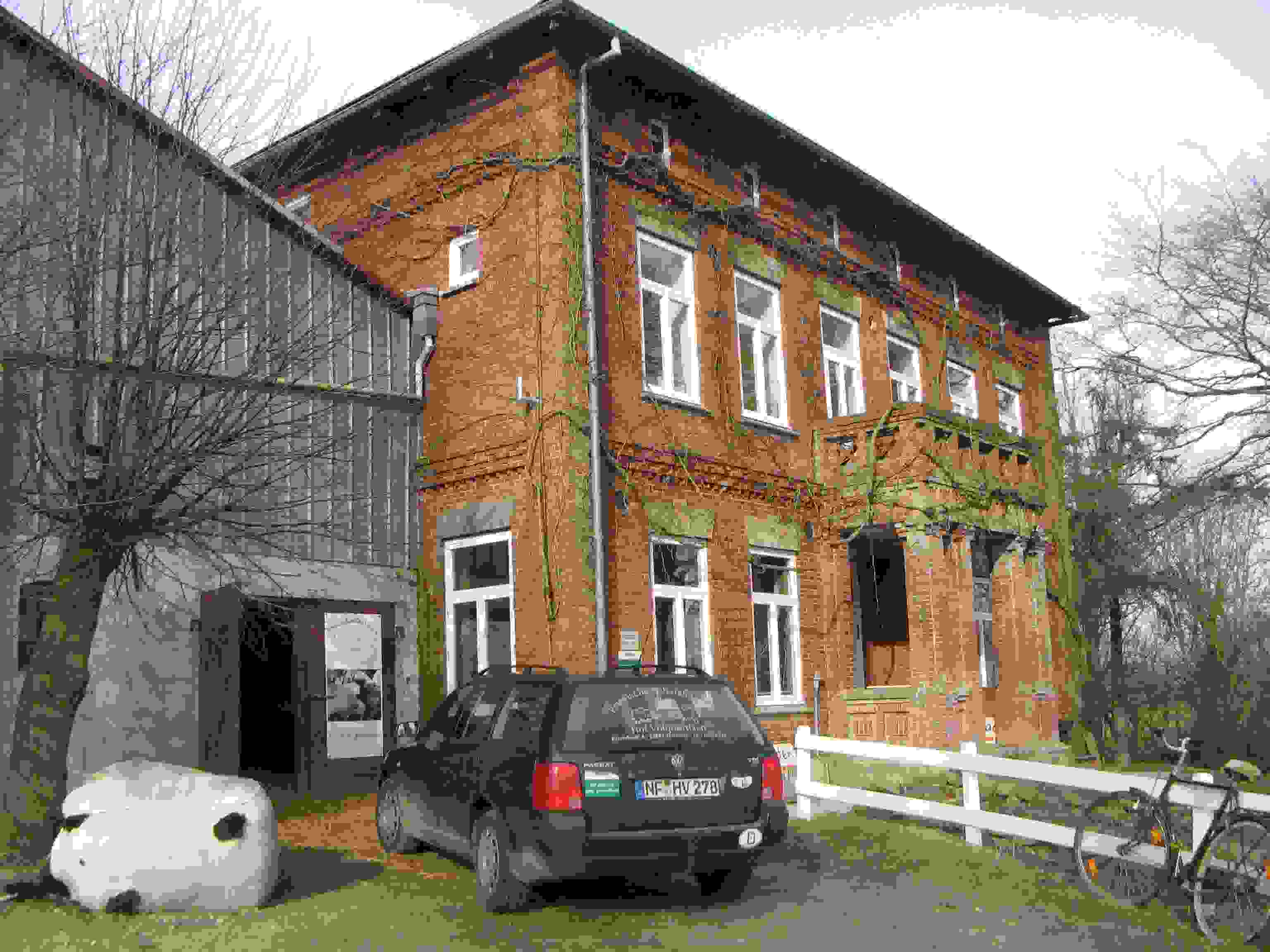
Instead, last week I started working at a farm close to the ‘Lüneburger Heide’ in Northern Germany. This farm is also very engaged in direct marketing. They deliver organic food boxes to 1300 customers in the region. The farm produces a lot of vegetables, herbs, and fruits, as well as some beef and pork meat. The food boxes are supplemented by many organic products from other organic farms and a wholesaler. Consumers can get almost everything they like in their individual food box. For more information you can have a look at the homepage: www.elbers-hof.de.