Op weg naar een duurzame varkenshouderij

“Hoe kom je tot een duurzamere veehouderij?” is een vraag die steeds vaker klinkt. Livestock Research Systeeminnovaties komt daarop met ontwerpen van nieuwe stalsystemen. 

Na ‘Houden van Hennen’ en ‘Kracht van Koeien’ is nu de eindbrochure van het derde project  verschenen ditmaal voor de varkenshouderij! 

Varkansen laat drie verschilldende ontwerpen zien voor toekomstige varkensstallen: De Pagode (‘welzijn als waarde’), De Pijler (‘duurzaam efficiënt’) en De Parel (‘band met de stad’). Ieder ontwerp is gebaseerd op behoeften van verschillende betrokkenen:

“Je kunt hele discussies houden  wie nu echt de belangrijke spelers zijn in en om de varkenshouderij. […] Wij hebben gekozen voor het varken, de varkenshouder, het milieu en de burger-consument als hoofdrolspelers, omdat zij in élke vorm van varkenshouderij van belang  zijn. Op die manier kijk je naar behoeften, los van hoe de sector nu in elkaar steekt.”  Onno van Eijk, co-projectleider Varkansen

Op dinsdag 6 april is de eindbrochure aan (demissionair) Minister Gerda Verburg aangeboden.

Growth of local food economy in USA – Ken Meter

Sustainability impact is one of the five themes of the course ‘Origin Food: a Market for Identity’ (see my earlier post for more info). Surfing on internet, looking for some empirical material on the importance of local food for local economies, we came across the work of Ken Meter, president of the Crossroads Resource Center

Crossroads Resource Center, a non-profit organization, works with communities and their allies to foster democracy and local self-determination. We specialize in devising new tools communities can use to create a more sustainable future.

Ken Meter is one of the most experienced food system analysts in the United States. His work integrates market analysis, business development, systems thinking, and social concerns. As president of Crossroads Resource Center in  Minnesota, Meter holds 39 years experience in inner-city and rural community capacity building.

As documented ath the site, Ken Meter has promoted 45 local food networks in 20 US-states and one in Canada. He has thus built a record on building local food communities and its impact on local economy. In an interview published in three part on You Tube, he shares his vision and experiences on ‘ Building a local food economy’: see part I, part II, part III. At the CRC website also an example presentation of Ken Meter on the ‘Growth in local food economies‘ in the USA. An eye-opener to all of us knowing that the USA is the worlds largets food exporting country, but actually has to import food to feed their own residents as Ken Meter says.  Anyway, local food seem to be booming in the USA, the internet is loaded with initiatives, as was already documented in the posts of our collegue Petra Derkzen at this blogsite.

Internship in the ‘Friesische Schafskäserei’ (Friesian sheep dairy), part 2

By Corinna Feldmann – MSc Student

March, 13th
Life on the sheep farm is very busy right now. More and more lambs are getting born, which have to be fed and of course more sheep have to be milked. All the milk is now used for cheese production, as we are expecting many tourists during the Easter holidays. I am already looking forward to the first guided tours and cheese tastings on the sheep farm. And I am interested to find out about the reasons for tourists to visit a farm during their holidays. Right now we have a lot to do to manage all the preparations. I hope the weather will be better soon, so that at least the sheep can get out of the stable and into the fields…

March, 21st
Finally spring arrived in Northern Friesland; the snow melted and the grass is turning green. Early spring flowers are blossoming. Hopefully the sheep and lambs can be sent out to the fields soon. Many of the lambs are already big enough to survive without their mothers. So, now we can concentrate on cheese making and selling. During the Easter holidays the first visitors are expected. But some of the cheeses still need to ripe in the cellar; they will be ready in May, when the tourist season begins.

Thesis possibility: Sheep & Wine in South Africa

The Rural Sociology Group offers a possibility to do your master thesis about organic wine production in South Africa.

As organic wine production cannot make use of pesticides, wine growers search for other ways to control the weeds in the vineyard, for example by mowing or burning.
More recently, the idea has come up to let sheep graze in the vineyards, see for example http://news.ucanr.org/newsstorymain.cfm?story=977: “If sheep avoid grapes, they can graze the floor of a vineyard, providing farmers an alternative to using herbicides and mowing.”

Although organic wine is also produced in South Africa, this idea has neither been studied nor applied in there. This offers interesting possibilities for a master thesis.

The research will be carried out under supervision of Rural Sociology (Birgit Boogaard) en Rural Development Sociology (Paul Hebinck) and in cooperation with the Unversity of Stellenbosch and an organic winegrower in South Africa – who is very interested in this concept.

If you are interested, just send me an email (birgit.boogaard@wur.nl ) for further information.

Best regards,
Birgit.

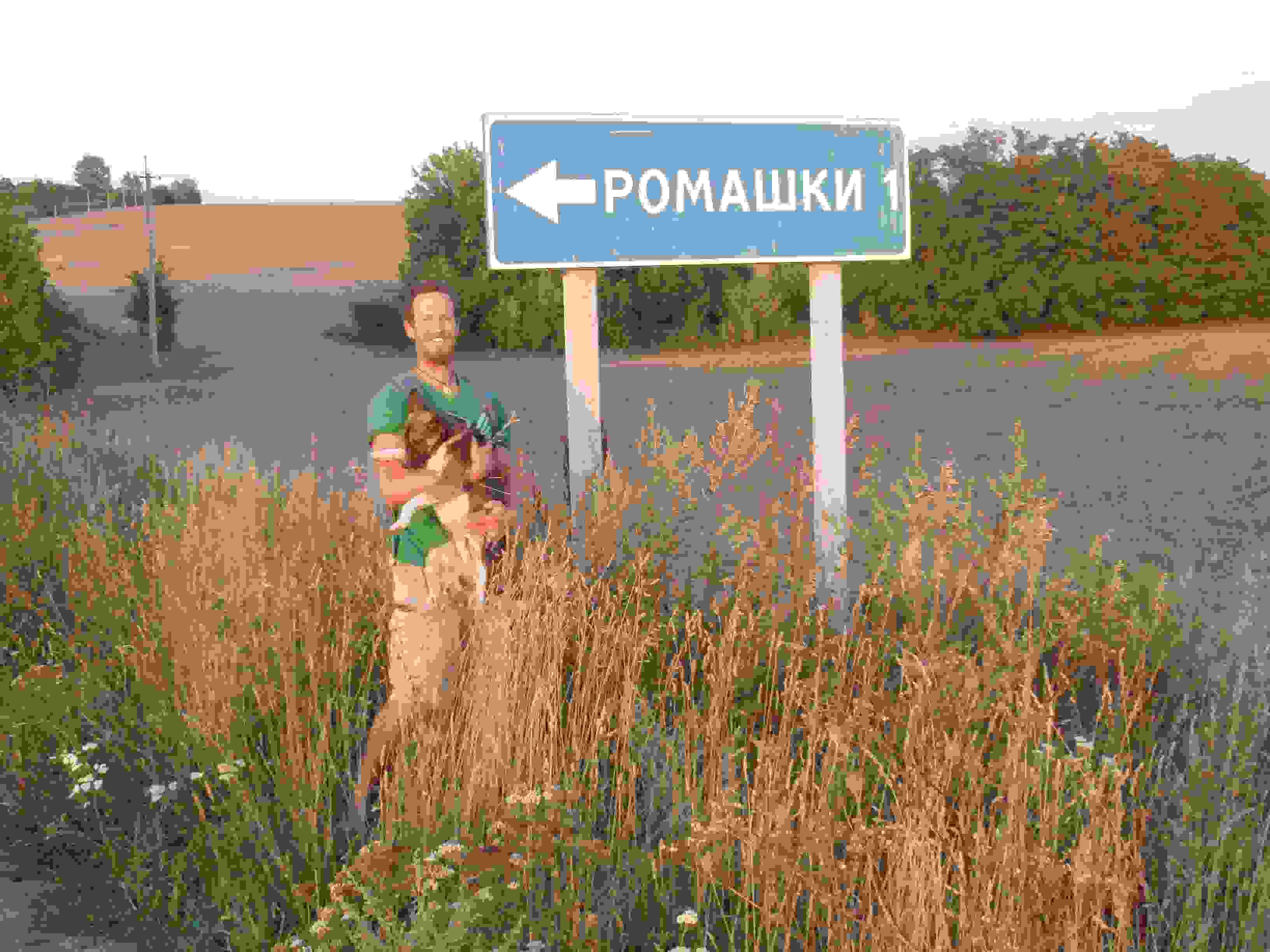
Romashki or a Life Less Ordinary, part 2

By Thomas Mcintyre

Once upon a time…Do you, my dear reader, believe it is possible to live in a fairytale? This may seem like a strange question on a rural sociology blog, and indeed it is. It is not a question I thought seriously about before, though I confess I have been predisposed to curling up on a chair in front of the fire and entering the world of fairytales through a book or through my imagination… but to live in one! This seems rather preposterous, and you would be forgiven for wondering what this has to do with serious anthropological research. But like any good research, setting out into the unknown has raised some strange questions I have had to stew on. If you answer a tentative yes to the opening question, as I am now inclined to do, then would you entertain the thought of writing a fairytale thesis? After all, if the reality you are studying is a fairytale, then would it not only be appropriate that the written representation of this reality should also be a fairytale? Now, I suppose you would like me to explain what I mean by living a fairytale and writing a fairytale thesis, especially its academic justification and application. But first things first: my arrival to Romashki.
Continue reading