
MSc-student Marlies Meijer has spent five months in Galicia investigating the relation between spatial planning and rural development. Earlier she wrote about her stay and experiences in Galica: balancing between two realities and land abandonment in Galicia. She has returned to Wageningen to accomplish her MSc-thesis. Currently Marlies is attending the International Student Conference in Copenhagen, organised by the Euroleague Spatial Planning Initiative (ESPI is a network of six Universities) to present the paper ‘Planning realities in Galicia’ (click on hyperlink to download paper) on her experiences, the first findings and some reflection with regard to rural and urban planning in Galacia and collective management of production forest (so-called UXFOR) in particular.
Category Archives: Education
Stadslandbouw in perspectief – Tilburg als voorbeeld
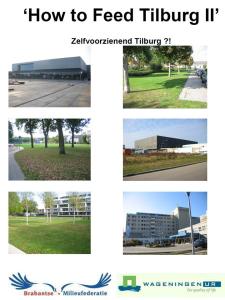 Een groep studenten van Wageningen Universiteit heeft in opdracht van de Brabantse Milieufederatie een kort onderzoek uitgevoerd naar de mogelijkheden om het aantal voedselkilometers in de gemeente Tilburg te reduceren. Dit onderzoek is een vervolg op een eerdere verkenning van een andere groep Wageningse studenten naar voedselconsumptie in Tilburg, waarover ik op 24 april een blog schreef. De effecten van het toepassen van volkstuinen in de gemeente en de huidige voedselconsumptie van inwoners zijn hierin onderzocht. De afgelopen weken heb ik deze groep begeleid. Het rapport dat zij hebben gemaakt n.a.v. hun onderzoek is via deze link te downloaden. De belangrijkste uitkomsten van hun onderzoek zijn samengevat in de vorm van een persbericht:
Duizenden inwoners van de gemeente Tilburg kunnen worden voorzien in de jaarlijkse behoefte aan groenten en fruit door het aanleggen van volkstuinen in verschillende woonwijken. Door grasvelden rondom flatgebouwen en andere gebouwen te gebruiken als volkstuin zijn de bewoners in staat, dichtbij huis hun eigen (biologische) voedsel te verbouwen.
Voedselkilometers, het aantal kilometers afgelegd door voedsel, zijn in de gemeente Tilburg onnodig hoog. Aardappelen, appels, tomaten en melk worden buiten de grenzen van de gemeente gehaald. De CO2 uitstoot van het geconsumeerde voedsel is derhalve zeer groot. Door een tekort aan land- en tuinbouwgrond in de gemeente Tilburg is het echter niet mogelijk om in de toekomst in de gehele consumptie van de bewoners van de gemeente Tilburg te voorzien. Het vergroten van de mate van zelfvoorziening door een aanpassing van de benutting van de land- en tuinbouwgrond en het uitgeven van extra grond voor de verbouwing van aardappelen, groente en fruit, verkleint de CO2 uitstoot aanzienlijk.
“Urban agriculture”, het verbouwen van aardappelen, groente en fruit binnen de grenzen van de stedelijke omgeving kan toegepast worden voor het verminderen van het tekort aan land- en tuinbouwgrond. De gemeente Tilburg beschikt binnen de stad over een groot aantal hectare grond geschikt voor de verbouwing van aardappelen, groente en fruit op volkstuinen.
Grasvelden en platte daken in woonwijken kunnen worden toegepast voor de verbouwing van aardappelen, groente en fruit. Buurtbewoners zijn hierdoor in staat om lokaal verbouwde producten te consumeren en de CO2 uitstoot aanzienlijk te verminderen. In totaal kunnen ruim 5100 bewoners jaarlijks worden voorzien in de voedselconsumptie van aardappelen, groente en fruit door het toepassen volkstuinen in woonwijken. Dit is meer dan zes keer de stadsschouwburg Tilburg vol.
Afstudeermogelijkheid: kritische succesfactoren zorglandbouw

source: guusnet.wordpress.com
Het aantal zorgboerderijen is sinds eind jaren 90 spectaculair toegenomen van 75 tot ongeveer 900. Toch gaat het opstarten van de zorgtak lang niet altijd gemakkelijk. Initiatiefnemers lopen b.v. aan tegen belemmerende regelgeving, desinteresse vanuit de zorg, of onvoldoende vraag van cliënten. Sommige initiatiefnemers zien desondanks mogelijkheden de zorgboerderij tot een succes te maken. Anderen lukt dit niet.
In dit studentenproject gaan we de ontwikkeling van succesvolle en minder succesvolle initiatieven op gebied van landbouw en zorg analyseren. We analyseren in hoeverre de mate van succes bepaald wordt door ondernemerschapscompetenties van de initiatiefnemers en het vermogen te schakelen tussen de landbouw- en de zorgsector.
Activiteiten:
- Selecteren van zorgboerderijen
- Interviewen van zorgboeren
- Analyseren van de interviews en koppelen met theoretisch kader
- Formuleren van aanbevelingen voor de sector landbouw en zorg

source:www.stkinderboerderijen.nl
Voor meer informatie:
Jan Hassink
Plant Research International
0317 480576
Bettina Bock
Rurale Sociologie
0317 483275
Farming the City: thesis possibilities
Thesis possibilities at the Rural Sociology Group
Contact person: Petra Derkzen. Petra.derkzen@wur.nl
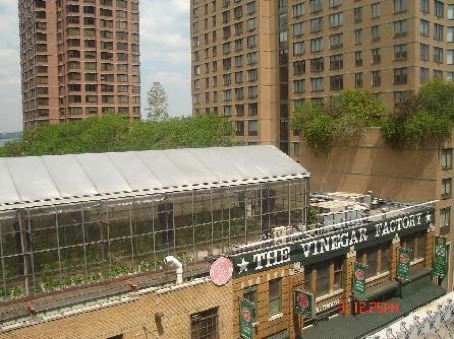
Growing food in and around cities is gaining momentum (see urban agriculture on our blog). From allotment gardens to vertical farming and rooftop production, new initiatives are appearing on a daily basis. Reasons are divers but urgent; the fight against obesity, the need for social cohesion in neighborhoods, reduction of food miles, education about the origin of our food, climate change buffering and preservation of green space in cities. The exact contribution of urban agriculture to these divers goals, however, has so far received little systematic attention. Contacts with initiatives in the Netherlands and worldwide make interesting research possible, for example:
1. To research small scale intensive urban agriculture farms
According to the conventional norms for agriculture, it is not possible to make a living from half a hectare. However, different types of urban agriculture farms show they can. How can this be the case?
2. To research the development possibilities and constraints for urban farmers
To start a farm outside the city, a few million euro’s are needed. Urban agriculture, however, has not the same costs for land acquisition. In this respect, urban agriculture is accessible for newcomers from all ethnic backgrounds. There are, however, other constraints such as planning legislation and policies which are focused towards food production outside the city, leaving those inside the city unrecognized. What is the background of people who are or who want to be active as urban farmers? What are the possibilities and constraints for these farmers?
3. To research the effects of urban agriculture
Over half of the population lives in cities nowadays. The Netherlands too, is a highly urbanized society. The current trend is that more affluent urban citizens seek a better living space in suburban or rural places. The future city will have to be a more attractive living space to keep a divers population. How can urban agriculture contribute to the quality of life of inner cities? What are the disadvantages and risks of food production in high density environments? What are the (potential) effects of urban agriculture?
4. To research to role of urban agriculture in the local food economy

Farmers market Des Moines
The current food system is dominated by long chains and a lack of connection between the place of production and the place of consumption. Urban farmers are exploring new local markets for their produce. How do these emerging local chains relate to larger and global chains? Which crops and livestock are suitable for urban farming and which products can better be sourced globally?
Boeren in de stad; Afstudeer mogelijkheden
Mogelijke afstudeer opdrachten bij Rurale Sociologie (RSO)
Contact persoon: Petra Derkzen. Petra.derkzen@wur.nl

Red Hook urban farm New York
Voedselproductie in en om de stad is dé trend van het moment (zie urban agriculture op deze blog). Van volkstuintjes tot vertical farming en eetbare daken, er ontstaan aan de lopende band initiatieven. De redenen zijn divers maar urgent; het bestrijden van obesitas, het versterken van sociale cohesie, reduceren van voedselkilometers, waar-komt-het-eten-vandaan-educatie, klimaatverandering en behoud van groen in de stad. Echter, de meer precieze bijdrage van voedselproductie in de stad aan deze doelen is nog weinig systematisch aangetoond. Onze contacten met tal van initiatieven in Nederland en wereldwijd maken interessant onderzoek mogelijk; bijvoorbeeld:
1. Onderzoek naar intensieve kleinschalige stadslandbouw bedrijven
Een inkomen halen uit een halve hectare is volgens de gangbare normen voor landbouw onmogelijk. Echter, verschillende stadslandbouwbedrijven laten zien dat het toch kan. Hoe kan dit?
2. Onderzoek naar ontwikkelingsmogelijkheden en beperkingen voor boer-zijn in de stad
Om als nieuwkomer een landbouw bedrijf te beginnen heb je enkele miljoenen euro’s nodig. Stadslandbouw volgt echter niet het gangbare grondverwervings- en opvolgensmodel. Dit maakt stadslandbouw wellicht beter toegankelijk voor nieuwe boeren en voor grotere (etnische) diversiteit in achtergrond. Anderzijds is de wet- en regelgeving alsmede de technische kennis en het ruimtelijk beleid vooralsnog gericht op voedselproductie buiten de stad, en hebben de initiatieven binnen de stad vaak een informeel (niet officieel erkent) karakter. Welke achtergrond hebben boeren die in de stad aan de slag willen? Wat zijn de ontwikkelingsmogelijkheden en beperkingen voor deze nieuwe boeren?
3. Onderzoek naar de effecten van stadslandbouw

Meer dan de helft van de wereldbevolking leeft inmiddels in de stad. Ook Nederland is een zeer verstedelijkte samenleving. Nu vertrekken mensen met genoeg inkomen naar buitenwijken en het platteland. De duurzame stad van de toekomst zal aantrekkelijker moeten worden. Hoe kan stadslandbouw bijdragen aan een beter leefbare stad? Welke nadelen en risico’s zitten er aan voedselproductie in de stad? Wat zijn de (potentiële) effecten van stadslandbouw?
4. Onderzoek naar de plaats van landbouw in en rond de stad in de lokale voedselvoorziening
Het huidige voedselsysteem wordt gedomineerd door lange ketens en het ontbreken van een geografische band tussen de voedselproductie in een bepaald gebied en de consumptie daarvan in de stad. Stadsboeren zoeken nieuwe afzetmogelijkheden voor hun voedselproductie. Hoe verhouden deze lokale ketens zich tot de globale? Voor welke gewassen en houderijen heeft lokale productie een grote meerwaarde en voor welke is global sourcing een duurzaam alternatief?


