Looking at organic+ activities and their perception by consumers in the rural web

Before I start writing about organic+ activities and consumers I would like to introduce myself.

My name is Corinna Feldmann and I study Organic Agriculture in my second year. I just finished my master thesis: ‘What does the consumer take up? – A case study on communication in the rural web around the dairy in Andeer’.

Everything started in late spring of 2009, when I decided that I would like to do my research on consumers and their opinion on producer’s activities which go beyond the minimum standards of organic regulations. So, I found my way to the Rural Sociology Group and met Bettina Bock. Doing some investigations on the internet I came across the first report of the EU Core Organic Project on Consumer Farmer Partnerships which deals with the identification of communication arguments used by small-scale farmers and producers who engage in organic+ activities. Thereupon I got into contact with the research institute for biological farming (FiBL) in Switzerland who is one of the partners in this EU project. In May I wrote my research proposal with the help of Heidrun Moschitz and Flurina Schneider from FiBL and Bettina Bock. The core of my research was to find out what aspects of the communication arguments consumers perceive as important. Continue reading →
Kijk op en beleving van duurzame melkveehouderij door burgers

Vorig jaar is Birgit Boogaard (Birgit.Boogaard@wur.nl ) gepromoveerd op een studie naar de sociaal-culturele duurzaamheid van de duurzame melkveehouderij, haar volledige (engelstalige) proefschrift staat online op onze RSO- website (klik hier om te downloaden). Over haar vergelijkend onderzoek in Noorwegen en Nederland, waarbij ondermeer burgers melkveehouderij bedrijven bezoeken om hun kijk te geven op duurzaamheid aan de hand van wat ze zien en ervaren, zijn twee artikelen verschenen in vakbladen: ‘Met burgers de boer op‘ in Veeteelt (2 november 2009) en ‘Techniek volgens burger niet per se strijdig met natuur‘ in het Agrarisch Dagblad van 11 december 2009. Hieronder uit elk artikel een citaat:

Volgens Boogaard heeft de gemiddelde burger best begrip voor de dilemma’s waarmee de boer te maken heeft. Maar dat begrip ontstaat niet vanzelf, zeker niet door eenrichtingscommunicatie van boer naar burger. Burgers die op de een of andere manier nog een relatie hebben met het boerenbedrijf, blijken meer begrip op te brengen. Volgens Boogaard kan de veehouderij dat begrip in stand houden door burgers zo jong mogelijk – als ze nog op school zitten – in aanraking te laten komen met de veehouderij. ”En breng ze dan niet naar een kinderboerderij maar naar de echte boerderij.” Uit: AGD, 11 december 2009

‘Door de beperkte bezoeken aan een boerderij ontmoeten maar weinig burgers de boer en kennen zijn verhaal. In een gesprek met de veehouder vormt de burger een beeld. Een melkveehouder kan laten zien hoe hij voor zijn dieren zorgt en kan uitleg geven over bijvoorbeeld moderne ontwikkelingen zoals een koematras of een krachtvoerbox.’  Boogaard stelt voor te beginnen met onderwijs aan kinderen. ‘In Noorwegen gebeurt dit al succesvol. Op deze manier ben je problemen voor. Kinderen vormen zo zelf een beeld. Een campagne is eenrichtingsverkeer, dat is riskant. Toenadering bereik je niet door een campagne over mensen uit te storten. Structureel inzetten op voorlichting van schoolkinderen is maatschappelijke duurzaamheid voor de lange termijn.’ Uit Veeteelt, 2 november 2009.

Birgit Boogaard werkt deels bij Rurale Sociologie als universitair docent en deels bij Cluster Systeeminnovaties van Wageningen UR Livestock Research.

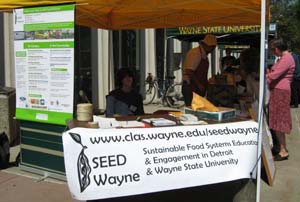
Sustainable Food Systems Education and Engagement in Detroit

Recently, in the process of writing an international research proposal, I had an email exchange with Dr. Kami Pothukuchi, Associate Professor in Urban Planning at the College of Liberal Arts and Sciences of Wayne State University. Dr. Pothukuchi is, together with Prof. Jerry Kaufman, one of the founders of food planning in the USA. She was the first to write about food as a stranger to the planning field in 2000 and is one of the authors of “Community and Regional Food Planning: A Policy Guide of the American Planning Association“. This policy guide was a major source of inspiration for organizing the first European Sustainable Food Conference under auspices of the AESOP.

In our email exchange Dr. Pothukuchi informed me that she has recently become director of SEED Wayne. SEED is the acronym for Sustainable food systems Education and Engagement in Detroit. 

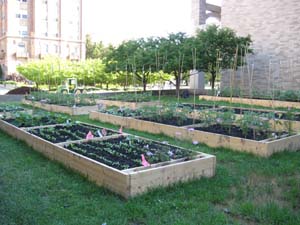
SEED Wayne is dedicated to building sustainable food systems on the campus of Wayne State University and in Detroit communities. SEED Wayne works in partnership with community-based organizations promoting food security, urban agriculture, farm-to-institution, and food and fitness planning and policy development. SEED Wayne embraces core university functions in teaching, research, engagement and operations. 

I think SEED Wayne is a perfect example of the role a university can and should play in enhancing sustainable food systems as well as in creating a learning-by-doing environment for students in which close collaboration with local communities is an intrinsic part of university teaching and research. For those interested in SEED Wayne download the brochure or simply browse SEED Wayne’s website.

Kennis arrangeren voor gebiedsontwikkeling II – verslag vanuit de gebieden

In een eerdere post is al bericht over een verkenning van regionale kennisarrangementen. Van de bevindingen is verslag gedaan in het LEI-rapport “De werkvloer van een Kennisnetwerk Vitaal Platteland; kennis maken met regionale kennisarrangementen’. Het eindigt met aanbevelingen hoe het samen leren doen in en tussen gebieden kan worden bevorderd en ondersteund vanuit beleid en kennisinstellingen met kennisarrangementen. 

In opdracht van LNV is inmiddels voor vijftien gebieden een overzicht gemaakt van ambities, afspraken en behoefte aan ondersteuning bij het inzetten van onderwijs, onderzoek en advies voor gebiedsontwikkeling. De uitkomsten zijn op 6 oktober 2009 met de vijftien gebieden besproken. Van de inventarisatie en de uitwisseling tussen de betrokken gebieden wordt verslag gedaan in ‘Regionale kennisarrangementen; verslag quick scan en kennisdag.

De bedoeling is dat deze vijftien gebieden het voortouw nemen bij het opzetten van kennisarrangementen die het leren doen in en tussen gebieden moeten bevorderen. Ze kunnen daarbij rekenen op ondersteuning van o.a. Netwerk Platteland, Wageningen UR en de Groene Kennis Coöperatie (m.n. Programma Regionale Transitie).

Wichterwest: A network meeting with gains for everybody

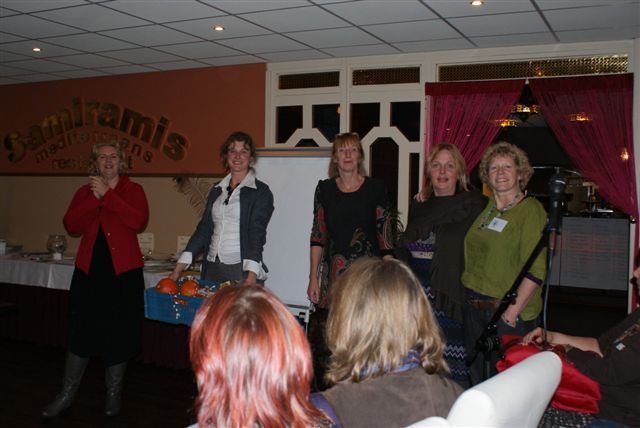
Yesterday, I – together with 66 rural business women- attended a meeting of the rural women’s business network ‘Wichterwest’ at Restaurant Samiramis in Grootegast.

 The establishment of women business networks was initiated by Groningen Province in an attempt to stimulate networking amongst rural business women in the province. Today, each region within Groningen province has a rural women’s network. In the Western region of Groningen province (a.k.a. Westerkwartier) the network is called ‘Wichterwest’ and is organised by the project leader ‘Vereiniging Groningen Dorpen’.

 ‘Wichterwest’ acts as a platform for business women to network, to exchange ideas and to receive information about business. The organisers also arrange offers for business courses and trainings. For example, the organisers are arranging a new training programme which will focus on three different business aspects: a) business start-ups, b) business management and c) market/ marketing strategies. To respond to the great interest of business women in the network and to accommodate its growing number of participants, the organisers are now considering options to set up a foundation with the aim to increase income and offers.

 Yesterday’s meeting started with a speed dating session in which everybody got to know the fellow participants and their businesses. I was impressed by the variety of activities carried out by the women of the Westerkwartier. For example, I met a photographer, a Bed & Breakfast owner, an administrator, a clothes designer, several advisors, an interior designer and the owner of an online farm shop for regional products. The evening proceeded with an exercise to practice efficient networking skills and a delicious three course menu made of organic products produced in the Westerkwartier. Filled with food, excitement rose as the winners of a lottery game were announced. Each business woman was asked to bring a gift made by her company. By winning vouchers for advice, massage and acupuncture sessions, bags of sheep wool and cushions for man and beast, everybody was able to get an impression of the variety of products offered by business women in the Westerkwartier. The evening was completed with three different workshops concerning a) optimal business plans, b) press releases and c) the importance of the entrepreneur for making business.

Even though I am not a business women myself, I returned home filled with positive impressions regarding the innovative spirit and versatility of business women in the Westerkwartier- and a business arrangement made during the networking game- let me recall, I said I was not a business women?