Foodscapes in times of uncertainty – blog 2

The Transformative Power of Gardening: food literacy, connection and environmentally sustainable choices during COVID19

By Jessica Breslau and Sofie de Wit

Sparked by the covid19 pandemic food supply chains have been disrupted: food is more scarce, expensive, and difficult to access than before (OECD, June 2, 2020). Simultaneously, the pandemic has increased the number of people participating in home and community gardening (Polansek and Walljasper, 2020). One of the reasons for this transition may be people losing their jobs, having less disposable income to spend on food. Additionally, as people spend more time at home due to the crisis, home gardening became more accessible. Some scholars also identified gardening as a therapeutic act that brings tranquillity during times of stress (Bratman G.N. et al. 2019). As such, the current global circumstances remind us of the therapeutic and educational potential of gardening, particularly regarding individuals’ relationships to their food and how this translates to food consumption patterns (Kellaway, 2020; Wang and MacMillan, 2013).  Continue reading
75th Anniversary: 8) Kyoto meets Wageningen, Political Economy meets Rural Sociology

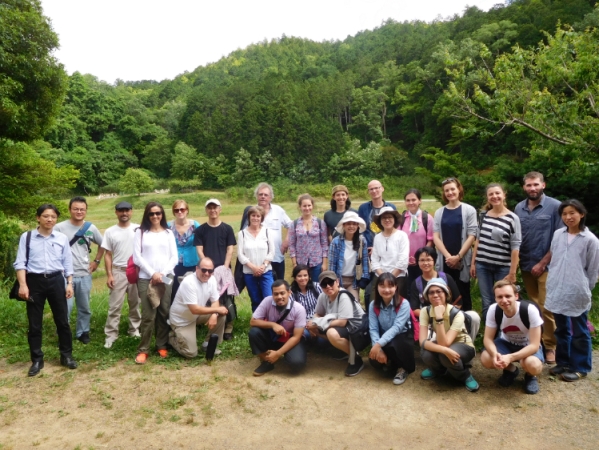
Countryside excursion at the 2016 Graduate Workshop

 Introduction

The collaboration between the group of rural sociology at Wageningen University and the group of agri-food political economy at Kyoto University officially started in July 2014, when we signed a letter of intent to foster international cooperation in education and research. This was first materialised when Kyoto University invited Dirk Roep in February 2015, and Guido Ruivenkamp and Joost Jongerden in March 2015 (http://agst.jgp.kyoto-u.ac.jp/topics/report/376). Their visit to Kyoto kickstarted a series of intensive lectures given by invited RSO members as well as a series of joint workshops between the two groups either in Kyoto or in Wageningen, as explained below. Continue reading

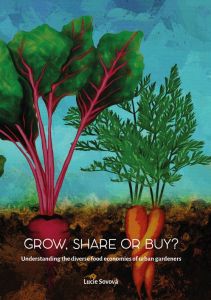
Grow, share or buy? PhD-thesis by Lucie Sovová

October 13 2020, at 13.30 am (CET) Lucie Sovová will defend her PhD-thesis ‘Grow, share of buy? Understanding the diverse food economies of urban gardeners‘. See the abstract below. After the defence the full thesis can be downloaded from WUR Library here. The ceremony will be live-streamed – click here – but is recorded and can be viewed later as well. Lucie Sovová is affiliated as PhD-candidate at the Rural Sociology Group of Wageningen University. 

Abstract
How do urban gardens work as sources of food? That is, in a nutshell, the central question of this thesis. Urban gardening and other food alternatives have received growing attention in relation to issues such as food quality and the environmental impacts of food production. However, we know little about how urban gardens actually provide food. In order to answer this question, I conducted an in-depth study of 27 gardening households in Brno, Czechia, exploring the long and lively tradition of gardening in Central and Eastern Europe. I investigated how much food gardeners produce in their plots, how they think of this practice and how it relates to other ways of obtaining food such as shopping. The results reveal that several practices facilitate food self-provisioning, such as food sharing or preserve making. I conclude that urban gardens play a central role in gardeners’ food supply, influencing eating as well as shopping habits in all four seasons.  

MSc thesis opportunity: Environmental versus/and political ecology explanations of civil war

There is a fierce debate about the origins of the civil war in Syria.

Some argue that the civil war was caused by environmental induced scarcity (climate change). Key environmental factors identified are water-scarcity and climate variability. Drought is said to have contributed to the displacement of rural populations to urban centers, unemployment and the occurrence of food insecurity with subsequent effects on political stability (Gleick 2014).

Others have argued that the relation between drought, migration and conflict is not so clear-cut (Eklund & Thompson 2017). They content that the central causes of the war were the Syrian regime’s agrarian policy and the rural poverty it produced (political ecology). The regime’s social and economic reforms cut the peasantry from subsidies, resulted in a loss of livelihood and brought large parts of the population out of the social reach of the state (Daoudy 2020).  

For this thesis you will evaluate and assess climate change and political ecology centered explanation of the causes of the civil war in Syria. Based on this reading, you are challenged to 1) develop an approach beyond the climate change – political ecology controversy or 2) assess the policy implications of both approaches. For this study, you will analyze scientific articles, reports by international organizations and NGOs, but also consider datasets of FAO and WB.

More info: joost.jongerden@wur.nl

SAMSUNG CAMERA PICTURES

New Book: Achieving Sustainable Urban Agriculture

Book cover Achieving Sustainable Urban Agriculture

This collection reviews key recent research on developing urban and peri-urban agriculture. The first part of the book discusses ways of supporting urban agriculture, from policy and planning to building social networks for local food supply chains. The chapters in the second part of the book survey developments in key technologies for urban agriculture, including rooftop systems and vertical farming. The book also assesses challenges and improvements in irrigation, waste management, composting/soil nutrition and pest management. The final group of chapters are case studies on urban farming of particular commodities, including horticultural produce, livestock, and forestry.

The book targets a varied audience: academic researchers in agricultural science, urban planning and environmental science specialising in urban agriculture; urban planners and policy makers in local government; national government and other bodies promoting urban agriculture.

More information about the book can be found at https://shop.bdspublishing.com/store/bds/detail/workgroup/3-190-83836