
ILVO, the Institute for Agricultural and Fisheries Research, has four PhD positions to offer as part of the GENESYS project (Use of By-Products as System Innovation). See here for more information on the project and the vacant PhD positions.
Category Archives: Research
Foodlinks News
Here you can find the first edition of Foodlinks News! In this newsletter we would like to update you on the activities of the Foodlinks project and its communities.
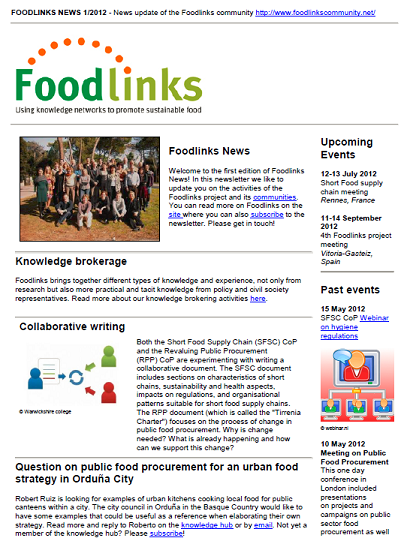
A key characteristic of the Foodlinks project is that it brings together different types of knowledge and experience, not only from research but also more practical and tacit knowledge from policy and civil society representatives. Foodlinks organises a collective process of sharing and integrating this knowledge around particular problems of food systems. You can read more about Foodlinks on our website and if you would like to receive the next edition of Foodlinks News you can subscribe here.
Would you like to become a member of one of our communities? Sign up for the Short Food Supply Chain, Revaluing Public Procurement or Urban Food Strategies Community of Practice!
A day in researching sense of place in the National Park “Galicica” in Macedonia
By Bojan Rantasa, MSc-student International Master of Rural Devleopment (IMRD)
Earlier I introduced my thesis research regarding the ‘Sense of place in Galicica national park‘. My research is coming to an end, but I am still cautious to speak of results prematurely. So I will share how my research days look like. Embarked on the mission to do a field research in the National Park “Galicica” in Macedonia, I begun packing my backpack:
- Field audio recorder. I will do open interviews with people, and writing notes whilst doing interviews is out of the question. First, if I write, I will have to pause the conversation and that will take a lot of time, and the person might forget what he or she was talking about, but most important, I am too lazy to write.
- Photo camera. I am researching sense of place, and having visual records of the places is a must. At least this is how I see it.
- Video camera. Photography is beautiful and my favourite art, but sometimes it does not say enough. Image and sound is compelling to more senses than just image.
- Handheld GPS. I should not get lost, but it will also come handy in marking those places that people see important, and making a map of what I’ve researched, as places reside in locations.
- Replacement batteries. I do not think that I will bump into a MediaMarkt shop behind that mountain peak.
- Walking stick. It is a mountain, dogs wondering around, thorny bushes, and my left knee is not really in a good shape. Besides, this one has a ¼” screw on the top, so I can use it as a monopod for the camera.
- Some snacks. I will spend a full day out.
- Sun tan cream. I hope that there will be some sun today.
- Toilet paper. No need to stress this importance.


Well, if people are not scared from my looks, I figure that means that they are open for a conversation on their sense of place. So I’m off on the first bus to the next village on my list. I arrive there around mid day. At this time only retired people are in the village. I walk around and I meet an old granny. But she refuses to speak with the recorder on. She says that afterwards someone might come to look for her. I, on the other hand, refuse to talk to her without the recorder. It is not only the issue of not noting all the detail of the conversation, but it is the issue that at a later stage of my research I will see some interesting correlation, something I might use to build a theory on. Now if I have only my written notes, I will not have this new thing noted. But if I have an audio recording of the conversation, I can check if there is really a pattern or something to relate to my new discovery in the interviews I’ve did in the past. Additionally, people that refuse to talk with the recorder on are people that have something to hide. So those people will tell me less or even lies, thus I can consider them as a misleading factor, or simply a waste of time. So I go my way. The granny did give me a boiled egg, as it was Eastern just yesterday, it will come in handy for my lunch later.
Thesis assignment commissioned by Foundation Social Workplace Saba (FSWS) on Food Sovereignty in Saba
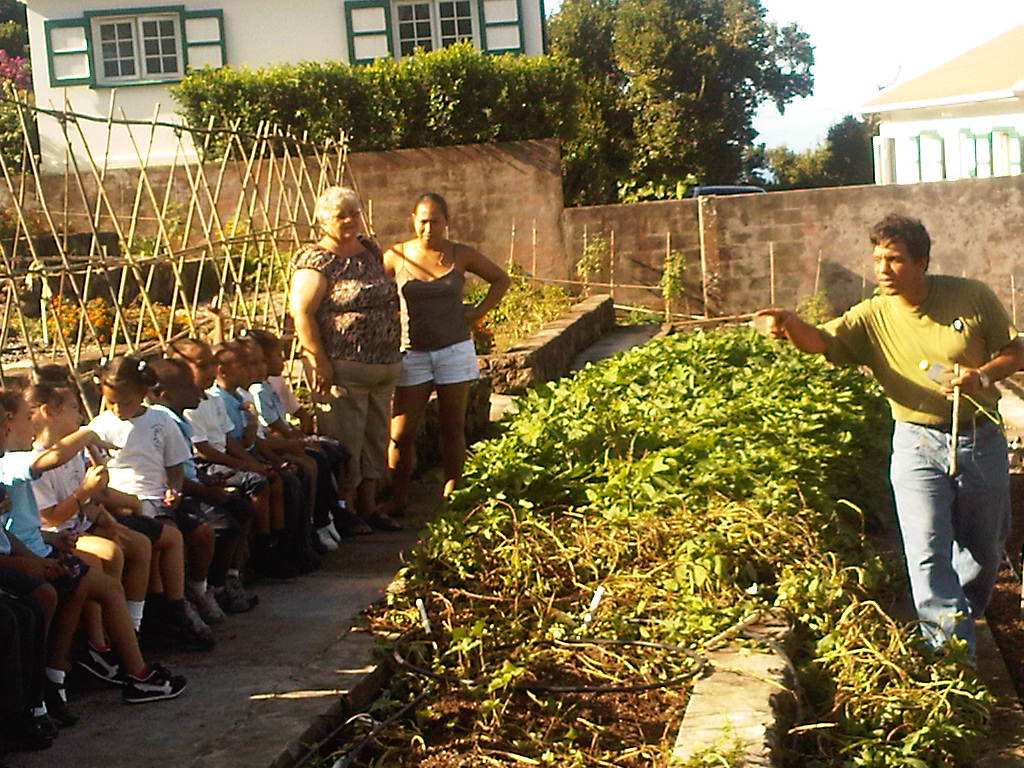 The assignment is a participatory scenario development on the different possibilities to achieve a local food supply at Saba. Saba is a Caribbean island and the smallest special municipality of the Netherlands. At the moment most food is imported which makes food expensive for the inhabitants of Saba. At the same time agriculture fields aren’t being fully used. The assignment is to develop different scenarios for a local food market. Optional is a thesis assignment including an internship.
Wageningen UR Science Shop accepted the assignment of FSWS. The research will make you familiar with ‘Participatory Scenario Development’ and is a chance to achieve work experience in the field of the Science Shop and Regional Food Supply. The research will start in September.
Are you interested? Please contact project leader Margriet Goris (cocreation@live.nl or 06-28109539).
Farmer driven transformation: next grassroots-science seminar
As announced earlier, St. Boerengroep and St. Otherwise organize a serie of seminars called Grassroots science: socially driven alternatives that tackle global problems. Next one will be on Monday May, 14, starting 19.30, in the Forum building. See the announced below and register a seat here:
Farmer driven transformation in the Netherlands: sustainable practices and struggles with the state
Dutch agriculture is one of the most productive in the world. This however seems to have come at a price. Disease outbreaks have led to the killing of more than 40 million animals in the last 14 years, it is the only EU country that does not comply to EU groundwater standards, it is the largest user of antibiotics for meat production in the EU, it ranks in the top 3 of the world’s largest pesticide users and the farming population has shrunk by 36% in 15 years. Policy efforts and huge investments in research seem to have brought little change to this. Farmer-led initiatives have however emerged that promise to tackle some of these problems. Frank Verhoeven (Boerenverstand bv) and Douwe Hoogland (chair Noardlike Fryske Wâlden) will talk about two farmer-led environmental co-operatives in the Frisian Woodlands, who, in cooperation with researchers, have devised system innovation by re-integrating dairy farming with nature conservation and landscape management. To realise this struggles with state policies were inevitable.

