Time Magazine about multifunctional agriculture, some thoughts about the farmers’ identity

While waiting for my train at Utrecht Central station – I tend to kill my time looking around in the book/magazine shop – the cover of the latest Time Magazine struck my eye, heading: “France’s Rural Revolution, traditional French farmers are dying. Can farmers make money from town dwellers’ love of the land?”. Interested about the heading – and teased by the astonishing landscape on the cover – I bought a copy for the second part of my trip to Rotterdam.

Bruce Crumley (the author) poses the question what eventually will save rural France. French farmers are hit by a shrinking agricultural sector, falling food prices (globalization) and tightening E.U. support (so called CAP reforms (Common Agricultural Policy) in 2013). These developments are not exclusive to France, farmers in many other E.U. member states are facing these problems. However, future CAP reforms are considered to be critical especially to French farmers, since the French receive nearly 20% of the total CAP funding.

By illustrating the developments on three French farms the author focuses on one of the ways to get out of this tightening trap by diversifying the farm business with new (‘non-farming’) activities. A strategy also known as multifunctional agriculture. The farmers mentioned in the article developed new activities in rural tourism and the production and selling of regional products like beer and ham. Interestingly, the article has many parallels with the conversations I had myself (in relation to our research project on (Dutch) multifunctional agriculture). Apparently, many farmers (eventually) don’t regret their step on the multifunctional pathway. On the contrary, many farmers say to enjoy the new farm dynamics, contacts with new people and some even claim to have reinvented entrepreneurship. However, we needn’t to underestimate the step of ‘just’ diversifying your farm to survive. In the article colleague rural sociologist François Purseigle argues many farmers simply refuse to find new sources of income as they see diversification as a betrayal of the agricultural profession they took on. As a parallel, I experienced many interviewed Dutch farmers – who have made the step or are still hesitating in some way – have or are still struggling with their identity of being a ‘real farmer’: “It’s not just running a business” – one farmers stressed – “it’s a way of life!”. I think the notion of multifunctional agriculture has matured but still often perceived as something for losers or nothing ‘real farmers’ should deal with. Often the environments of hesitating farmers aren’t ready for this new way of farming, yet.  

The article can be found on the Time website. The page also offers a great picture gallery about the topic.
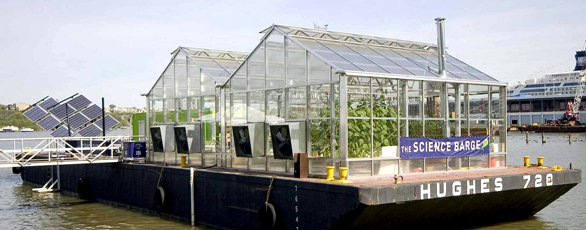
The ‘Suit’ of Urban Agriculture

Marlinde Koopmans of Van Hall Larenstein presented her thesis results yesterday in a workshop at Stroom, The Hague. Her thesis will be online available in September. For now she presents her main results in the below article.

By VHL student Regional Development Marlinde Koopmans (marlinde.koopmans@gmail.com):

groundworkhv.org/programs/environmental-education/science-barge/faqs/

Lately urban agriculture has gained interests of scholars, policy makers and citizens. Urban agriculture forms a unique integration with the urban system. It uses resources from the city and produces for the city. For the Foodprint program, Stroom has investigated the potentials of urban agriculture for the city of The Hague.In terms of flows of energy and food is a city one giant glutton, consuming tons of high valuable material coming from the countryside and only leaving tons of waste in return. The Hague therefore has, like other cities, to increase its environmental sustainability, for example the reduction and reuse of waste, the improvement of the urban climate.

It requires a systematic change of the metabolic system of the city. Various, often costly, measures are undertaken in order to change this unsustainable metabolic system of the city. Yet these are all very specific solutions to specific problems for example: the assigning of ecological protected areas to certain regions in The Hague and municipality buildings being covered with solar panels to supply energy.Since agriculture can form an ecological circular system, urban agriculture will be able to combine a multitude of environmental facets.

The research investigated the potentials of urban agriculture to contribute to the sustainability of The Hague.Organizations active in The Hague were asked about the possibilities to integrate urban agriculture in the city; how and where could this happen, and how can the respondents participate? Continue reading →

Citizens and Animal Welfare: Methods, Findings and Policy Implications

Last Thursday (20th of May) I participated in an interesting workshop about citizens and animal welfare.  The workshop was organized at Aarhus University in Denmark and dealt with questions like: Whose opinion on animal welfare counts? How can one integrate the different perspectives of,  for example farmers, citizens, (animal) scientists and the government? We already know that citizens consider animals’ ‘naturalness’ a very important feature of ‘good animal welfare’. But what is naturalness exactly? Can you implement this in animal farming systems? Can you measure it? And what if the choice for naturalness is in conflict with other aspects, such as animal health? How do citizens make trade-offs between such dilemmas in animal farming? And how should one involve citizens in animal welfare research? Via surveys, farm visits, consensus conferences or are there other ways to be explored? To be short, although much research has already been done on animal welfare over the last decade, there are still many questions surrounding the animal welfare debate when it comes to citizens’ participation and involvement.

Raising new questions is of course a characteristic of research: finishing a research can give you the feeling that you answered some questions, but in the end it will always result in more questions. That’s what keeps us going. What in addition keeps me going, is the cooperation and discussion with other researchers in the world. Particularly after doing a PhD for six years on my own, it is really nice to exchange ideas and cooperate with other researchers in this field, like Jan Tind Sørensen of the Department of Animal Health and Bioscience and Peter Sandøe of the Danish Centre for Bioethics and Risk Assessment . During my PhD I often had the feeling I was one of the very few researchers who is interested in public perceptions of animal farming. But recently, the importance of the public opinion of animal farming is more and more acknowledged, also in the field Animal Science, of which this workshop was a good example.

Stage/internship and Thesis/Afstuderen Voedselteams Tilburg

Interessante stage en/of afstudeeropdracht bij de Brabantse Milieufederatie in Tilburg (BMF), Noord-Brabant. De Brabantse Milieufederatie is een onafhankelijke belangenbehartiger voor natuur, landschap en milieu in de provincie Noord-Brabant. Ze zet zich in voor duurzame ontwikkelingen met speciale aandacht voor de kwaliteit van onze dagelijkse leefomgeving. Voedsel is daarin een belangrijk element. De BMF is met verschillende nieuwe voedselinitiatieven bezig en heeft al eerder op deze blog oproepen geplaatst voor stage en afstudeer mogelijkheden. De eerdere oproep rondom buurtmoestuinen is nog steeds beschikbaar. Kijk hier voor meer informatie.

Deze nieuwe oproep voor een stagiaire en/of afstudeerstudent gaat over voedselteams. In Amerika zien we de opkomst van CSA’s (Community Supported Agriculture) en allerlei andere vormen van Food Communities tussen producenten en consumenten. Ook in andere landen komen nieuwe intiatieven van de grond. In Belgie bestaan al meer dan 100 Voedselteam bijvoorbeeld. In Nederland komen dit soort initatieven echter maar mondjesmaat van de grond. Er zijn 10 CSA/Voedselteam achtige constructies actief, onder de Nederlandse verzamelnaam van ‘Pergola’. De BMF wil in Brabant minimaal 3 voedselteams actief gaan krijgen en wil daarnaast ook andere vormen van voedselnetwerken opzetten. Zie bijvoorbeeld de blog van Simone Plantinga over haar huidige afstudeerscriptie.

Opdracht in twee delen, separaat te doen of te combineren. Periode 5 maanden tot een 1 jaar.

Deel A: De BMF wil de bestaande contacten met groepjes consumenten en soms ook boeren/tuinders die geinteresseerd zijn verder met elkaar in contact brengen. Zij zoeken daarom een enthousiaste student die deze opstartende netwerken/teams gaat begeleiden en ondersteunen om te komen tot een operationeel Voedselteam. Er zijn contacten in Tilburg, Den Bosch en Breda.

Deel B: Opzet van een communicatietraject om het begrip Voedselteam en netwerk binnen Noord-Brabant verder uit te dragen zodat mogelijkerwijs meer steden dergelijke initiatieven zullen nemen.

Er is veel ruimte voor eigen inbreng. Men zoekt een enthousiast iemand die in staat is zelfstandig te werken, doorzettingsvermogen heeft en goed kan organiseren. ‘Community’ denken is essentieel. Afstudeeropdracht is open voor alle studenten met interesse en hoeft niet perse via RSO plaats te vinden.

Leg direct contact met John Vermeer van de BMF voor meer informatie en solliciatie: Email:John.vermeer@bmf.antenna.nl of 013-5356225

Op weg naar een duurzame varkenshouderij

“Hoe kom je tot een duurzamere veehouderij?” is een vraag die steeds vaker klinkt. Livestock Research Systeeminnovaties komt daarop met ontwerpen van nieuwe stalsystemen. 

Na ‘Houden van Hennen’ en ‘Kracht van Koeien’ is nu de eindbrochure van het derde project  verschenen ditmaal voor de varkenshouderij! 

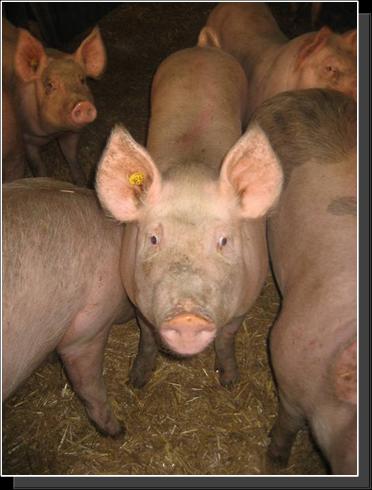
Varkansen laat drie verschilldende ontwerpen zien voor toekomstige varkensstallen: De Pagode (‘welzijn als waarde’), De Pijler (‘duurzaam efficiënt’) en De Parel (‘band met de stad’). Ieder ontwerp is gebaseerd op behoeften van verschillende betrokkenen:

“Je kunt hele discussies houden  wie nu echt de belangrijke spelers zijn in en om de varkenshouderij. […] Wij hebben gekozen voor het varken, de varkenshouder, het milieu en de burger-consument als hoofdrolspelers, omdat zij in élke vorm van varkenshouderij van belang  zijn. Op die manier kijk je naar behoeften, los van hoe de sector nu in elkaar steekt.”  Onno van Eijk, co-projectleider Varkansen

Op dinsdag 6 april is de eindbrochure aan (demissionair) Minister Gerda Verburg aangeboden.