Wichterwest: A network meeting with gains for everybody

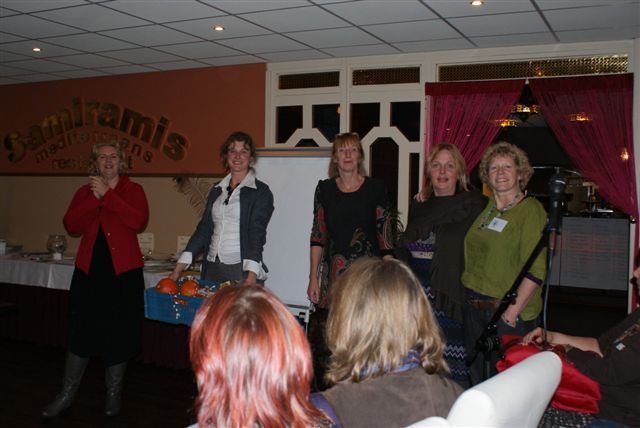
Yesterday, I – together with 66 rural business women- attended a meeting of the rural women’s business network ‘Wichterwest’ at Restaurant Samiramis in Grootegast.

 The establishment of women business networks was initiated by Groningen Province in an attempt to stimulate networking amongst rural business women in the province. Today, each region within Groningen province has a rural women’s network. In the Western region of Groningen province (a.k.a. Westerkwartier) the network is called ‘Wichterwest’ and is organised by the project leader ‘Vereiniging Groningen Dorpen’.

 ‘Wichterwest’ acts as a platform for business women to network, to exchange ideas and to receive information about business. The organisers also arrange offers for business courses and trainings. For example, the organisers are arranging a new training programme which will focus on three different business aspects: a) business start-ups, b) business management and c) market/ marketing strategies. To respond to the great interest of business women in the network and to accommodate its growing number of participants, the organisers are now considering options to set up a foundation with the aim to increase income and offers.

 Yesterday’s meeting started with a speed dating session in which everybody got to know the fellow participants and their businesses. I was impressed by the variety of activities carried out by the women of the Westerkwartier. For example, I met a photographer, a Bed & Breakfast owner, an administrator, a clothes designer, several advisors, an interior designer and the owner of an online farm shop for regional products. The evening proceeded with an exercise to practice efficient networking skills and a delicious three course menu made of organic products produced in the Westerkwartier. Filled with food, excitement rose as the winners of a lottery game were announced. Each business woman was asked to bring a gift made by her company. By winning vouchers for advice, massage and acupuncture sessions, bags of sheep wool and cushions for man and beast, everybody was able to get an impression of the variety of products offered by business women in the Westerkwartier. The evening was completed with three different workshops concerning a) optimal business plans, b) press releases and c) the importance of the entrepreneur for making business.

Even though I am not a business women myself, I returned home filled with positive impressions regarding the innovative spirit and versatility of business women in the Westerkwartier- and a business arrangement made during the networking game- let me recall, I said I was not a business women?

Planning realities in Galicia – experiences and reflections

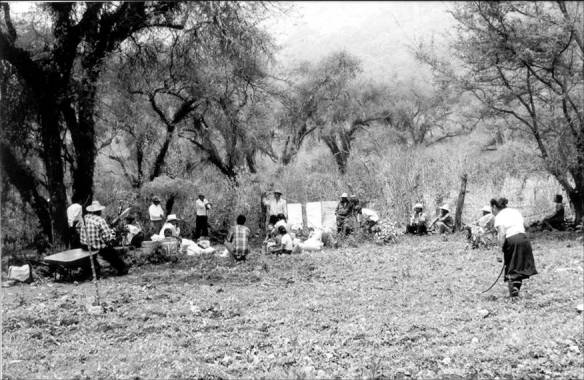
MSc-student Marlies Meijer has spent five months in Galicia investigating the relation between spatial planning and rural development. Earlier she wrote about her stay and experiences  in Galica: balancing between two realities and land abandonment in Galicia. She has returned to Wageningen to accomplish her MSc-thesis. Currently Marlies is attending the International Student Conference in Copenhagen, organised by the Euroleague Spatial Planning Initiative (ESPI is a network of six Universities) to present the paper ‘Planning realities in Galicia’ (click on hyperlink to download paper) on her experiences, the first findings and some reflection with regard to rural and urban planning in Galacia and collective management of production forest (so-called UXFOR) in particular.

Food, agriculture and cities

Recently the Food and Agricultural Organisation (FAO) has published a brochure and briefing note about food and agriculture in and around cities. Like many international public bodies, national governments and NGOs the FAO is concerned about the social, economic, ecological and health consequences of the concentration of the world’s population in and around large cities. In the brochure the FAO states that there is an urgent need to invest in urban food programmes: 

The 4th World Urban Forum cited the need for policies and interventions to ensure that the increasing number of urban poor do not get left behind. The food dimension of poverty in urban areas still has not been translated into sufficient policy action in many countries. Rural-urban linkages will become increasingly important. Urban policies also need to acknowledge the role of urban and peri-urban agriculture in urban development, ensure urban food supply and strengthen livelihoods of poor urban producers. This includes removing barriers and providing incentives for urban and peri-urban agriculture (UPA) as well as improving natural resource management in urban and peri-urban areas. … A paradigm shift in both urban and agriculture development, planning and policy formulation is required in order to ensure access to urban food security, improved environmental management and enhanced rural-urban linkages.

In order to broaden the approaches and to gather new insights for cities both of developing, intermediate or developed countries,  the FAO’s Global Forum on Food Security and Nutrition (FSN Forum) has opened a debate which is, in terms of contributing to the debate, only open for FSN forum members. However, everyone can read contributions to the debate. Furthermore, for those interested in this topic, I can highly recommend the website of the FAO’s Food for the Cities Initiative. It contains a lot of interesting fact sheets and publications about the multiple aspects related to food, agriculture and cities.

Can farmers inform policy about multifunctional agriculture?

By Leonardo van den Berg (MSc. student International Development Studies, Wageningen University) & Klarien Klingen (graduate International Land and Water Management, Wageningen University).

On the 8th of October we participated in the mini-conference about multifunctional agriculture organized by the Rural Sociology Group. We would like to share some thoughts about the conference and relate them to our thesis research experiences in Brazil.

Gianluca Brunori spoke of the benefits of multifunctionality in Tuscany. Here, farms are not merely production spaces rather:

  • Educational sites where children learn about biodiversity and breeds of animals.
  • Sites where farmers are community leaders and negotiate with public institutions.
  • Sites where food quality is negotiated with consumers and subsequently created. This not only entails consumers’ feedback on wine but also farmers educating consumers on what other parts of a cow are edible.

These thoughts turn past and present public concerns of educating farmers upside down and coincide with our thesis experiences in Brazil, where we studied a movement of innovative peasants. Here, farmers refused to be assigned a role as a poor class and instead re-established their role as experts over production, consumption and the environment. Their knowledge, farming systems, and achievements surprised social and natural scientists.

Roberta Sonnino and Katrina Rønningen focused on state policies. Sonnino criticised the little support UK policy grants to multifunctional agriculture. She argues that the UK equates best value with low costs. The few developments in multifunctional agriculture have occurred despite rather than thanks of state action. An exception is the Scottish case where an increase in organic and locally produced school meals gained €150.000 of regional revenues. Rønningen showed us another picture: in Norway multifunctionality has been embedded in society for a long time. She says it started with market demand and that it is now supported by policy: the government aims at having 20% of the food locally produced by the year 2020. Farming as a profession is highly appreciated by the public: farmers are seen as managers of cultural heritage and as producers of healthy food.

Two things struck us about these two cases. First, the UK case shows how difficult it is to penetrate the neo-liberal armour that defines not only political but also much of our own rationality. Policies are often perceived as an obstacle rather than as enabling factors. It was this hostile context in which Brazilian peasants operated. Through diversification, agroecology, and community forms of exchange these peasants have increased their autonomy enabling them to pursue their own values. Second, the case of Norway gives us a taste of the role public policies could play in the valorisation of farmers as (re)producers of healthy food, nature, landscape, biodiversity, and public health. That most governments are lacking this is no secret, even according to a market oriented, middle size farmer in our research area:

I could fence a water source, buy some wire and provide some poles. If it were more, how do you say; all this imprisonment of all that is commerce, if it were more humane, looked more at the human side, I think there would be more left and all of society would gain from this (interview November 2009).

In short: we would argue that that the lessons from the third world should not be underestimated. Our experience learns that some of these cases may be running well ahead of theory and policy practice.

Resistance and Autonomy in Western Mexico – local actors creating a place of their own

 By Peter R.W. Gerritsen, Department of Ecology and Natural Resources, South Coast University Centre, University of Guadalajara, Av. Independencia Nacional 151, 48900, Autlán, Jal., Mexico. Email: petergerritsen@cucsur.udg.mx

 The local effects of global processes in the Mexican countryside are well documented; describing problems related to the quality of rural producers’ life, identity and traditional practices, as well as their resource management practices. Alike initiatives all over the world,  also in western Mexico local actors joined forces to counter these problems and created ‘a place of their own’ in a globalised world, a place for their own wellbeing.

RASA - Peter Gerritsen

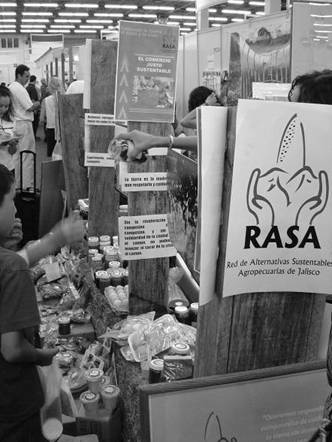
In the state of Jalisco, located in western Mexico, 20 groups of peasants and indigenous farmers, supported by professionals from non-governmental organizations and local universities, joined forces in 1999 and created the Red de Alternativas Sustentables Agropecuarias (RASA: the Network for Sustainable Agricultural Alternatives). As such, the RASA can be considered an umbrella organization for many local organized producer groups.

The RASA is also a social organization with characteristics of the so-called new social movements. New social movements have emerged since the late 1970s in the Mexican countryside, due to the problems created by global processes. The struggles that have led to their emergence originate from the demand to defend local structures and to remain control over the different domains of daily life. As such, these movements stress the need for endogenous development approaches. Closely related to the issue of specific life styles is the defense of the territory, being the place of local identity formation. It is also here, where innovative forms of resource management have emerged.

RASA 2 PGThe RASA´s main objective is strengthening a development model that aims to mitigate the local impacts of global processes and that permits the transition towards sustainable local development. In practice, the RASA organizes workshops on organic agriculture and fair trade, and organizes farmer-to-farmer meetings for sharing experiences (including political discussions on the countryside). These activities take place in the rural and peri-urban areas of Jalisco. The RASA also designs and implements new fair trade-channels, mainly in the metropolitan area of the Jalisco state capital Guadalajara. As such, the RASA´s actions are also directed at urban consumers. Finally, articulation with other social movements is actively sought for. Thus, the RASA seeks to create new room for maneuver by establishing strategic alliances with different societal actors.

The creation of local transition paths towards sustainable development, such as promoted by the RASA, is related to the issues of agency and power. These, in turn, are (often) related to resistance and autonomy. Both elements are also recognizable in the RASA experience.

To start with, the RASA has created its own socio-political space in the Jalisco countryside, which has permitted to resist to and counter the dominant rural development model in Mexico and in Jalisco that follows global tendencies. However, the RASA´s efforts must be understood as heterogeneous in nature; not all groups are involved in fair trade, but only those with a production surplus. Moreover, some groups focus more on basic grain production, while others cultivate horticultural crops. Furthermore, the RASA emerged outside the realm of governmental intervention in rural areas. In fact, it has been systematically neglected by formal institutions, as the RASA has been considered a threat to the established formal – historically-determined – political spaces in the rural arenas. Moreover, within the rural communities the RASA-members are perceived as outsiders. In this sense, the RASA conceptual approach has permitted strengthening their self-consciousness and self-organization, as well as improving their position in their communities. It has also led to the dimension of autonomy in the sustainable development model, as designed and implemented by the RASA.